
Between Five and Six Days
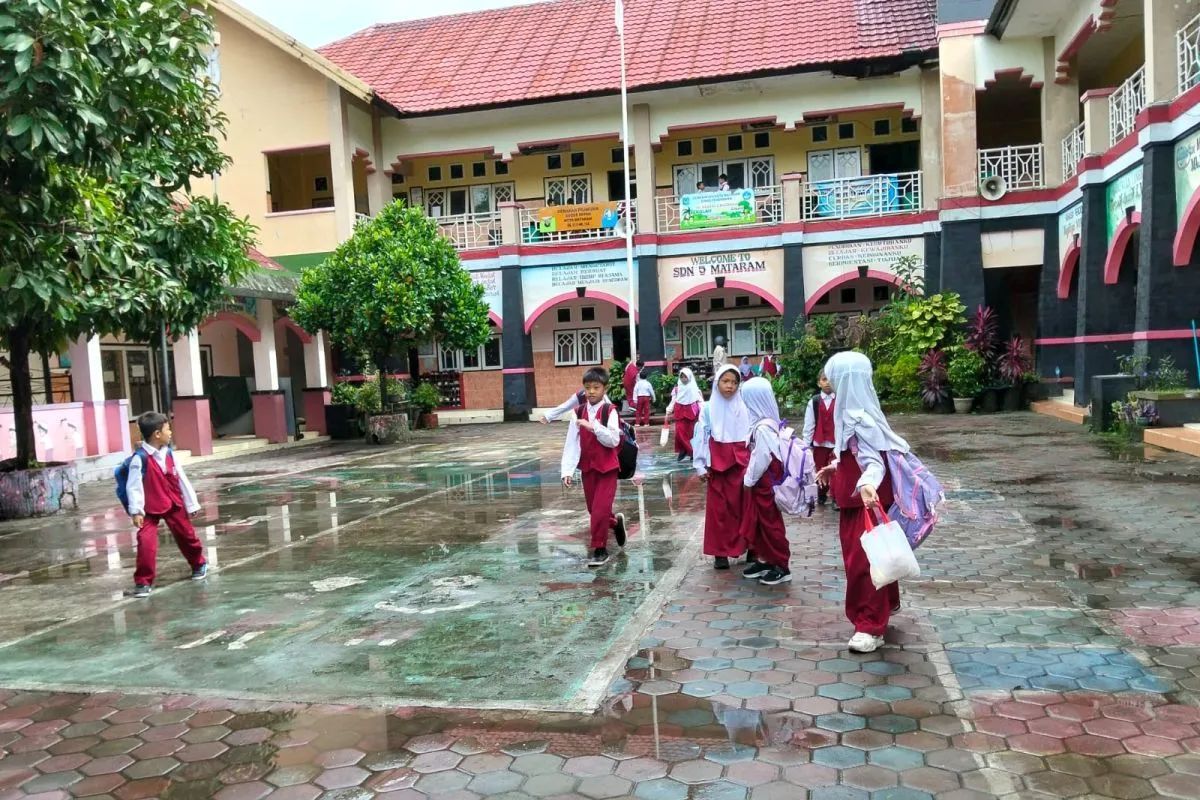
Longer school hours demand physical and mental readiness from students. Without balanced creative teaching methods, boredom becomes a real risk.
Mataram (ANTARA) - The debate over the number of school days is not a new issue in the world of education. In various regions, discussions between five-day and six-day school weeks often arise as part of efforts to find a balance between learning effectiveness, student quality of life, and the readiness of the education system itself.
The question is simple, but the answer is never singular: is denser learning in five days better, or is the more relaxed rhythm of six days more ideal for children?
Amid this debate, the city of Mataram in West Nusa Tenggara (NTB) presents an interesting picture. Since the beginning of 2026, the education rhythm in this city operates in two different patterns.
On one side of the city, primary and secondary school students return home later, closing the learning day in a dense five-day schedule. On the other side, madrasahs have revived the old six-day school rhythm, with Saturday remaining a learning day.
These two patterns run concurrently, posing an important question to the public: which is more appropriate for Mataram’s children?
The five-day school policy trialled since January 2026 in public schools has received a fairly positive response. The Mataram City Government is even preparing regulations to make it permanent starting from the 2026/2027 academic year.
On the other hand, the Mataram City Ministry of Religious Affairs Office has stopped a similar trial in madrasahs and returned to the six-day school system since mid-February 2026.
These two policy directions are not merely technical differences, but reflections of the complexity of educational issues in a continuously growing region.
Behind these differences lies a reality that is not simple. Education is not just about school days, but about classrooms, children’s time, the role of families, and the system’s ability to adapt.
This is where this article becomes important, to delve deeper into what is actually happening.
Learning Dynamics