
Between an emergency brake and limits on children's digital expression on social media
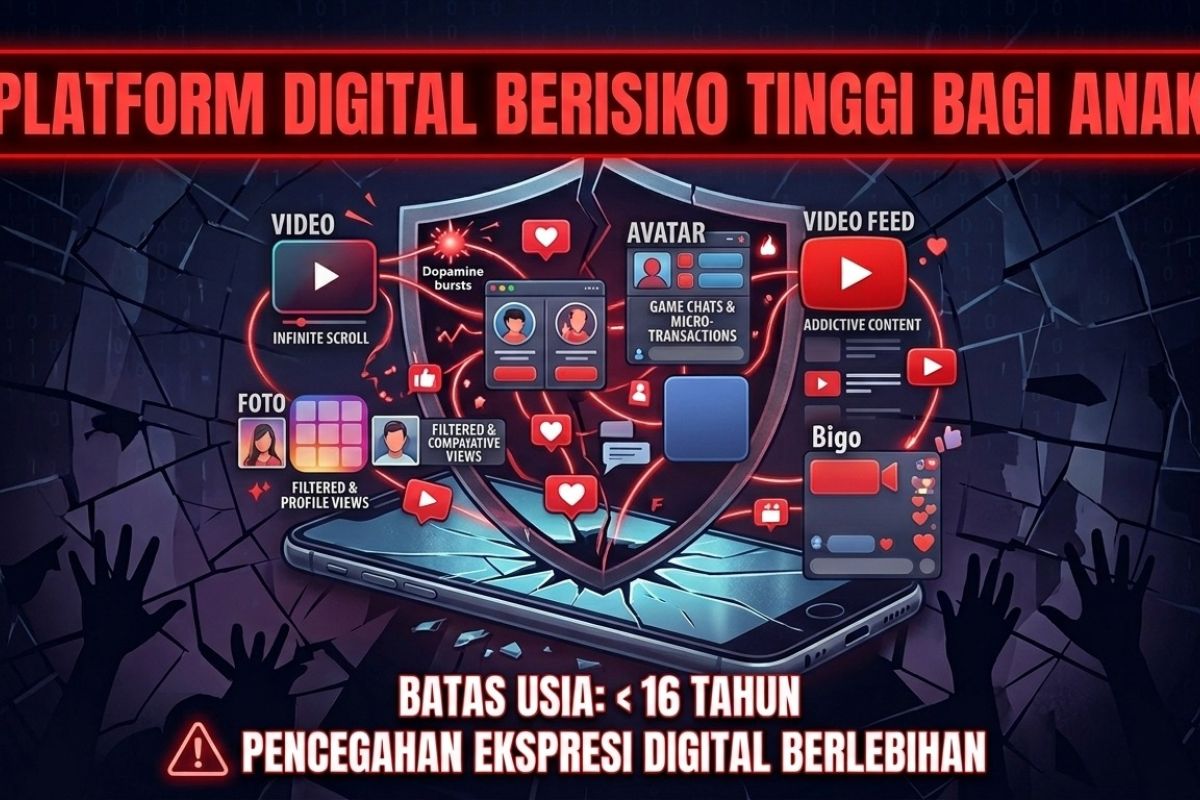
Surabaya (ANTARA) – The government has officially issued Ministerial Regulation on Communications and Digital Affairs (Permen Komdigi) No. 9 of 2026 governing a staged deactivation of access to social media for children under 16 on high-risk digital platforms. The regulation is the implementing rule for Government Regulation (PP) No. 17 of 2025 on the Governance of Electronic System Administration in the Protection of Children, known as PP TUNAS. Through the policy, the government provides technical guidelines for operators of digital platforms to fulfil obligations to protect Indonesian children in cyberspace. A platform, in this context, refers to internet-based systems that facilitate interaction, transactions, and distribution of content in the online space. The regulation stipulates that accounts owned by children under 16 on high-risk digital platforms will be progressively deactivated. The policy is scheduled to take effect on 28 March 2026. Several platforms categorised as high risk include YouTube, TikTok, Facebook, Instagram, Roblox, and Bigo Live. This categorisation is not solely based on the type of content circulating, but also on the platform’s digital architecture designed to maximise user engagement. Platforms such as TikTok, Instagram and Roblox employ psychology-driven approaches to increase watch time. For children lacking cognitive maturity, such mechanisms can yield negative effects, including digital addiction and even psychological disorders.
Global policy trend
Indonesia’s move is not unique globally. A number of countries have previously introduced similar restrictions. Australia has been a pioneer, implementing a ban on access to social media for children under 16, with regulations that took effect on 10 December 2025. The ban applies to platforms including TikTok, Instagram, X, Facebook and Snapchat. Parental consent cannot serve as an exemption under this policy. Platforms contravening the rule can face penalties of up to AUD 50 million. Meanwhile Denmark reached a political agreement in November 2025 to limit social media usage for children under 15, aimed to become law by mid-2026. The country even uses a national digital identity verification system to confirm users’ ages. Rise in cases The policy of delaying access to social media for children comes amid rising cases involving minors in the digital space. UNICEF data show about 50 per cent of Indonesian internet-using children have been exposed to sexual content on social media, while 42 per cent report feeling scared or uncomfortable due to experiences in the digital space. A joint report by the Ministry of Communications and Digital and the National Center for Missing and Exploited Children (NCMEC) shows high levels of online child sexual exploitation (OCSE) in Indonesia.