
Besides Healthcare Workers, PAPDI Recommends Measles Vaccine for Vulnerable Groups
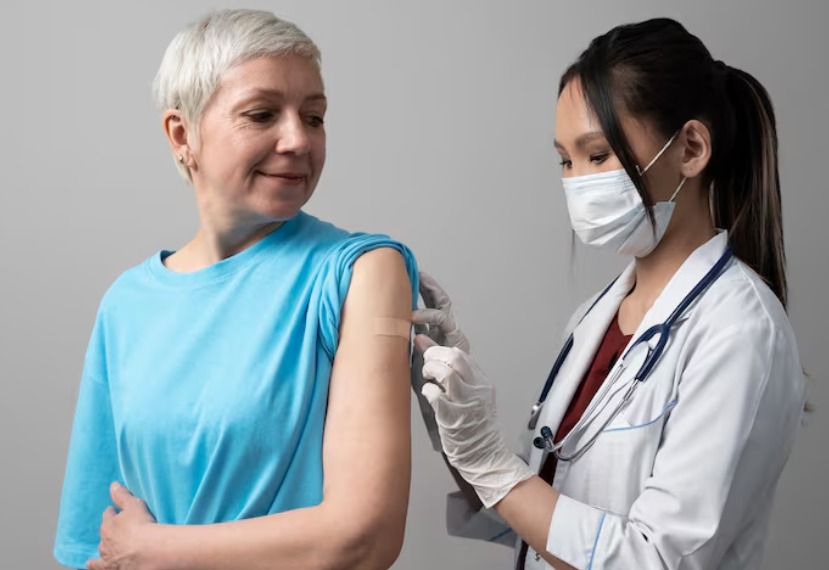
The Indonesian Society of Internal Medicine (PAPDI) has issued recommendations for vulnerable groups to receive the measles vaccine.
Chair of the Adult Vaccination Task Force of PAPDI, Soekamto Koesnoe, explained that there are two groups at risk of contracting the disease: those with low or weakened immune systems or with comorbidities such as diabetes mellitus, hypertension, autoimmune diseases, people with HIV, including the elderly.
Other recommendations are also given to groups that may or could transmit to those comorbid groups. Such as people caring for elderly parents, people caring for those with weakened immune systems, including healthcare workers.
“Healthcare workers fall into both categories; if they fall ill, they will transmit it to their patients, and likewise, if a patient is ill, they will contract it. If their immune system is then low or weak,” said Soekamto during a press conference in Jakarta on Wednesday (8/4).
Soekamto stated that people who are fatigued or overloaded, stressed, with poor eating habits, and inadequate hygiene can lower their immune system and become susceptible to measles.
“With the availability of the Bio Farma vaccine product, which is not only a domestic product but also more affordable, it can be given to more people. We certainly encourage it to be extended to adults who need it,” he revealed.
It is known that the Food and Drug Supervisory Agency (BPOM) has officially issued permission for the use of the measles vaccine produced by PT Bio Farma for adults.
The Ministry of Health records 39,212 medical personnel and around 2,000 healthcare workers in 14 provinces with the highest measles cases who will become the primary priority.
The West Java Health Office is striving to break the chain of transmission, increase immunisation coverage, and protect vulnerable groups, especially children, from the risk of measles complications.
Lestari also highlighted the decline in group immunity or herd immunity as one of the main factors in the increase in measles cases.
Measles cases peaked in the first week of January 2026 with 2,932 suspected cases and 2,220 confirmed cases.
In Tasikmalaya Regency, the spread of measles cases has occurred in Linggawangi Village, Leuwisari Subdistrict, and Mekarjaya Village, Padakembang Subdistrict, up to the status of an Extraordinary Event (KLB).