
Benny K Harman Quotes Tan Malaka: If We Use Mystical Logic, the Country Won't Progress
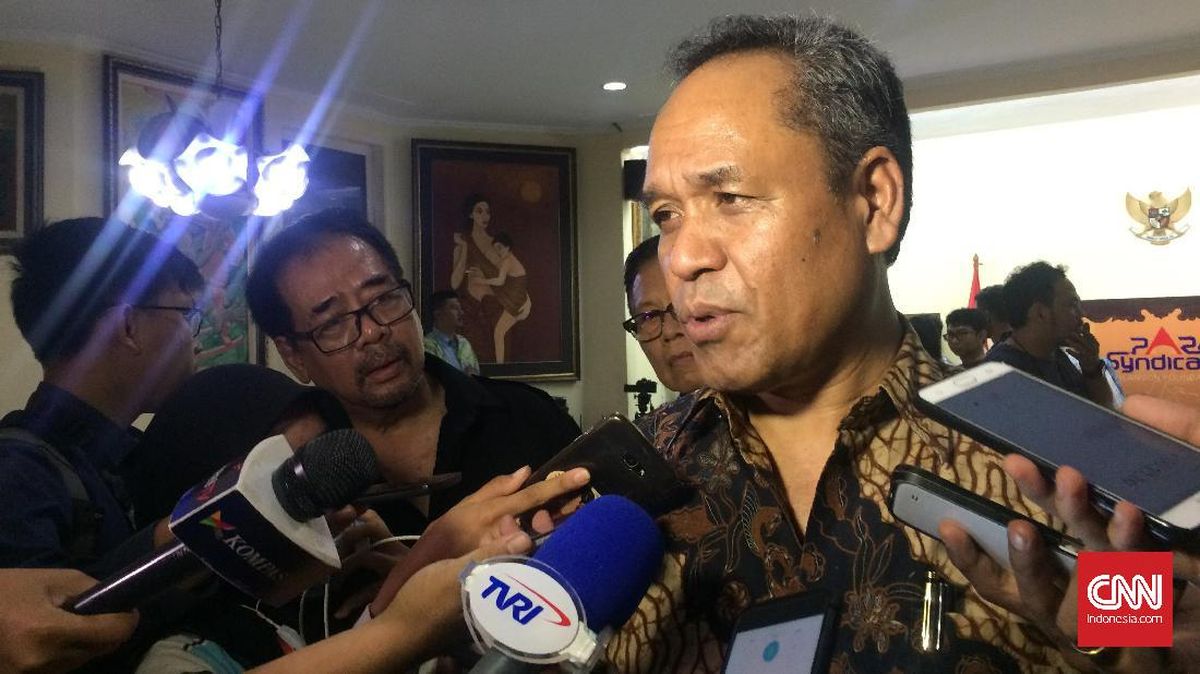
Benny K Harman, a member of Commission III of the DPR from the Democrat Party faction, quoted the ideas of Indonesian independence fighter Tan Malaka during a meeting discussing the Asset Seizure Bill in Commission III of the DPR on Monday (6/4).
The follow-up meeting on drafting the Asset Seizure Bill text invited two legal experts: Heri Firmansyah from Tarumanagara University in Jakarta and Oce Madril, Chairman of the Anti-Corruption Studies Centre (Pukat) at the Faculty of Law, Gadjah Mada University.
According to Benny, one of the purposes of the DPR inviting academics in drafting the bill is to turn the obscure into the clear, and the irrational into the rational.
“Quoting Tan Malaka’s words, what we need from academics is rational logic, not mystical logic,” Benny said.
“If we use mystical logic, our country will never progress. Rational logic is generally developed by our friends in universities,” he added.
On that occasion, Benny said he wanted to get an overview of why the Asset Seizure Bill is considered important. According to Benny, the terminology or nomenclature of asset seizure remains vague and unclear.
He said the term still raises several questions, such as who is given the power to seize, and what is being seized.
“What is the state’s legitimacy to seize someone’s wealth, right?” he said.
In addition, Benny also questioned who would manage the seized assets. Including who oversees the institution designated to carry out the seizure.
“These are academic questions that must be answered by the resource persons,” Benny said.
According to him, the DPR is not an academic institution, but a political one. Therefore, academics must provide several rational options for the DPR.
“So that we in the DPR can make choices, called rational choice, in the law-making process,” Benny said.
In their presentations, the experts provided input on the substance of the Asset Seizure Bill before it is officially discussed with the government.
Oce Madril, for example, hopes that the Asset Seizure Bill does not only regulate seizure, but also ensures that asset management provides economic value to the state.
“Then the second approach that I think should be used is a more balanced approach between how to protect property while also serving the state’s interest in enforcing the law,” Oce said.
Meanwhile, Heri Firmansyah reminded the DPR that the Asset Seizure Bill should not violate private property rights. He assessed that the Asset Seizure Bill is difficult to achieve because it always has issues with equality in law enforcement.
“Because as far as my knowledge and experience, what is quite difficult to achieve in law enforcement is the issue of equality,” Heri said.
In response to the various inputs, Commission III also provided several notes.
Gerindra highlights the presumption of innocence principle
Bimantoro, a member of Commission III of the DPR from the Gerindra faction, highlighted the presumption of innocence principle in the investigation process of alleged corruption cases.
So far, said Bimantoro, law enforcement officials often create public opinion regarding the assets of suspected corruption perpetrators, even though their legal status is not yet clear.
“Now it seems that before anything happens, right at the beginning, issues are already being created, usually by law enforcement officials, issues about assets here and there, so this becomes dangerous,” Bimantoro said.
Therefore, in the future, he encourages the Asset Seizure Bill to set boundaries so that officials cannot build open negative opinions against alleged corruption perpetrators.
“So don’t let it be that just because there is reasonable suspicion, the origin is not yet clear, from where it was obtained, they are already battered in the public space first,” he said.
Golkar discusses assets of deceased defendants
Soedeson Tandra, a member of Commission III of the DPR, raised the issue of asset seizure for perpetrators who have died. According to Soedeson, the law so far stipulates that criminal penalties are extinguished if someone dies.
He said the future Asset Seizure Bill must regulate this properly. Therefore, he proposed that asset seizure for deceased convicts be done in another way, namely asset recovery.
“I agree more with the term asset recovery or in Madurese, asset recovery,” Soedeson said.
However, in practice, this contradicts several regulations. Therefore, such cases must be discussed together.
PKB questions disguised assets
Hasbiyallah Ilyas, a member of Commission III of the DPR, questioned the method of asset seizure for corrupt proceeds that are disguised. Because in many cases, he said, not all of the perpetrator’s assets come from corruption crimes.
“How about corrupt proceeds that are disguised?” Hasbiyallah said.
According to him, there are many different perceptions in society compared to officials. For the public, asset seizure is interpreted as an effort to impoverish corruptors.
However, for some circles, especially state officials, not all assets come from corruption proceeds.
“They understand that asset seizure means taking everything, impoverishing everything, even if it is our own assets, not from corruption proceeds, for example,” Hasbiyallah said.
PDIP responds to proposal for special agency under the President
A member of Commission III of the DPR from the PDIP faction said that they will consider the proposal for a special agency authorised to execute asset seizures in the Asset Seizure Bill.
According to Safaruddin, the Asset Seizure Bill in principle will be carried out by law enforcement officials. However, the Asset Seizure Bill will only apply if the investigation process does not go well.
“When the criminal act does not proceed well, then the Asset Seizure Law applies, yes, death, fleeing, we will detail it later,” Safaruddin said.
The Asset Seizure Bill, which has been proposed since 2008, has not been passed due to a lack of political priority in the DPR, the complexity of legal synchronisation (especially related to the Criminal Procedure Code), and caution.