
Bengkulu Provincial Government and Bappenas Strengthen Low-Carbon Development Collaboration
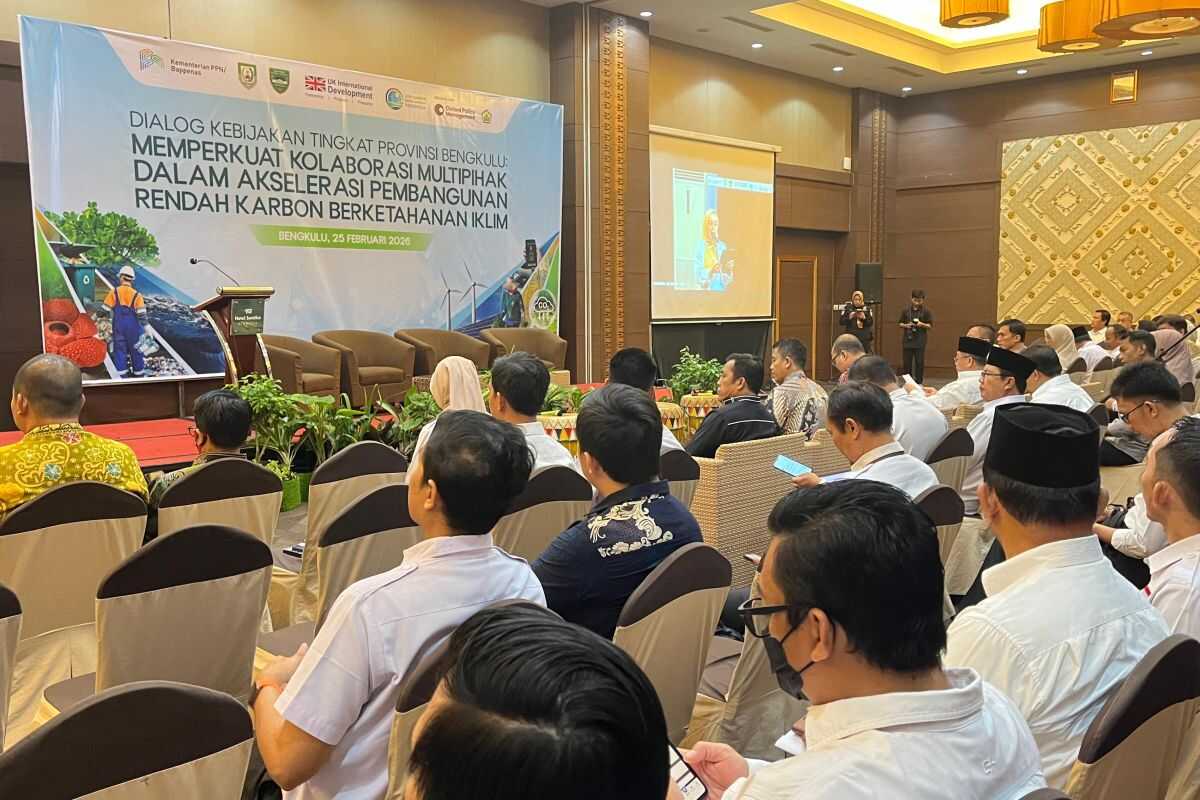
Bengkulu (ANTARA) - The Bengkulu Provincial Government is strengthening collaboration with the Ministry of National Development Planning (Bappenas) to accelerate low-carbon development and climate resilience in the region.
“Low-carbon development is not merely an environmental agenda, but a green economic transformation strategy that creates employment and improves community welfare,” said Deputy Minister for Food, Natural Resources and Environment at the Ministry of National Development Planning Leonardo A. A. T. Sambodo in Bengkulu on Wednesday.
He stated that low-carbon development is part of the national strategy towards Net Zero Emissions 2060 or earlier. According to him, the success of this agenda heavily depends on implementation at the regional level through policy integration in planning documents such as the Long-Term Regional Development Plan (RPJPD), Medium-Term Regional Development Plan (RPJMD) and regional budgets (APBD).
Leonardo emphasised that regional governments play a crucial role in ensuring low-carbon development principles are truly implemented so that benefits are directly felt by communities.
“We want economic growth to increase, but development must not come at the expense of the environment. We must not let Golden Indonesia 2045 become Anxious Indonesia,” he said.
Sambodo stressed that synergy between central and regional government must be strengthened so that policies are not merely planning documents but consistently implemented in the field.
Bengkulu Provincial Secretariat Assistant II Raden Ahmad Denni stated that the provincial government has followed up on national commitments through a memorandum of understanding with the Ministry of National Development Planning signed on 15 August 2023, and has established a Low-Carbon and Climate-Resilient Development Document through Provincial Regulation Number 36 of 2025.
“We must balance economic utilisation and environmental conservation so that benefits are felt by current and future generations,” said Denni.
According to him, multi-stakeholder collaboration is key to accelerating green economic transformation in Bengkulu so that low-carbon and climate-resilient development can proceed sustainably.