
Bengkulu builds 172 kilometres of road to support national agenda from regional level
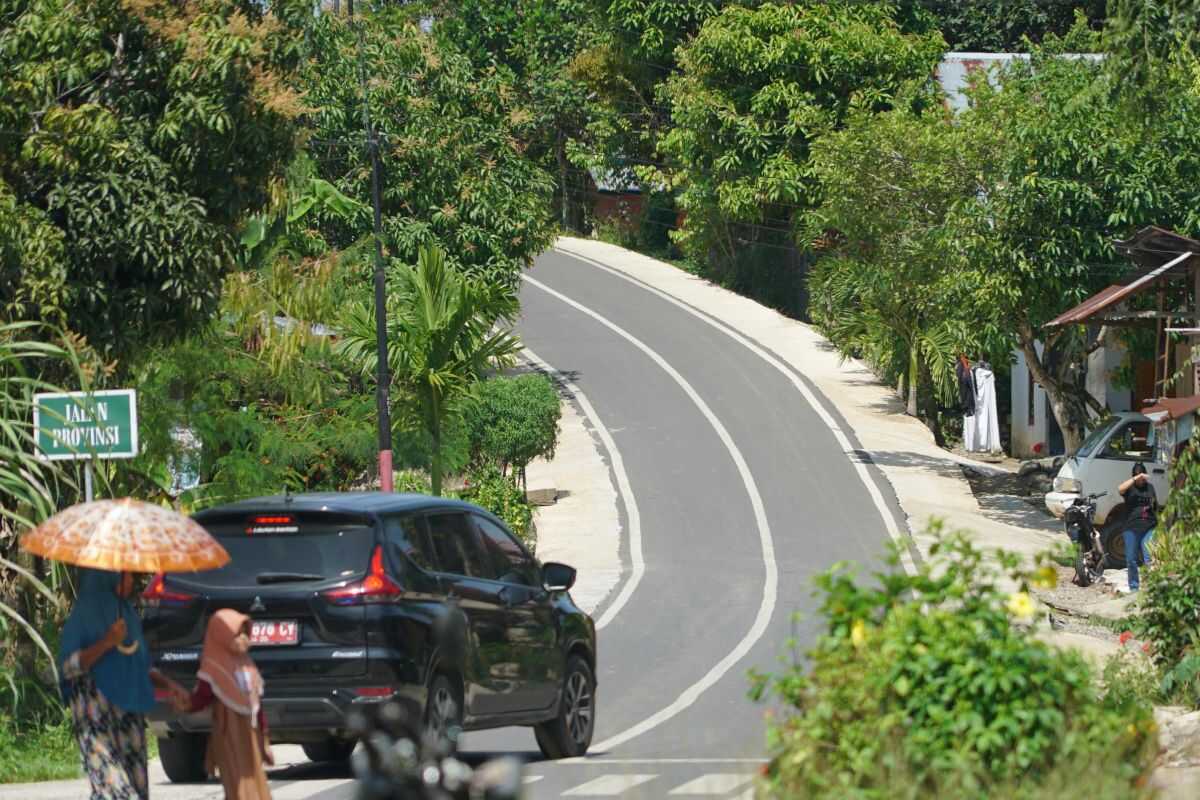
Across numerous provincial road sections in Bengkulu, the transformation is evident. Routes previously characterised by waves of deterioration and potholes are gradually being replaced by new asphalt surfaces. Vehicles that previously required slower speeds can now travel more stably, and travel times between regencies are progressively reducing.
For the community, provincial roads are far more than mere connectors between administrative divisions. These routes serve as primary channels for goods distribution, enabling resident mobility, educational access, and connectivity to referral health and social facilities.
Geographically, Bengkulu is situated on the western coast of Sumatra, bordering West Sumatra to the north, Jambi and South Sumatra to the east, and Lampung to the south. To the west, the region directly faces the Indian Ocean with a coastline extending approximately 525 kilometres. The terrain of the province, now nicknamed the Red and White Land, is predominantly dominated by the Bukit Barisan mountain range, which makes connectivity a unique challenge.
Provincial roads play a strategic role as connectors between major regions and regional distribution hubs. Economic inequality frequently originates from severed access. When roads deteriorate, logistics costs surge, commodity prices lose competitiveness, and public services slow. Within this context, road infrastructure becomes more than merely a physical project.
The Bengkulu Provincial Government for the 2025–2030 period has therefore established resolving access issues as a policy priority, with clear focus on strengthening provincial roads as the backbone of regional mobility.
Through the “smooth roads” programme, the provincial government has taken a bold step by allocating nearly Rp600 billion from the 2025 provincial budget. These funds are directed towards rehabilitating 22 provincial road sections distributed across nine regencies and one city.
This budget represents the largest allocation designated for road infrastructure development in a single-year period since Bengkulu became an autonomous province on 18 November 1968.
From this programme, road development and quality improvement have been realised across approximately 172 kilometres. Priority sections falling under provincial authority have been repaired and upgraded to strengthen inter-regional connectivity. Upon completion, several strategic routes now support vehicle flow considerably more effectively. However, this development does not halt merely at resolving access issues alone.