
Benefits for Domestic Workers Following DPR's Approval of the PPRT Law
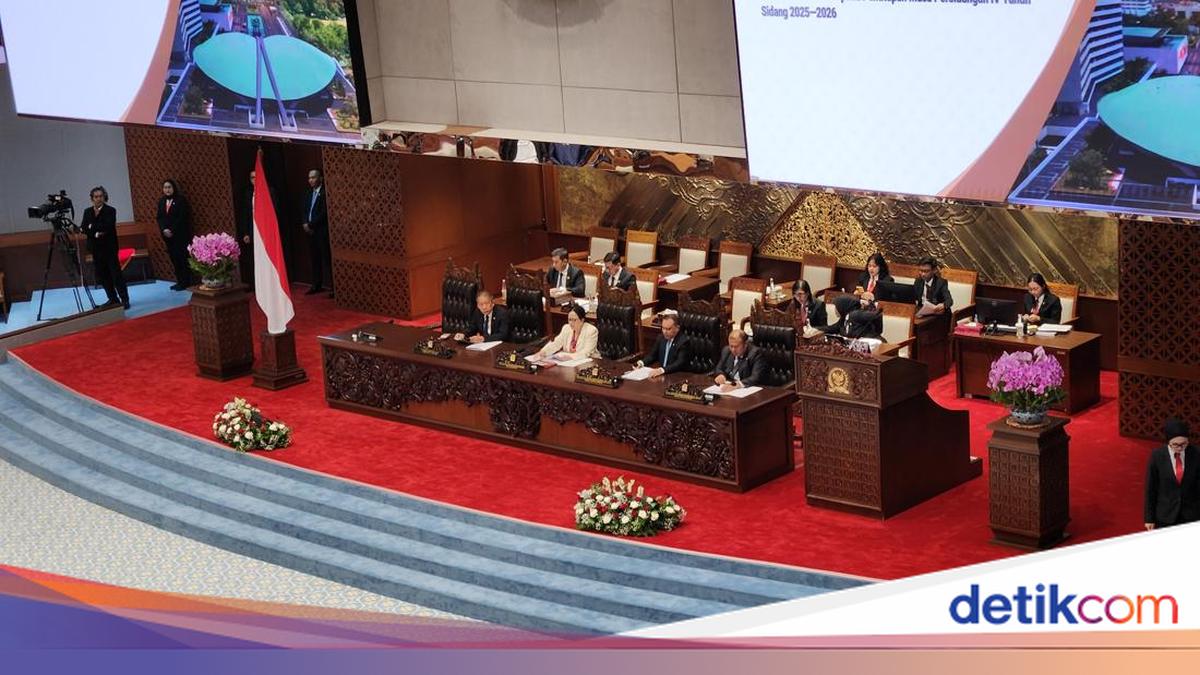
Indonesia’s House of Representatives (DPR RI) has officially enacted the Domestic Workers Protection Bill (RUU PPRT) into law. This legislation regulates the entitlements for domestic assistants (ART).
The approval of the RUU PPRT as law took place in the plenary session room at DPR RI, Senayan, Jakarta, on Tuesday (21/4/2026). The RUU PPRT was officially enacted as law around 11:30 WIB.
The balcony of the plenary session room was lively ahead of the approval of the RUU PPRT as law. The domestic workers’ community enthusiastically welcomed the moment when the session chair questioned whether the RUU PPRT could be approved as law.
“Has the time come for us to request the approval of the factions for the Domestic Workers Protection Bill. Can it be approved and enacted as law?” asked Puan.
“Agreed,” responded the House members, accompanied by applause and joyful cheers from the domestic workers present in the plenary session.
Minister of Law Supratman Andi Agtas also welcomed the commotion in the plenary session. He noted that the approval of the RUU PPRT as law was joyfully received by the factions on the balcony.
“Those we respect, the ‘balcony faction’, who today are happy with the approval of this bill,” said Minister Supratman, greeted again with applause from the domestic workers’ community on the balcony.
Protecting Vulnerable Women
DPR member from the Golkar Faction, Nurul Arifin, assessed the Domestic Workers Protection Bill (RUU PPRT) as a concrete step by the state in protecting women. Nurul stated that the RUU PPRT is an effort to side with women as a vulnerable group.
“I view the presence of the RUU PPRT as a concrete step by the state in translating the spirit of Raden Ajeng Kartini into policies that favour vulnerable women’s groups, especially domestic workers,” said Nurul Arifin in his statement on Tuesday (21/4/2026).
The Golkar Party politician highlighted the long process before the RUU PPRT was approved. According to him, the approval demonstrates the DPR’s commitment to delivering justice for domestic workers.
“I welcome the struggle that has been ongoing since four periods ago. This shows the collective commitment of the DPR and all stakeholders to bring justice for domestic workers,” he said.
Nurul noted that the substance of the law is an important milestone in eradicating exploitative practices that have long shadowed domestic workers, the majority of whom are women.
“If we talk about empowered women, they must have certainty of rights, including full wages and social protection. There should no longer be practices of wage deductions or placements that disadvantage them,” she emphasised.
Meanwhile, Deputy Speaker of the DPR Sufmi Dasco Ahmad emphasised that social security for domestic workers (PRT) will be regulated in a government regulation (PP).
“(Social security) will be in the PP, right? There will be a PP later, regulated in the PP,” said Dasco to reporters.
Dasco also mentioned that social security could potentially be covered by the state. The Gerindra Party’s daily chairman stated that his side would propose this concept to the government.
“Yes, we’ll try to propose it, so it’s regulated in the PP,” he said.
In the draft of the RUU PPRT received by detikcom on Tuesday (21/4/2026), it is explained that the Domestic Workers Placement Company, hereinafter referred to as P3RT, is a legal entity business that has obtained a business licence to provide domestic workers placement services.
Protections Related to Wages
The P3RT is bound by several regulations. Among them, it is prohibited from deducting domestic workers’ wages or withholding personal documents. This is affirmed in Article 28.
Article 28
- P3RT is prohibited from:
deducting Wages and/or collecting fees in any form or for any reason from prospective domestic workers and domestic workers;
withholding original personal documents and/or obstructing communication access from prospective domestic workers and domestic workers;
placing domestic workers with business entities or other institutions that are not individual employers; and/or
forcing prospective domestic workers and domestic workers to continuously be bound by the Placement Agreement after the agreement period ends.
Furthermore, it is explained that P3RT can be subject to sanctions if it violates some of these prohibitions. Sanctions range from warnings to licence revocation.
P3RT that violates the provisions as referred to in paragraph (1) and Article 21 shall be subject to administrative sanctions.
The administrative sanctions as referred to in paragraph (2) consist of:
warning;
written reprimand;
restriction of business activities;
suspension of business activities;
temporary or complete cessation of business activities; and/or
licence revocation.
Domestic Workers Entitled to Social Security and Leave
Furthermore, this law also regulates the rights of domestic workers. Domestic workers are entitled to social security and leave as per agreements.
Article 15
- Domestic workers are entitled to:
practising their religion and beliefs;
working with humane working hours;
obtaining rest time;
obtaining leave in accordance with the Agreement or Employment Contract;
obtaining wages in accordance with the Agreement or Employment Contract;
obtaining religious holiday allowances in the form of money in accordance with the Agreement or Employment Contract;
obtaining health social security in accordance with applicable laws and regulations;
obtaining employment social security in accordance with applicable laws and regulations;
obtaining social assistance from the Central Government in accordance with applicable laws and regulations;
obtaining healthy food;
obtaining decent accommodation for full-time domestic workers;
terminating the employment relationship if the employer does not fulfil the Agreement or Employment Contract;
obtaining a safe and healthy working environment; and
obtaining other rights in accordance with the Agreement or Employment Contract.
Wages and religious holiday allowances as referred to in paragraph (1) letters e and f shall be given in accordance with the amount and payment time that have been agreed upon or in accordance with the Employment Contract.
Further provisions regarding the amount and payment time of Wages will be