
Bekasi Regency Government Backs Subsidised High-Rise Flats for Low-Income Households
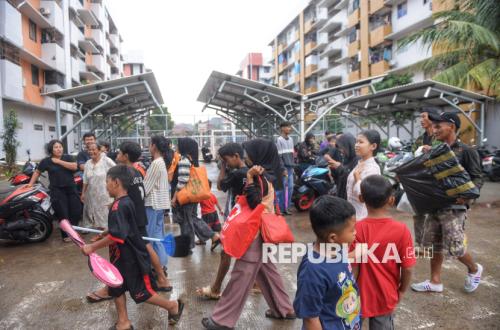
Bekasi Regency Government in West Java supports the construction of subsidised high-rise housing in the Lippo Cikarang area intended for low-income communities as part of the Three Million Homes Programme of President Prabowo Subianto. Acting Regent Asep Surya Atmaja said the regional government stands ready to support accelerating the development of subsidised high-rise housing for the people through collaboration between the central government and the private sector. ‘We welcome the construction of subsidised flats in this Meikarta area as part of supporting the national priority programme to provide three million homes for the public,’ he said in Cikarang on Sunday. He assured that the local government is ready to facilitate the acceleration of the development process both in licensing aspects and other technical matters so that the government’s strategic programme to eliminate the housing backlog can be realised soon. ‘The Bekasi Regency Government is ready to support so that this programme can run well and bring benefits to the people,’ he added.
Housing and Settlements Minister Maruarar Sirait also asked for the assistance and support of provincial and district governments to accelerate the realisation of subsidised high-rise housing in Bekasi Regency. He said the collaboration that has been ongoing can achieve faster development so that the target of at least three million units per year, as directed by the President, can be fulfilled. ‘So far our synergy has been very good, and we ensure that the acceleration of this development is the result of a super team, not Superman,’ he said. He also admitted that the stages of planning for subsidised flats have gone through a long process, including ensuring legal certainty for all parties involved. ‘This process did not happen today alone. I have visited the site several times to ensure various things, especially legal certainty for the public, banking sector, developers and prospective buyers,’ he said.
Ara emphasised that legal certainty is a crucial factor in housing development, especially for people who will buy subsidised homes. Without legal certainty, people are hesitant to purchase these housing products.
Chair of the Housing Task Force and Special Envoy to the President of Indonesia, Hashim Djojohadikusumo, described the subsidised flats project as an important momentum in accelerating housing provision for those who do not have a home. ‘In the holy month of Ramadan we are witnessing a very good momentum. I think it is not an exaggeration to call today’s event a historic moment,’ he said. He explained that the development is supported by private sector contributions, with land donated covering more than 30 hectares to the government for use as public housing. ‘The land will be used to build housing for those who do not own a home. From this area it is hoped that around 140,000 apartment units can be built for the public,’ he said.