
Beijing: Xi Jinping and Trump to Discuss Several Key Issues
Beijing (ANTARA) - China’s Foreign Ministry has not yet disclosed the specific topics to be discussed by President Xi Jinping and US President Donald Trump during their meeting in Beijing as part of Trump’s state visit to China on 13-15 May 2016.
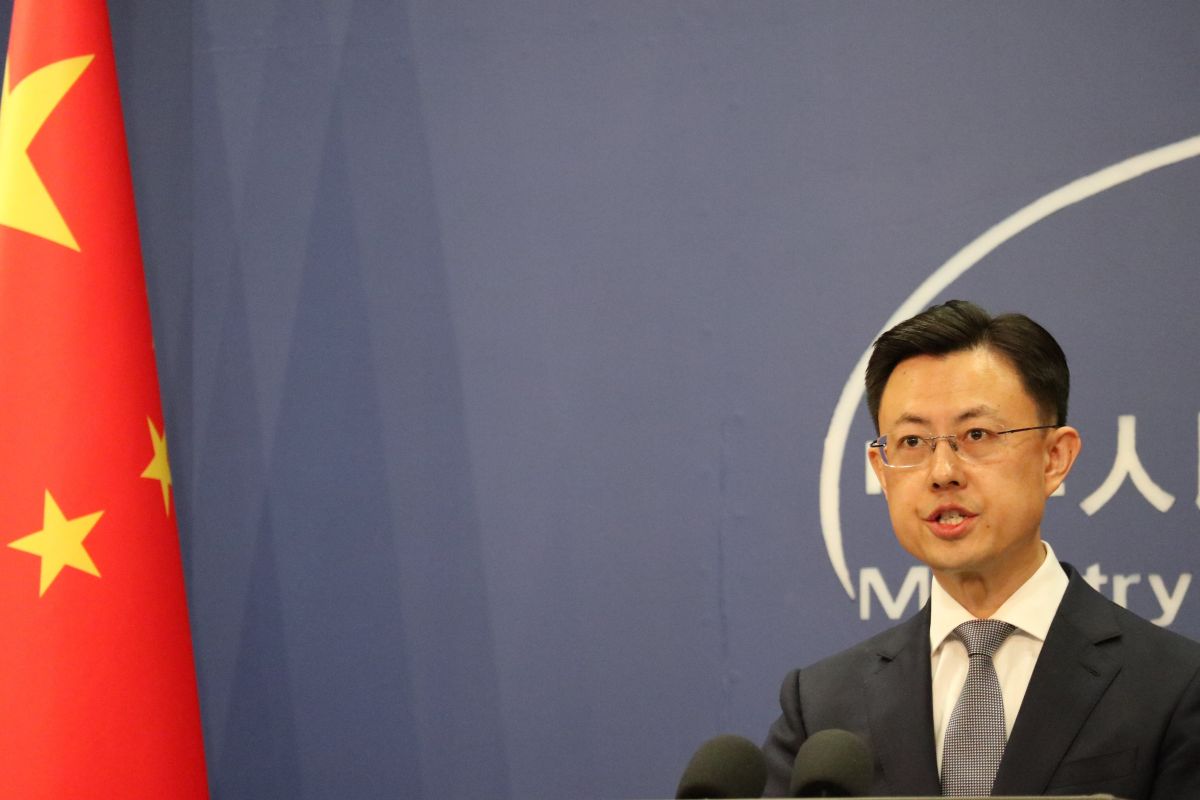
“During President Trump’s visit to China, the two heads of state will conduct in-depth exchanges of views on major issues concerning China-US relations and world peace and development,” said Spokesperson for China’s Foreign Ministry Guo Jiakun at a press conference in Beijing on Tuesday (12/5).
However, Guo Jiakun did not elaborate on what exactly is meant by those “major issues”.
Previously, President Donald Trump stated that arms sales to Taiwan and the fate of imprisoned Hong Kong media businessman Jimmy Lai would be on the agenda for the meeting in Beijing.
When asked about Washington’s long-standing support for Taiwan’s defence, Trump said, “I will discuss that with President Xi. President Xi wants us not to discuss it, and I will discuss it; it is one of many things I will talk about.”
The Trump administration is reported not to have proceeded with arms deliveries after a $11 billion US arms package for Taiwan was approved in December 2025.
Last Friday (8/5), Taiwanese lawmakers approved a special defence budget of $25 billion US to purchase missiles and other weapons from the US, far below the $40 billion US sought by the Taiwanese government.
In addition, Trump also said he plans to advocate again for Jimmy Lai’s release. In February 2026, a Hong Kong court sentenced Lai to 20 years in prison on charges of colluding with foreign powers during the large demonstrations in Hong Kong in 2019.
“Jimmy Lai, he caused a lot of chaos for China. He tried to do the right thing. He didn’t succeed, was imprisoned, and people want him released, and I also want to see him released,” Trump said on Monday (11/5).
Trump had expressed the same during his meeting with President Xi on the sidelines of the APEC Summit in South Korea in October 2025.
“China’s firm opposition to US arms sales to the Chinese territory of Taiwan is consistent and clear. Regarding the case of Lai Chee-ying, China has clarified its position more than once,” added Guo Jiakun.
Jimmy Lai, also known as Lai Chee-ying, is, according to Guo Jiakun, the main instigator and perpetrator behind the riots that shook Hong Kong. “Hong Kong affairs are China’s internal affairs. The central government of China firmly supports the Hong Kong judicial authorities in carrying out their duties in accordance with the law,” added Guo Jiakun.
He also noted that China-US economic and trade relations are fundamentally mutually beneficial.
“The two countries need to work together to realise the important common understanding between the two presidents and provide greater stability for China-US economic and trade cooperation as well as the global economy,” stated Guo Jiakun.
Jimmy Lai is the founder of the now-closed newspaper Apple Daily, convicted of charges of colluding with foreign powers, endangering national security, and conspiracy to publish seditious materials.
The 78-year-old man has been detained for more than five years and was subsequently sentenced to 20 years in prison, the heaviest penalty under the National Security Law newly implemented in 2020.
In addition to Taiwan and Jimmy Lai, agricultural issues are expected to be discussed, given that China has drastically reduced its dependence on US agricultural products since Trump’s first term, buying only about 20 percent (around $4.5 billion US) of its soybean needs from the US in 2024, down from 41 percent in 2016.
US media reported that markets in the US are awaiting clarity on whether China will fulfil last year’s commitment to purchase 25 million metric tons of soybeans annually until 2028, which would be the largest amount since 2022.
Trump is also reported to be bringing 16 CEOs and executives from US companies, including Larry Fink (CEO and co-founder of BlackRock), Stephen Schwarzman (CEO and co-founder of Blackstone), Kelly Ortberg (CEO of Boeing), Brian Sikes (CEO of Cargill), Jane Fraser (CEO of Citigroup), and Jim Anderson (CEO of Coherent).
Then Larry Culp (CEO of GE Aerospace), David Solomon (CEO of Goldman Sachs), Jacob Thaysen (CEO of Illumina), Michael Miebach (CEO of Mastercard), Dina Powell McCormick (President and Vice Chair of Meta), Sanjay Mehrotra (CEO of Micron), Cristiano Amon (CEO of Qualcomm), Elon Musk (CEO of Tesla and SpaceX), and Ryan McInerney (CEO of Visa).
These companies are said to have interests in China, for example, Meta had to cancel its acquisition of the AI startup Manus worth more than $2 billion US because Beijing tightened oversight of US investments in domestic startups developing cutting-edge technology.
Meanwhile, Tesla is currently seeking approval from Chinese authorities to expand adoption of its Full Self-Driving (FSD) assistance system in the domestic Chinese market.
BlackRock is facing strict scrutiny regarding its planned $23 billion US acquisition of ports, including two ports managing the Panama Canal, from Hong Kong-based CK Hutchison. Beijing is reportedly criticising the acquisition, viewing it as Washington’s attempt to reduce China’s influence in that strategic waterway.
The optical component manufacturer Coherent is working to address Beijing’s export controls on indium and related materials crucial for high-performance optical chips.
Illumina, the US gene sequencing company, is seeking to rebuild its business in China after Beijing lifted the export ban imposed on the company last year. Boeing is reportedly pursuing large aircraft orders from Chinese buyers.
Trump is expected