
Beijing: South China Sea negotiations with ASEAN enter a crucial phase
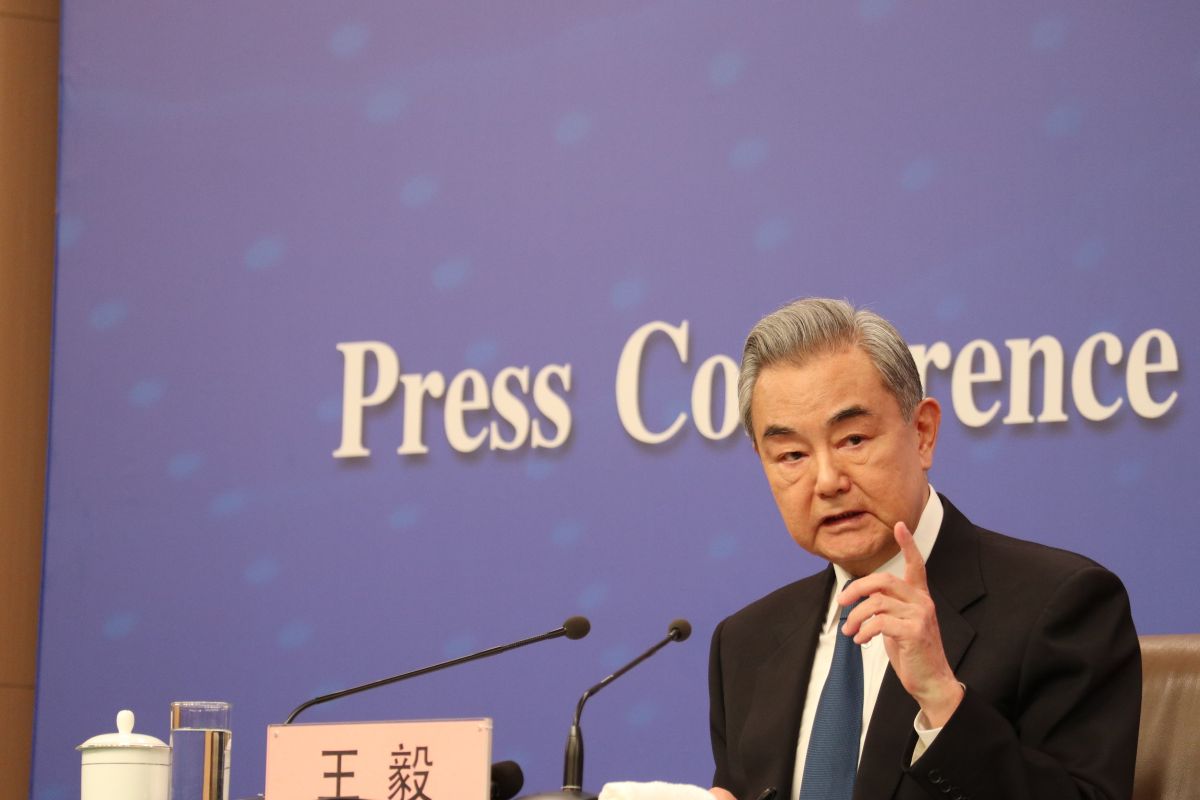
Beijing — Chinese Foreign Minister Wang Yi acknowledged that the negotiation process to find common ground on the South China Sea Code of Conduct with ASEAN member states has entered a crucial phase. ‘By continuing to implement effectively the Declaration of Conduct by Parties (DoC), the negotiations on the South China Sea Code of Conduct have now entered a crucial stage. All parties hope to complete the negotiations within this year,’ Wang Yi said in response to ANTARA’s questions at a press conference on ‘China’s Diplomacy and Foreign Policy’ in Beijing, China, on Sunday.
China says several reefs and islands in the South China Sea, such as the Spratlys (Nansha), Paracel (Xisha), Pratas (Dongsha), Macclesfield Bank (Zhongsha), are part of its territory, but ASEAN members — Brunei Darussalam, Malaysia, Vietnam and the Philippines — also claim the area.
To resolve the dispute in the South China Sea, in 2002, ASEAN and China signed the Declaration of Conduct (DoC) which contains commitment to ‘promote more conducive conditions for peaceful and sustainable solutions to differences and disputes among the relevant countries.’
However, achieving an agreement within the framework of the legally binding Code of Conduct (CoC) has not yet been found.
As the party most frequently experiencing direct clashes with China’s Coast Guard in the South China Sea, the Philippines, which will serve as ASEAN Chair in 2026, has also made the rapid finalisation of the South China Sea CoC a priority agenda.
‘To realise peace and long-term stability in the South China Sea, a robust institutional guarantee is still required. China has the resolve and determination to work with all parties to remove disturbances, seek common ground while managing differences,’ Wang Yi said.
Wang Yi also acknowledged that China wants to reach a consensus as soon as possible.
‘The goal is to provide a truly effective ’golden rule’ for managing differences, building mutual trust, and promoting cooperation among all parties,’ Wang Yi said.
Wang Yi also described the South China Sea as currently the world’s busiest sea lane for cargo traffic but also the safest and with the most guaranteed freedom of navigation in the world.
‘Over the past year, cooperation in the South China Sea has continued to maintain good momentum. China has conducted in-depth discussions with Indonesia on joint development in the sea, held bilateral dialogues with Malaysia on maritime issues, and cooperated with Vietnam in the sustainable development of fisheries,’ Wang Yi explained.
Not long ago, Wang Yi noted that China’s Coast Guard also managed to rescue more than 10 Filipino crew members who were in danger in the South China Sea.
It is known that in 2013, the Philippines brought an arbitration case against China to the Permanent Court of Arbitration in The Hague, Netherlands, leading in 2016 to the Court’s ruling that the 200-mile Exclusive Economic Zone (EEZ) is the Philippines’ right to exploit energy and other resources, but the area overlaps with waters claimed by China as its own.
The ruling also stated that China had violated the Philippines’ sovereign rights and caused ‘serious damage to the coral reef environment’ by building artificial islands, reclaiming land in the waters where the court did not grant any rights to the Chinese government.
However, China never accepted the Arbitration Court’s ruling, saying it violated the fundamental principles of international law because it did not incorporate China’s comprehensive perspective and also violated the DoC previously agreed.