
Beijing Confirms President Trump Will Visit China on 13-15 May
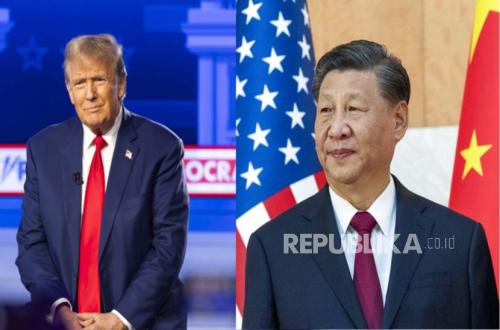
US President Donald Trump is scheduled to pay a state visit to China from 13 to 15 May at the invitation of Chinese President Xi Jinping.
The visit was announced by the spokesperson for China’s Ministry of Foreign Affairs on Monday (11/5/2026). Trump’s trip to Beijing comes amid rising dynamics in relations between the two countries on several strategic issues, ranging from trade, technology, Indo-Pacific regional security, to global geopolitical competition.
The Chinese government has yet to detail the official agenda for the meeting between the two leaders. However, several observers assess that the visit has the potential to become an important momentum in determining the direction of Washington-Beijing relations amid ongoing tensions in recent years.
US-China relations have previously been marked by various tariff policies, technology restrictions, rivalry in the South China Sea, and competition for influence in global strategic industries.
In recent months, Trump has also toughened his rhetoric towards Beijing, including on trade and US national security. Meanwhile, China has repeatedly called for stability in bilateral relations and economic cooperation between the two countries.
The visit is expected to be one of the most watched diplomatic meetings this year, given the positions of the US and China as the world’s two largest economic and geopolitical powers.
Influence Competition
The United States and China are now engaged in the greatest geopolitical rivalry of the 21st century, encompassing trade, technology, military, energy, to the contest for global influence. Washington views Beijing’s rise as a direct challenge to US dominance post-Cold War, while China seeks to expand its influence as a new world power through economy, infrastructure, and military modernisation.
The rivalry between the two countries is evident in the Indo-Pacific region, particularly in the South China Sea and around Taiwan. The US is strengthening security alliances with Japan, South Korea, the Philippines, and Australia to counter China’s expanding influence. On the other side, Beijing is expanding its military strength, building strategic bases, enlarging its naval fleet, and promoting the Belt and Road Initiative project to bolster economic-political influence in Asia, Africa, the Middle East, and Latin America.