
Behind the US Leaving NATO Issue, Here Are the Facts Revealed by Rutte
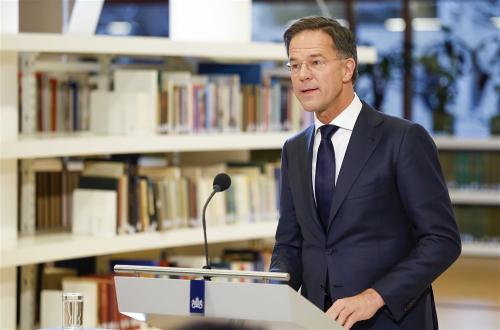
REPUBLIKA.CO.ID, JAKARTA — Speculation regarding the possibility of the United States withdrawing from NATO has resurfaced amid rising global geopolitical tensions. However, NATO Secretary General Mark Rutte has firmly dismissed such narratives.
Rutte described the notion that Washington would leave the North Atlantic Alliance as nonsensical. He assessed that the speculation is more political in nature than reflective of strategic reality.
“I do not see the possibility of the US leaving NATO,” Rutte stated in an interview with the German media outlet Welt am Sonntag, also featured on RT.
This statement emerges amid increasing scrutiny of the United States’ relations with its European allies. In recent years, the internal dynamics of the alliance have indeed faced pressures.
US President Donald Trump is known to have repeatedly issued sharp criticisms towards NATO member countries, particularly regarding defence budget contributions.
Trump has repeatedly stated that many European countries have not met the 2 per cent of gross domestic product defence spending target, as agreed within NATO.
These criticisms have sparked concerns among analysts that America’s commitment to NATO could weaken. In fact, some parties have begun speculating about the possibility of a shift in US foreign policy direction.
However, Rutte affirmed that America’s strategic commitment to NATO remains strong. He views the transatlantic alliance as still the main pillar of global security stability.
According to him, NATO’s existence is not only important for Europe but also for the strategic interests of the United States itself. This relationship is reciprocal and mutually beneficial.
Rutte also highlighted the crucial role of the American nuclear umbrella in safeguarding European regional security. He described this protection as a determining factor in NATO’s collective defence system.
“The American nuclear umbrella is the primary security guarantee in Europe,” he said.
He added that there are no indications that the United States will withdraw this protection in the near future. Instead, the continuity of this commitment is seen as part of Washington’s global strategy.