
Behind the US-Israel versus Iran Conflict, Expert: Trump Seeks to Control Energy Access
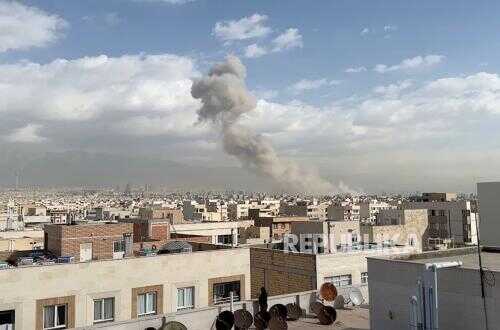
Jakarta — Military attacks launched by Israel and the United States against Iran are not solely related to geopolitics, but also to global economics. Prof Muhammad Faris Al-Fadhat, an international political economy expert from Muhammadiyah University of Yogyakarta, cautioned that the impact of these military operations will be significant for the world’s energy market.
“We must look from a broader perspective, that there is competition for economic resources that is far greater than simply attacking Iran because Israel-US considers Iran as a political enemy. What is actually happening is competition for energy,” Faris Al-Fadhat told Republika.
On Saturday morning, 28 February 2026, the US and Israel launched a combined air strike on several regions in Iran. This unprovoked aggression was carried out following reports that Washington-Tehran negotiations over Iran’s nuclear programme had reached an impasse.
Faris explained that Iran is a country with the world’s third-largest oil reserves. In early January 2026, the US also attacked Venezuela, which holds the world’s largest proven crude oil reserves, with reserves of up to 300 billion barrels, surpassing Saudi Arabia and Iran.
“If we look at Venezuela, it has reserves of between 200 to 209 billion barrels of crude oil, which is equivalent to 12 per cent of the world’s total oil reserves,” Faris said.
The Israel-US conflict against Iran will also have repercussions for China, Washington’s largest economic rival. The conflict has the potential to suppress China’s economy through rising energy prices. This is because, Faris noted, approximately 80 per cent of Iran’s oil has historically been purchased by Beijing.
“If we look at this attack on Iran, global economic conditions are disrupted by the supply of oil from Iran. We will see the chain of effects to China and several other countries. So this supply chain will be somewhat disrupted, meaning the global economy will be somewhat affected,” he said.
For this reason, according to Faris, in the long term the attack on Iran will benefit the US. As Washington successfully achieved in Caracas, regime change is its objective in Iran.
“Precisely as in Venezuela. Regime change will benefit the US in the long term because it will facilitate more dominant economic access to Iran and the Middle East in general,” he concluded.