
Behind the US-Iran Conflict, This Country is Actually 'Harvesting' Energy Profits
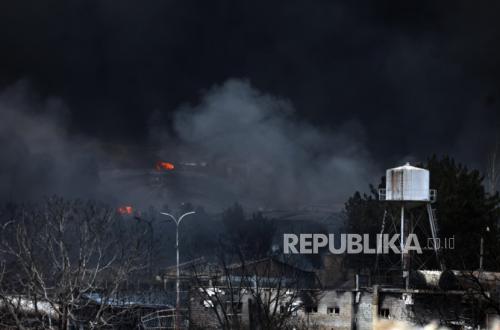
The escalating conflict between the United States and Iran threatens to shake the global economy, triggering inflation spikes and slowing world economic growth. Economists warn that the conflict in the Middle East region could also drive up energy prices and disrupt global logistics chains.
Reports from various international financial institutions show the economic impact of the conflict is already becoming apparent. Investment bank JPMorgan estimates that global gross domestic product (GDP) growth could slow from 2.6 per cent to around 2 per cent if the conflict persists. At the same time, global inflation is estimated to increase from 3 per cent to 4 per cent.
The surge is primarily driven by rising crude oil prices. Tensions in the Gulf region are triggering energy supply disruptions, particularly because the oil shipping route through the Strait of Hormuz is threatened with disruption. This strait carries approximately a quarter of global oil supplies, so any disruption directly affects world energy prices, as reported by Bloomberg and Ria Novosti.
Analysts from Goldman Sachs believe the situation could last quite some time. The institution even raised its projection for Brent crude oil prices for the fourth quarter of 2026 from 66 US dollars to 71 US dollars per barrel. In recent weeks, Brent oil prices have surged more than 30 per cent and approached 100 US dollars per barrel.
The surge in energy prices has immediately impacted global financial markets. Bloomberg reported that world stock markets have lost some of the gains achieved since the beginning of the year due to increased geopolitical uncertainty.
To dampen energy market volatility, the International Energy Agency (IEA) decided to release its strategic oil reserves. IEA Executive Director Fatih Birol stated that approximately 400 million barrels of crude oil would be released onto the market to maintain global energy supply stability.
However, analysts believe this measure can only ease pressure in the short term. Russian Central Bank investment adviser Sergey Varfolomeev assessed that the release of oil reserves would only cover a shortfall in supply for about 20 days from the Persian Gulf region.
According to him, the conflict has created a major energy shock in the global market. Oil production in Persian Gulf countries is estimated to fall by up to 10 million barrels per day. At the same time, tanker shipping rates have increased more than twofold, whilst shipping insurance premiums in some cases have surged by up to 1,000 per cent.
“This creates a real energy shock, comparable to the impact of the pandemic, but with a different character because it stems from a supply reduction,” Varfolomeev said.