
Behind the Title of Grand Ayatollah: Who Is Eligible to Carry It?
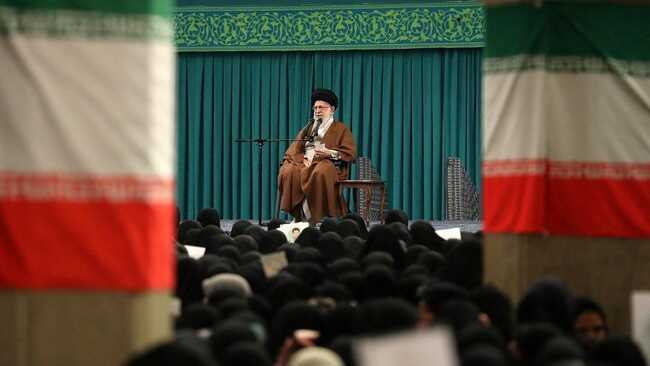
Iran’s Supreme Leader Ayatollah Ali Khamenei died in an attack by the Israeli and American regimes on Saturday, 28 February 2026, local time. Khamenei’s death leaves a significant gap in Iran’s state system, leaving the nation to determine who will become the next “Ayatollah.”
A title often carries the weight of long history and a distinctive intellectual aura, and “Ayatollah” is no exception. Like a beacon on the horizon, the title promises spiritual and legal guidance whilst raising the question: who exactly is deserving of bearing it?
The term Ayatollah originates from Arabic and Persian, formed from “āya” (sign/miracle) and “Allah” (God), literally meaning “sign of God” or “reflection of God” on earth.
Iran’s Supreme Leader is the head of state in Iran who oversees nearly all government functions, either directly or indirectly. This position was established as rahbar (“leader”) in 1979, coinciding with the founding of the Islamic Republic of Iran, which combines elements of democracy with theocratic oversight by Islamic scholars of the Twelver Shia school.
Generally, Ruhollah Khomeini and Ali Khamenei, Iran’s first two rahbars, are often referred to as “ayatollahs.” However, this title actually reflects their status as Islamic scholars, not their political position.
The official title of Iran’s Supreme Leader, rahbar, simply means “leader,” whilst the title of ayatollah is used by many scholars in the Twelver Shia school.
In the Shia religious context, this title is granted to senior Islamic scholars whose capacity reaches the level of mujtahid—those capable of deeply understanding Islamic law and issuing religious rulings based on interpretations of Sharia law.
Not all Islamic scholars can bear this title. Only those who have mastered religious knowledge and are followed by many students and communities are considered worthy.
Before the 1979 Iranian Revolution, only a few prominent Islamic scholars used this title. However, since then, the number has grown from hundreds to thousands as access to religious higher education and the publication of Islamic legal works became institutionalised.
Above the Ayatollah stands the Grand Ayatollah or Ayatollah al-Uzma, who serves as marja’ taqlid, a source of religious reference for the Shia community. They publish works of jurisprudence, a kind of guidebook for religious and social conduct, and their rulings can be followed by millions of adherents.
Prominent figures such as Ruhollah Khomeini and Ali Khamenei are exemplary Ayatollahs. Khomeini, the revolutionary leader of Iran, used this title in his role as both spiritual and political leader. In short, this is not an arbitrary title, but a symbol of legitimacy in religious knowledge and leadership.
In the Shia system, Ayatollahs and particularly Grand Ayatollahs are influential figures.
They can issue religious rulings on socio-political developments, for example on public law and moral guidance. Their rulings are followed by their adherents, and in cases such as Iran, they are involved in legitimising state policies.
The Ayatollah is a high honour in the Shia community, denoting a mujtahid Islamic scholar. Few achieve this level, and even fewer become Grand Ayatollahs. In Indonesia, this title is not common, but understanding its meaning helps us comprehend global religious dynamics.