
Behind the Reasons for India's Withdrawal as COP33 Host Candidate
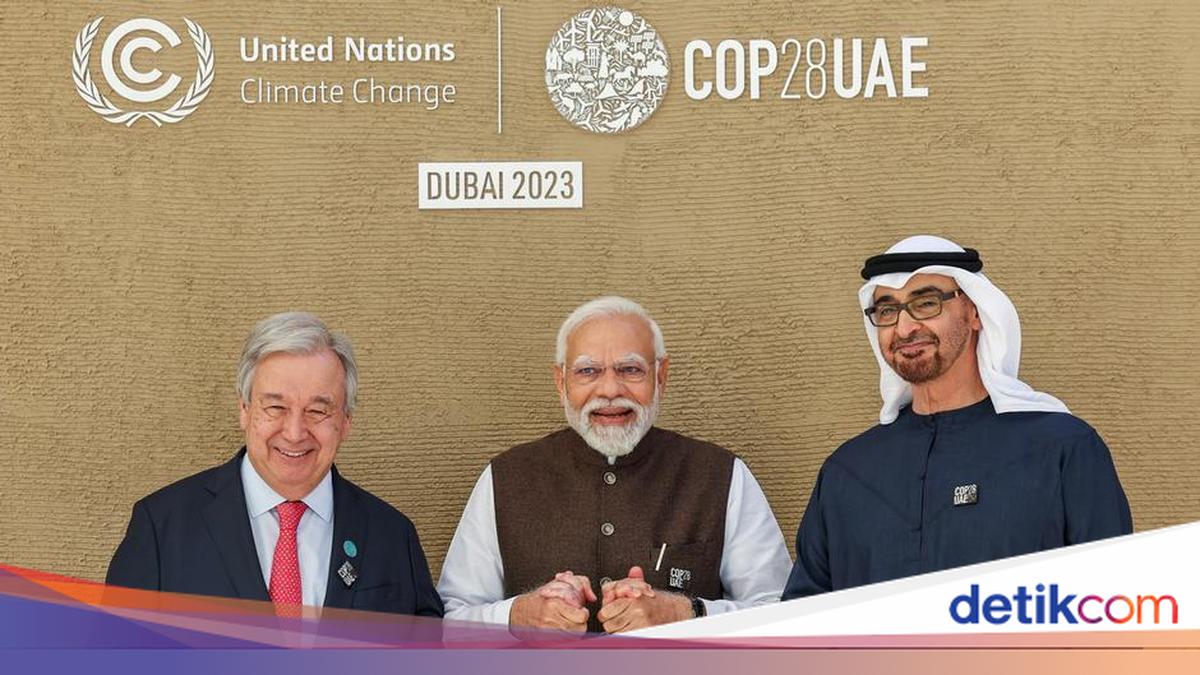
When Prime Minister Narendra Modi appeared at the Dubai Climate Summit in December 2023, he expressed India’s commitment to hosting the climate conference. That moment reflected ambition, as well as a signal that India was ready to take on a leadership role, particularly as the voice and representative of the Global South, a term grouping developing countries.
The candidacy received support from the BRICS group (Brazil, China, India, and South Africa) in July 2025, representing the Asia-Pacific region under the UN.
However, just 18 months later, India quietly withdrew via a brief letter dated 2 April, according to a report by Climate Home News, which first broke the story.
The annual Conference of the Parties (COP) is the UN’s climate forum that brings together 198 parties (197 countries and the European Union) to negotiate and assess progress and responses to climate change.
Hosting this conference is not just about prestige, but also about how a country can potentially influence the agenda, showcase itself diplomatically, and open space to shape the direction of global conversations.
Weakening Climate Consensus
Experts and policy analysts assess that India’s withdrawal reflects a shift in global priorities, where the COP has a lower status than before amid global instability and prioritised national interests domestically. In recent years, the global climate consensus has weakened.
The Paris Agreement, a global pact to reduce the impacts of the climate crisis that requires countries to set voluntary national targets to limit global warming, is increasingly under pressure, particularly with the Trump administration withdrawing the US from the agreement for the second time.
“One of the main reasons for India’s withdrawal appears to be the COP’s continuously declining relevance in driving meaningful global climate action,” said Chandra Bhushan, head of the Delhi-based International Forum for Environment, Sustainability and Technology.
“The loss of trust among countries at the Belem Summit in Brazil, where several nations reneged on previously agreed commitments, seems to have been a turning point,” Bhushan added.
That summit was attended by few participants and had minimal high-level political engagement, including from the US, which conspicuously did not send high-level representatives. Bhushan also highlighted that India has shown its willingness to engage in climate multilateralism.
Recently, India updated its NDC for the 2031–2035 period, the climate action plan under the Paris Agreement. India targets a 47% reduction in emission intensity by 2035, 60% of electricity capacity from non-fossil sources, and an additional absorption of 3.5–4 billion tonnes of carbon dioxide through increased forest cover.
However, there is currently a growing domestic consensus that domestic climate actions will be key to achieving sustainable development.
“This approach is likely to continue until more favourable conditions emerge for more effective multilateral cooperation,” Bhushan said.
In this situation, hosting the summit is no longer seen as beneficial. While its symbolic value remains, the ability to achieve meaningful outcomes or even attract global attention has become less certain.
Bearing the Financial Burden
Abinash Mohanty, head of global climate change and sustainability at IPE Global, an international development organisation, views India’s withdrawal as a pragmatic step.
“First, the global system is not meeting expectations. Developed countries promised to provide US$100 billion (approximately Rp1,700 trillion) per year by 2020 for climate funding, but have repeatedly failed to meet that commitment.
Even new promises like US$300 billion (approximately Rp5,100 trillion) per year until 2035 only cover a small portion of what developing countries need. At the same time, the US has undermined trust in global climate commitments by exiting the Paris Agreement twice,” Mohanty told DW.
For countries like India, which have consistently emphasised climate justice and funding, this imbalance is increasingly hard to ignore, Mohanty added.
According to Mohanty’s estimates, India has performed well domestically by surpassing 50% installed non-fossil capacity, achieving 200-GW installed renewable energy capacity, and reducing emission intensity by more than a third since 2005, largely using its own resources rather than external funding.
Mohanty also assesses that India’s domestic performance is strong. The share of non-fossil electricity capacity has already exceeded 50%, renewable energy capacity has reached 200 GW, and emission intensity has fallen by more than a third since 2005, largely achieved by relying on its own resources, not external funds.
“Hosting COP33 would incur costs. It would mean spending significant funds and political capital to support a global process that, from India’s perspective, may not deliver fair outcomes for Global South countries,” Mohanty said.
“Instead, India is shifting strategy, focusing on platforms it can shape directly, such as the International Solar Alliance and similar coalitions,” he added.
Avoiding the Spotlight
Hosting COP33 would actually place India at the centre of the next global stocktake cycle, a mechanism under the Paris Agreement framework to measure collective progress in curbing emissions and achieving climate targets.
However, this position would also mean sharper scrutiny of India’s coal dependence, its emission trajectory, and the clarity of its energy transition timeline. Despite making significant progress in renewables, India remains a consumer and producer