
Behind the Palace Table: Prabowo, Jokowi and SBY’s Consolidation to Safeguard National Stability
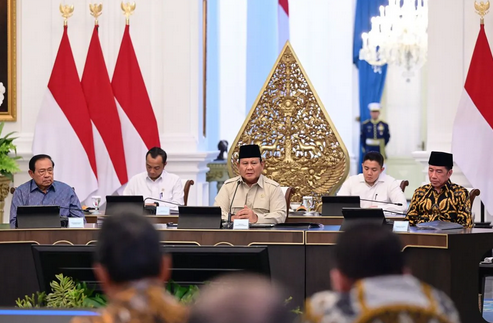
Historic meeting took place at Istana Merdeka on Tuesday evening, 3 March 2026. President Prabowo Subianto sat beside two of his predecessors, the 7th President of the Republic of Indonesia Joko Widodo (Jokowi) and the 6th President Susilo Bambang Yudhoyono (SBY). Amid intensifying global geopolitical tensions, this gathering was not merely a social visit but a strong signal of national consolidation in the face of an increasingly complex era.
The focus of the nearly four-hour discussions was an update on developments in geopolitics in West Asia, particularly the conflict among Iran, the United States, and Israel. President Prabowo openly sought input from the seniors on mitigation steps that Indonesia should take.
Some crucial points discussed include:
The presence of SBY and Jokowi on the left and right of Prabowo created an appearance of stability that the markets and investors require. Prabowo recognised that SBY’s experience navigating the 2008 financial crisis and Jokowi’s success in safeguarding the economy during the pandemic are highly valuable intellectual assets.
The meeting is expected to influence the government’s strategic policy in the coming period, especially related to:
The meeting of Prabowo, Jokowi, and SBY in early March 2026 proves that national interest comes first. This cross-generational synergy is expected to help Indonesia weather the geopolitical crisis while maintaining domestic economic growth.
Lieutenant Colonel Teddy Indra Wijaya serves as Secretary to the Cabinet, ensuring harmonisation and consistency of the Merah Putih Cabinet’s policies.
A Breaking of Fast event at the NasDem Central Executive Board Office in Jakarta was attended by Surya Paloh, Puan Maharani, Sufmi Dasco, Jusuf Kalla, and Anies Baswedan.
Indirect local elections do not contradict the spirit of local democracy and do not solve the problem of high political costs.
Head of BRIN Research Center Mardyanto Wahyu Tryatmoko assesses that the idea of indirect local elections via the Regional House of Representatives does not guarantee the elimination of money politics and could even be more expensive.
Commission II of the DPR targets the election law (RUU Pilkada) to be completed in 2026 to provide legal certainty before the 2029 election process begins in 2027.