
Behind the Chalkboard: A Waiting That Has Yet to End
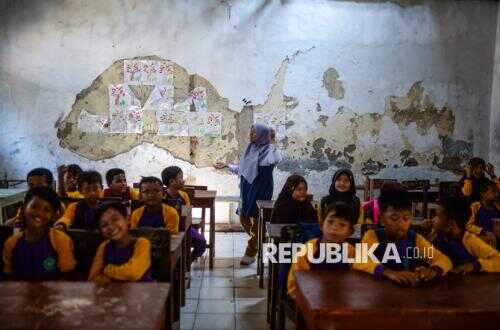
In many villages in West Nusa Tenggara (NTB), madrasahs stand modestly in the heart of local settlements. The buildings are not always grand, the paint not always fresh, and the benches not always complete. Yet the classrooms remain alive, with the voices of children spelling hijaiyah letters, reading textbook passages, and learning to understand values that they will carry throughout their lives.
Behind the chalkboard and textbooks, there is a figure whose presence often goes unnoticed: madrasa teachers. For decades, they have taught in quiet. They arrive in the morning, leave in the afternoon, fill in report cards, shape character, with wages that, if calculated per hour, might not be enough to buy a cup of coffee in the city.
Most of them are private or honorarium teachers. There is no guarantee of long-term contracts, no adequate allowances, no assurance that next year they will still be teaching in the same class. Yet they endure. Because to them, teaching is not merely a job; it is a form of service rooted in conviction.
NTB is not a random region on the map of Indonesia’s Islamic education. On Lombok Island alone, more than two thousand madrasahs stand, both state and private. If each madrasah has around ten to fifteen private teachers, the number of non-ASN teaching staff in the region could reach between 25,000 and 35,000 people.
That figure is not an ordinary statistic. It depicts an education system that has long operated on the shoulders of thousands of teachers who have never appeared on the state payroll. They are the backbone that is invisible within the formal structure, but felt in every classroom they fill every morning.
This phenomenon is not unique to NTB. The Ministry of Religious Affairs oversees more than one million teachers across religious education institutions nationwide. Of that total, only about a third hold civil servant status. The remainder, more than two thirds, are non-PNS teachers who drive education in madrasahs, pesantrens, and religious-based schools in remote areas.
This is where the inequality is most keenly felt. The state recognises the importance of religious education as part of building human resource development. Yet the state has not fully stepped in to support the teachers who perform that function daily.
Many of these teachers actually meet the professional qualifications required. They have undergone teacher certification programmes, obtained inpassing or job realignment, and teach the same national curriculum as formal schools across Indonesia.
Their responsibilities are not different, but the system’s treatment of them is far from even.
Their income often depends on the capacity of the madrasah or the foundation running it. In several areas, madrasah teachers’ honoraria remain below the regional minimum wage standard. They educate the nation’s children, but the state has not fully recognised them as part of its apparatus.
This paradox has long persisted in national education policy: the state needs a large number of teachers to raise education quality, but the civil service appointment mechanism has not been able to accommodate the realities on the ground.