
Behind the 5.61 Percent Economic Growth, the Rupiah Weakens to Rp 17,400
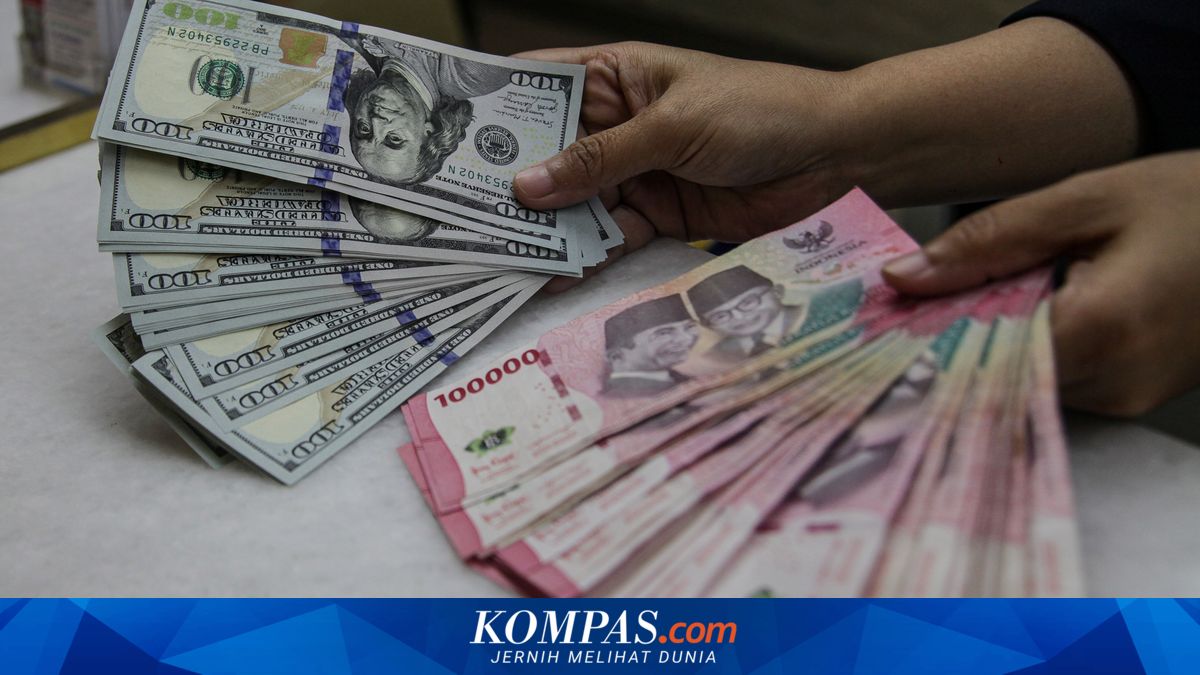
JAKARTA, KOMPAS.com - The rupiah’s exchange rate against the US dollar is in a weakening trend following the report on Indonesia’s first-quarter 2026 economic growth figures.
Based on Kompas.com monitoring, as of 12:17 WIB today, the rupiah is once again moving in the 17,000 range.
The rupiah exchange rate is recorded at 17,406, still strengthening by 18 points or 0.10 percent compared to yesterday’s close.
This morning, the rupiah’s exchange rate in the spot market strengthened at the opening of trading on Wednesday (6/5/2026). The Garuda currency rose 0.24 percent to Rp 17,383 per US dollar.
Previously, the rupiah was at Rp 17,424 per US dollar at the close of trading on Tuesday.
Head of Research at Kiwoom Sekuritas Indonesia, Liza Camelia Suryanata, said the pressure on the weakening rupiah exchange rate, which briefly reached around Rp 17,400 per US dollar, indicates that the market is looking beyond the headline gross domestic product (GDP) figure.
“The annual import growth of 7.18 percent, far higher than the annual export growth of only 0.90 percent, shows that the current economic expansion is also increasing the need for foreign currency and amplifying external pressures,” she said in a written statement.
For context, the Central Statistics Agency (BPS) reported that Indonesia’s economy grew by 5.61 percent year-on-year in the first quarter of 2026.
She added that Kiwoom Research views this situation as an indication of growth without depth.
This means the growth appears strong in numbers but is not yet fully qualitative and sustainable.
“True validation of the economic growth and welfare slogan must be reflected in quality real indicators such as rises in real wages, reductions in poverty and unemployment, and strengthening of non-subsidy consumption and savings among the lower classes,” Liza said.
“Without improvements in these indicators, the 5.61 percent figure is more appropriately read as growth based on fiscal stimulus and initial project stages, not an even and sustainable welfare improvement,” Liza stated.