
Behind Indonesia's Import of 105,000 Pickup Trucks: The Secret of India's Automobile Industry
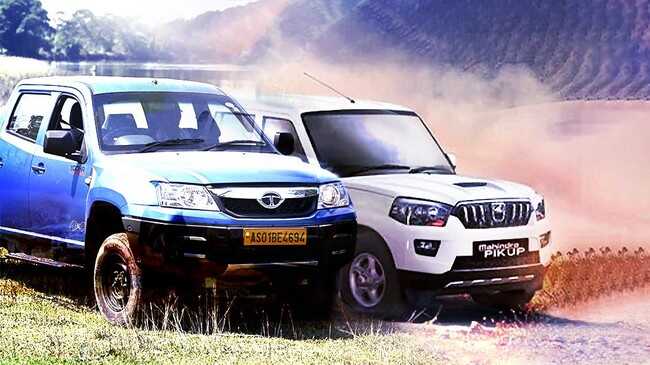
Jakarta, CNBC Indonesia – PT Agrinas Pangan Nusantara (Persero) has announced the arrival of 1,000 pickup trucks and lorries imported from India for the needs of Koperasi Desa Merah Putih.
This announcement comes amid controversy surrounding the planned entry of Indian-branded vehicles from Tata Motors and Mahindra. Days earlier, Deputy Speaker of the Indonesian House of Representatives Sufmi Dasco Ahmad called for the import plan to be postponed to protect the domestic automotive industry.
Beyond this controversy, this decision raises a broader question: What has enabled India’s automotive industry to rise and develop so successfully? India is a nation relatively contemporaneous with Indonesia, having gained independence just two years later in 1947. Yet India has built a robust automotive sector that has become attractive enough to supply the Indonesian market.
What is the secret?
Since independence in 1947, India actually already possessed national automotive manufacturers. Brands such as Hindustan Motors, Premier Automobiles, Tata, and Mahindra formed the early foundation of the vehicle industry. However, this industry developed within a closed, protective, and heavily state-controlled economic system.
According to research titled “Evolution and Growth of Indian Auto Industry” (2011), for decades the automotive sector operated under a strict licensing regime (licence raj). Production, factory expansion, and vehicle types were all regulated by the state.
The industry grew with virtually no competition, particularly when foreign investment was restricted. Additionally, the supply chain was purely domestic, technology levels were low, and the industry remained disconnected from global production systems. In effect, the automotive industry existed but was stagnant and uncompetitive.
The turning point finally came in 1991 when the Indian government undertook sweeping economic reforms. Deregulation and de-licensing dismantled this protectionist system. The automotive sector was opened to markets, private investment, and foreign collaboration. From this point on, foreign automobile manufacturers from Japan and Europe began to enter.
According to research titled “Trade Liberalisation and International Production Networks: Experience of the Indian Automotive Sector”, India’s automotive industry renaissance began from this phase. Technology arrived, manufacturing standards rose, knowledge transfer occurred, and the market transformed into a competitive arena.
Entering the 2000s, the industry’s orientation shifted. India was no longer merely a consumption market but began to be positioned as a global production hub. As domestic steel and iron industries grew, global manufacturers began establishing manufacturing facilities for export and incorporated India into international automotive supply chains. From components to complete vehicles.
This rise was also supported by domestic players. Tata Motors, for example, evolved from a domestic vehicle producer into a global automotive actor, with cross-country production networks and international market expansion.
However, as foreign manufacturers built factories domestically, the Indian government implemented strategic policies to prepare for international expansion. These included mandatory local content requirements of up to 70% for foreign companies and obligations for knowledge transfer and local workforce training.
According to a report in The Atlantic, the impact of these policies gradually strengthened the domestic manufacturing base. This was further supported by cheap and skilled labour. In 2004, for example, Indian automobile production stood at around 1.18 million units, far below South Korea’s 3.12 million units. However, by 2016, production had matched South Korea at approximately 3.5 million units per year.
Gradually, India’s automotive industry has built an integrated supply chain ecosystem capable of meeting both domestic demand and export markets. By 2025, the sector has become the world’s third-largest automotive industry with a production value of US$250 billion, ranking below the United States and China.
India projects that by 2026, automotive will become a major driver of national economic growth, contributing 12% of GDP, accounting for 40% of manufacturing, and creating 65 million jobs.