
Before Global Energy Ministers, Bahlil Demonstrates Evidence of Inclusive Energy Development
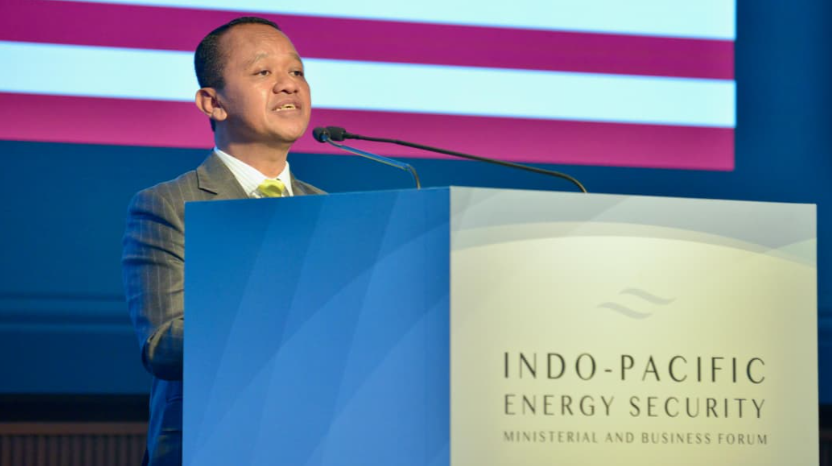
Amid strengthening global pressure to accelerate the transition towards clean energy, the issue of energy sovereignty has resurfaced at the Indo-Pacific Energy Security Ministerial and Business Forum in Tokyo, Japan, on Sunday, 15 March local time.
The meeting of energy ministers and industry players from Indo-Pacific nations served as a discussion forum on how energy transition can be implemented without disrupting supply stability or the national energy interests of respective countries.
“I greatly appreciate this forum as a manifestation of our collective presence to strengthen one another, not weaken each other. How Indo-Pacific nations can engage in mutually beneficial cooperation,” said Minister of Energy and Mineral Resources (ESDM) Bahlil Lahadalia before the delegations.
Bahlil referenced the increasingly complex global situation that necessitates inter-country collaboration. “When faced with these conditions and unable to conduct good collaboration, we also cannot blame each nation for prioritising its internal policies,” he explained.
For Indonesia, accelerating energy transition must continue to respect each nation’s right to determine its own energy policy. The Indonesian Government emphasised that economic conditions, energy structures, and societal needs vary widely, thus a standardised transition path cannot be applied uniformly.
Nevertheless, international cooperation remains necessary to address climate change challenges and maintain energy resilience, provided it is built on mutual respect for national policies. “Cooperation and collaboration must benefit all parties without sacrificing the interests and national objectives of each country,” Bahlil stated before the delegations.
Expanding Access
As an archipelago nation with continuously rising energy needs, Indonesia faces the challenge of maintaining balance between efforts to reduce emissions and ensuring reliable energy supply. The Government emphasised that the transition process must occur in stages to avoid disrupting economic stability or industrial activity.
“The transition must not result in energy price surges that further burden society,” he said.
He affirmed that Indonesia’s energy transition strategy is conducted realistically by leveraging domestic resource potential, such as biodiesel utilisation. One step taken is strengthening the biodiesel programme by utilising raw palm oil (CPO) production, which has historically been exported at 26 to 30 million tonnes annually.
“We will develop a plan for the CPO we have been exporting; we will push for it to become B50, B60, B70 to meet our domestic needs,” Bahlil explained.
Simultaneously, the Government continues accelerating renewable energy development, including construction of solar power plants (PLTS) totalling approximately 100 gigawatts to reduce dependence on fossil fuels. Indonesia is also taking concrete steps by gradually shutting down diesel power plants (PLTD) with a capacity approaching 20 gigawatts.
“I believe the time has come for every global agreement to be something we can execute,” Bahlil stated.
In the forum, Bahlil reiterated the principle of socially equitable inclusive energy. The presence of programmes such as the Single Fuel Price scheme, Village Electricity (Lisdes), and New Electricity Connection Assistance (BPBL) represents the Government’s commitment to society by ensuring all citizens have access to reliable and affordable energy.
The Tokyo forum was a high-level meeting bringing together government and energy business actors to discuss energy supply security in the Indo-Pacific region. The event was jointly organised by the Ministry of Economy, Trade and Industry and the National Energy Dominance Council.
The meeting resulted in a joint statement emphasising the importance of strengthening regional energy resilience whilst respecting the energy transition paths chosen by individual nations.