
Becoming a Wild Dumping Ground, Residents Block Shortcut Road from Kerobokan to Dalung
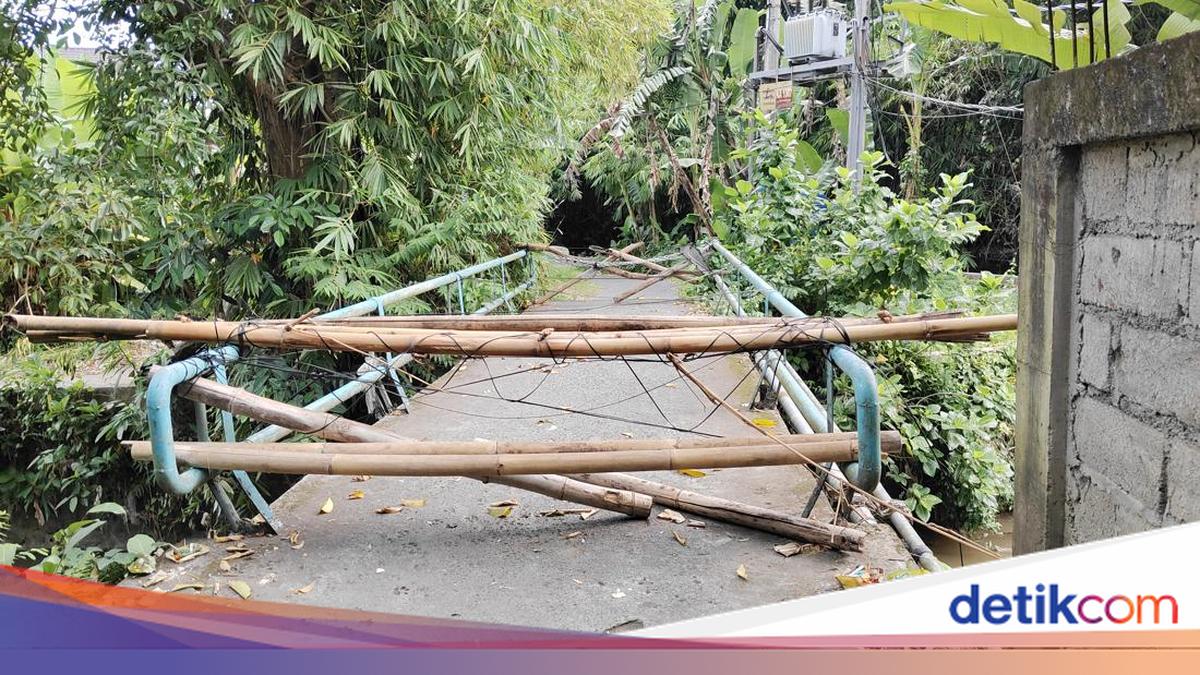
Residents of Banjar Batu Culung, Kerobokan Kaja Ward, North Kuta, have decided to close access to a shortcut road leading to Dalung Permai since a few days ago. The residents are annoyed because the area is frequently used as an illegal dumping site by certain passers-by.
“We have indeed closed the shortcut access, the connection from Kerobokan to Dalung Permai. But it must be emphasised that it is an environmental road, a traditional adat road utilised by the residents,” said the Head of the Banjar Batu Culung Environment, I Wayan Gede Wirasana, on Sunday (5/4/2026).
Wirasana revealed that piles of rubbish are often found along the road. What angers them is that the perpetrators dump waste right under prohibition banners, and the banners have even been torn by certain individuals. The types of waste dumped vary, from household waste to animal carcasses wrapped in plastic.
“Dog carcasses wrapped in plastic, chicken feathers, and offal are also frequently dumped there. As someone who happens to sell cut chickens, it’s uncomfortable with the residents; I feel accused too, so I now source chicken cutting to Tabanan to avoid being suspected,” Wirasana complained.
This dumping action has been ongoing for the past year, even though residents have repeatedly cleaned up independently or with the ward team. This situation has sparked the residents’ anger in an adat meeting, leading to demands to blockade the route.
“Finally, the residents requested that the road be closed because it is a traditional adat environmental road, not a public road. Its history involves many local residents building houses in the area, so a road was needed to facilitate adat ceremonies,” he explained.
The route was originally just a rice field embankment and river, which was then built with a bridge and road through self-help efforts by local residents since the 1950s. With the development of housing in Dalung Permai, this access became popular as an alternative route to avoid congestion.
“Finally, it became a crossing for village residents and housing residents as a shortcut. But what we regret is that after being given a good road, given passage, they bring rubbish as provisions and dump it there,” Wirasana stated.
The banjar side emphasised that this closure is temporary as a deterrent for passers-by who do not maintain cleanliness. If after reopening the area is still dirtied, residents will not hesitate to close access permanently to the public.
“After that, if during the closure the environment is clean, we will reopen it. But after the road is opened and it’s dirtied again, rubbish dumped again, we will close it again,” he asserted.
Regarding internal waste management, Wirasana assured that residents of Banjar Batu Culung mostly still have land to process organic waste independently. Waste sorting socialisation is also being intensified in line with the policy of restricting operations at the Suwung landfill.
“Waste sorting has been running since the policy to close the Suwung landfill specifically for organics on 1 April. We continue to urge our residents not to dispose of waste indiscriminately,” Wirasana concluded.