
Becak Drivers and Minibus Operators Receive Rp1.4 Million Compensation During Eid Holiday in West Java
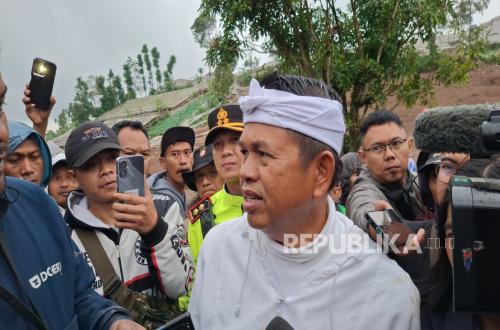
Hundreds of becak (pedicab) drivers and minibus operators in Cirebon Regency received compensation worth Rp1.4 million per person on Saturday, 14 March 2026, as a substitute for forgoing operations during the Eid holiday travel season.
The compensation was distributed directly by West Java Governor Dedi Mulyadi, Transport Minister Dudy Purwagandhi, Cirebon Regent Imron, and Cirebon Police Chief Kombes Imara Utama. Governor Mulyadi stated that the West Java Provincial Government was providing compensation to becak drivers, minibus operators, motorcycle taxi riders, and horse cart operators ahead of the Eid holiday rush as an effort to reduce potential traffic congestion on several road sections.
The programme was also designed to regulate the activities of non-motorised vehicles that frequently stopped or waited for passengers on roadsides. “This compensation for becak drivers is to reduce traffic congestion caused by roads being used for waiting areas for minibuses, becaks, horse carts, and motorcycle taxis,” said the governor, commonly known as KDM (Kang Dedi Mulyadi).
He explained that becak drivers would receive assistance of Rp1.4 million per person as a form of support whilst they were not operating ahead of Eid al-Fitr. “With this assistance, they can take leave during the period leading up to Eid al-Fitr,” he said.
According to Mulyadi, the programme was not being implemented in just one area. Rather, it was targeting thousands of becak drivers across various areas in West Java. “Across all of West Java, the figure reaches approximately 5,000 people, but there are still additional allocations that we will cover with other funds,” he stated.
Specifically in the Cirebon area, Mulyadi noted that approximately 557 becak drivers were registered to receive the assistance. However, this figure still had potential to increase. “In Cirebon, approximately 557 people, but there may still be additional numbers later,” he explained.
He considered the measure sufficiently effective to minimise potential traffic congestion, particularly in areas that often become congested with vehicles during peak travel periods. “This activity is effective in minimising traffic congestion,” said Mulyadi.