
BBPOM confirms takjil in North Jakarta are free from hazardous substances
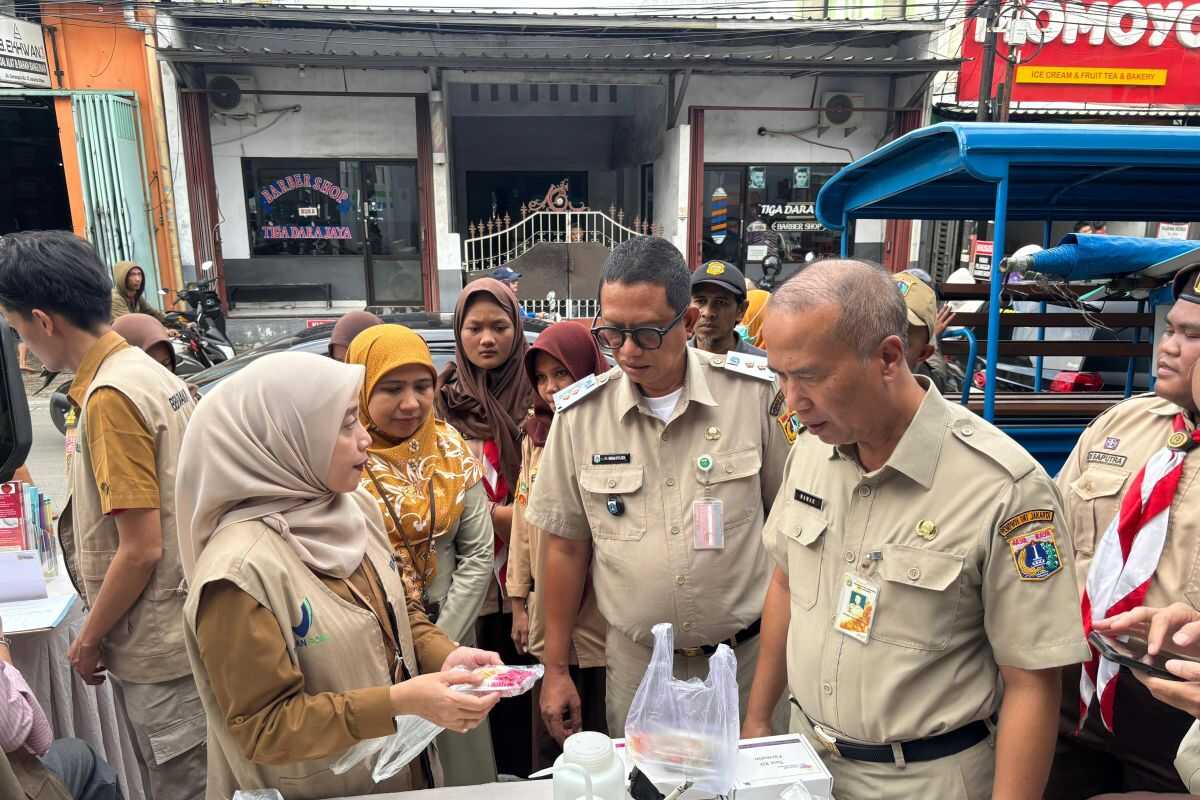
Jakarta (ANTARA) - The Jakarta Food and Drug Supervisory Agency (BBPOM) confirmed that foods for breaking the fast, or takjil, in the Koja district of North Jakarta, are free from hazardous substances.
‘We have conducted joint supervision with the North Jakarta City Government in Jalan Semangka, Lagoa Village, Koja District, on Tuesday (3/3) to ensure that the foods consumed by the public are safe and free from hazardous substances,’ said Evi Citraprianti, head of the BBPOM Information and Communications Team in Jakarta, in Jakarta, on Wednesday.
She said the supervision was conducted collaboratively with the DKI Jakarta Provincial Government, the Health Office, and local authorities. They targeted takjil for breaking the fast, aiming to obtain foods free from hazardous substances.
At the takjil selling site, officers collected food samples for immediate testing. BBPOM also involved the Pramuka Scout Satuan Karya unit to assist in educating traders and the public.
‘This inspection is routine; we do not carry it out only during Ramadan. However, Ramadan is a period of heightened activity as people buy takjil,’ Evi said.
‘From 58 samples tested, no formalin, borax, or textile dyes such as rhodamine B were found. In other words, traders have used food ingredients that meet the standard, not hazardous chemicals,’ she explained.
According to Evi, samples were taken randomly from various popular foods, such as wet cakes, lontong, fried tofu, es pisang hijau, otak-otak mercon, and assorted fried snacks.
‘Let us ensure the foods we consume are tasty, healthy, and safe. Safe means free from hazardous substances. If hazardous substances are continually consumed, they will accumulate in the body and increase the risk of disease,’ she asserted.
Meanwhile, Wawan Budi Rohman, Assistant for Economy and Development to the North Jakarta City Secretary, said the collaboration with BBPOM Jakarta in supervising takjil is a joint commitment to protect the public, particularly in North Jakarta, so residents feel safe and comfortable while observing the fasting month.
Food surveillance is a key part of maintaining stability and the quality of services to the public, especially in seasonal food trading sectors such as Ramadan.
‘We also urge traders to always uphold the quality of raw materials and the cleanliness of the preparation processes. In this way, the economy will continue to circulate well, but public health remains the top priority,’ he said.