
BBPJN: Landslide clearance on the Trenggalek–Ponorogo national route completed in two days
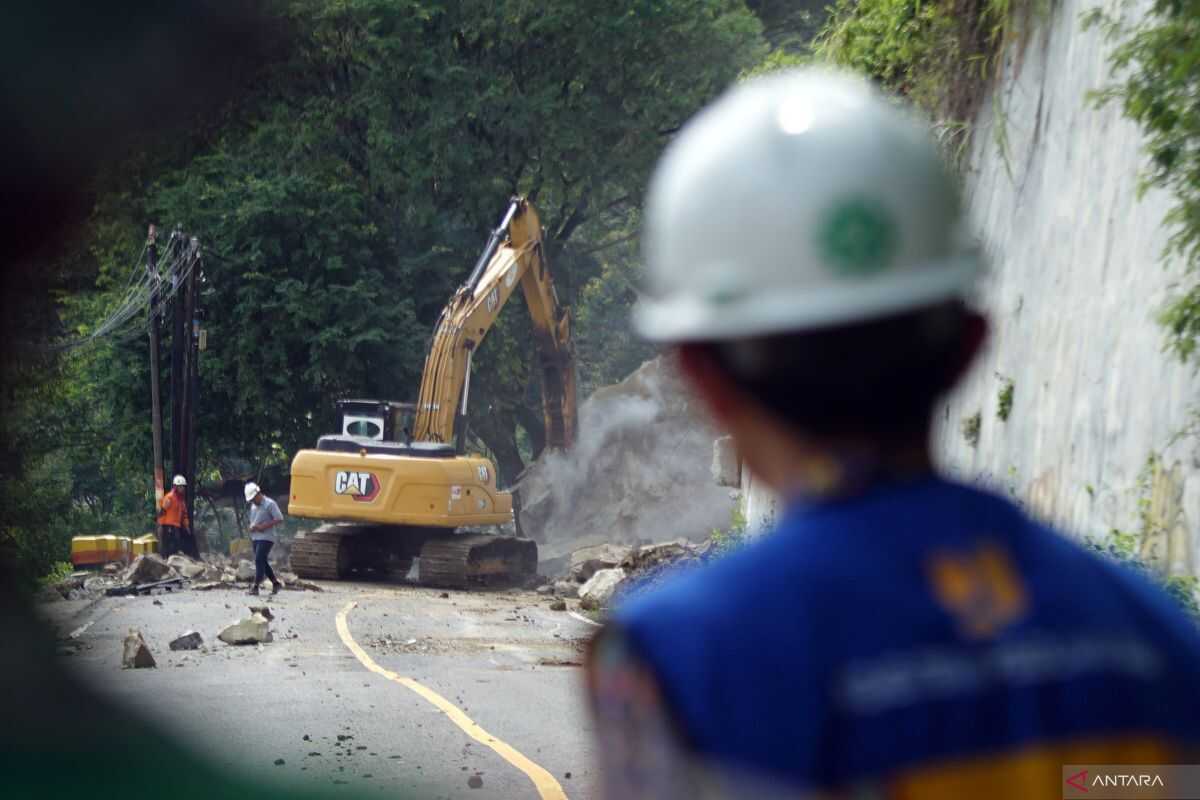
Trenggalek, East Java — The Balai Besar Pelaksanaan Jalan Nasional (BBPJN) Jawa Timur-Bali said the process of cleaning landslide material on Km 16 of the Trenggalek–Ponorogo national route, Nglinggis Village, Tugu District, Trenggalek Regency, was completed within two days. Endhy Aktony, the Pejabat Pembuat Komitmen (PPK) 2.3 East Java, Regional Work Unit II East Java BBPJN Jawa Timur-Bali, in Trenggalek, said on Wednesday that evacuation of material was carried out carefully because the cliff remains prone to further landslides. ‘The target is to finish in two days. However, work cannot proceed at full capacity because crews must rotate and safety factors must be considered,’ he said. In the handling, four heavy equipment units were deployed: two excavators, one breaker (rock breaker), and one loader. He explained that, based on on-site team recommendations, large rocks blocking the road should first be broken with the breaker before being loaded with an excavator. ‘Basarnas advised using a breaker first. After the rocks are broken, they are loaded using the excavator,’ he added. The retaining wall (tanggul) affected was reported to have cracked due to being struck by rocks, not due to ground movement. ‘The wall cracked because it was struck by rocks, the bottom part was affected in the same way.’ After cleaning is complete, the planning team will conduct a technical evaluation to determine the next steps, including repairs to the talud that collapsed. Endhy confirmed that repairs to asphalt damage caused by the landslide are targeted to be completed before Eid al-Fitr 2026 so that traffic on the Trenggalek–Ponorogo national route returns to normal. For temporary measures in the hazard area, authorities will install protective barriers such as geolandscape and tarpaulins to prevent rainwater seepage while awaiting permanent construction planning.