
BBCA Becomes the Culprit Behind the IHSG's Morning Plunge
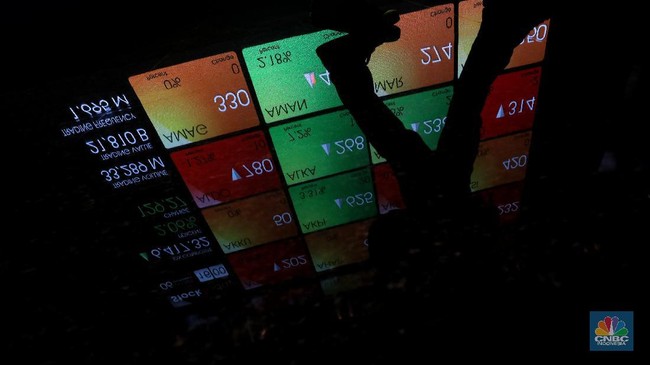
Shares of Bank Central Asia (BBCA) experienced significant selling pressure this morning, Monday (30/3/2026). The shares of the Djarum Group issuer recorded the highest transaction value in the market, amounting to Rp 1.19 trillion.
BBCA shares plunged to 6,425, a 4% decline. Even in the early hours of market opening, BBCA briefly touched 6,350.
According to Refinitiv, BBCA became the heaviest burden on the Composite Stock Price Index (IHSG) this morning. BBCA dragged the IHSG down by -21.32 points as of 09.05 WIB.
Other major bank shares also corrected, but not as severely as BBCA.
Other stocks weighing on the IHSG include Dian Swastatika Sentosa (DSSA), Barito Renewables Energy (BREN), and Sumber Alfaria Trijaya (AMRT). However, in terms of weighting, the difference is far compared to BBCA. DSSA, in second place among top laggards, contributed -9.56 index points.
In the past month, selling pressure on BBCA has been substantial, primarily from foreigners. Since early March 2026, net foreign selling of BBCA has reached Rp 3.66 trillion, the largest in the regular market.
Meanwhile, the IHSG opened down more than 1% this morning at 7,020.53. The IHSG even nearly plunged 2%, touching a low of 6,955.57.
Pressure on the IHSG is expected to continue this week. Yet the IHSG had previously hit an All-Time High of 9,174.47 at the start of 2026. This means that from its peak this year, the IHSG has corrected by more than 20%.
In the current conditions, the room for IHSG upside remains very limited due to the absence of strong positive catalysts from the global side.
The market is essentially awaiting clear signals such as a ceasefire in the Middle East, the reopening of major energy routes like the Strait of Hormuz, and oil prices falling back below US$80 per barrel.
As long as these factors have not occurred, the IHSG is likely to struggle for a significant rebound because external pressures still dominate.
The escalation of the conflict is now entering a more complex phase with the emergence of double chokepoint risks.
If previously the market focused only on the Strait of Hormuz, through which about 20% of the world’s oil passes, attention is now shifting to Bab el-Mandeb after Houthi groups in Yemen became involved in the conflict.
This route is the main connector between Asia and Europe via the Suez Canal and accounts for about 6-12% of global trade flows. If both routes are disrupted simultaneously, around 25-30% of global oil supplies could be affected, increasing the risk of global inflation and heightening the likelihood of recession. In this scenario, oil prices could remain high for longer.
For Indonesia, this situation adds further pressure because high oil prices above the ideal fiscal comfort zone of under US$80 per barrel.
Assuming the state budget uses an oil price of US$70 per barrel, every US$10 increase could widen the deficit by around Rp 51.8 trillion.
If oil prices reach US$100 per barrel, additional energy subsidies are estimated to reach Rp 236 trillion, while additional revenue is only about Rp 81 trillion, potentially adding to the deficit by up to Rp 155 trillion. This fiscal pressure ultimately burdens domestic stock market sentiment.
On the other hand, global dynamics are also influenced by the Fed’s policies, which are tasked with maintaining inflation and employment but indirectly also play a role in preserving financial system stability that heavily depends on liquidity.
Meanwhile, the Israeli military stated it is attacking various targets in Iran’s capital, Tehran. The Iranian government also said energy infrastructure was damaged, but Iranian media reported that electricity has been restored in most of Tehran and nearby city of Karaj.
A university in Isfahan, central Iran, was targeted for the second time this weekend.
On the other hand, Israel stated that a fire at an industrial site in the southern part of the country—caused by an Iranian attack—has been brought under control, several hours after previously reporting a “hazardous materials incident” in the area. Verified photos show a US military jet severely damaged at an airbase in Saudi Arabia.
Previously, Iran’s Parliament Speaker said their forces are “waiting” for the arrival of US ground troops to “rain fire upon them,” following the US announcement that around 3,500 troops are in the region along with the USS Tripoli warship.