
Baznas Strengthens Development of National Zakat Ecosystem
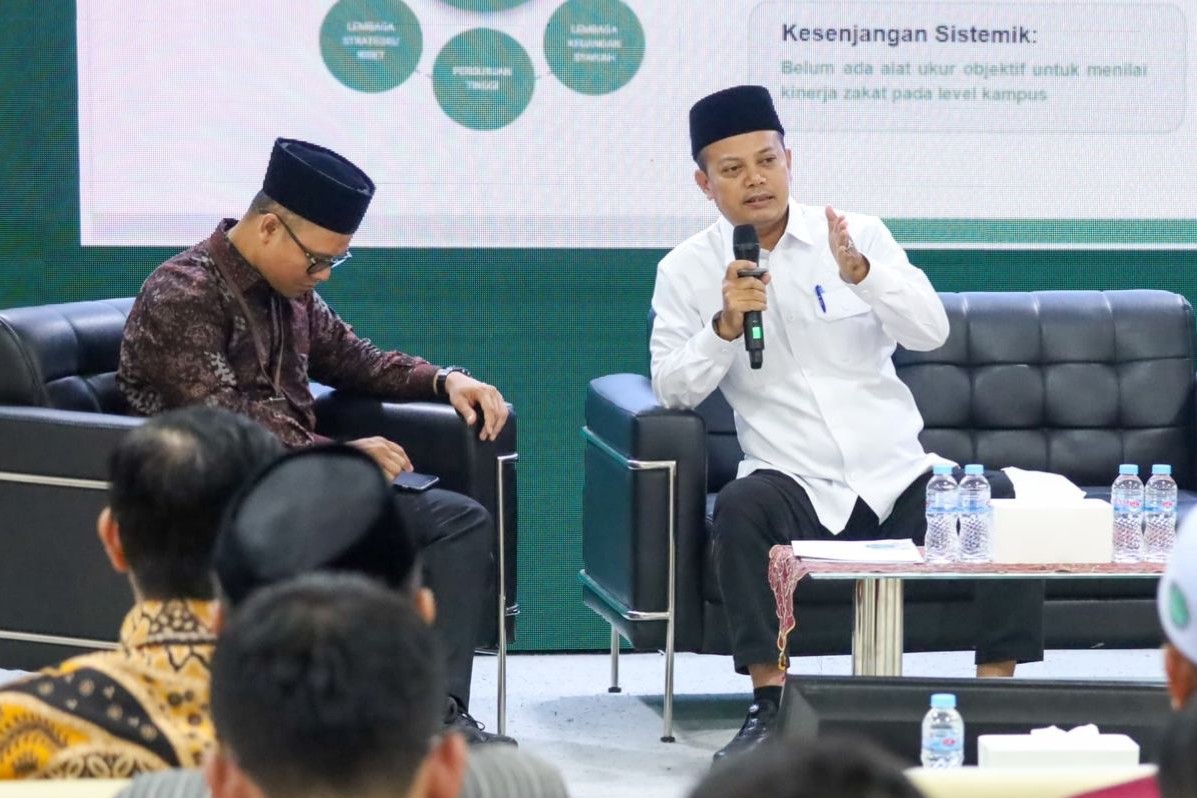
The National Alms Agency (Baznas) is strengthening the role of its postgraduate scholarship recipients in developing the national zakat ecosystem through a guidance and evaluation activity for the Baznas RI Postgraduate Scholarship. The event served as a platform for awardees to bolster research collaboration and produce recommendations supporting the strengthening of zakat management in Indonesia. The activity, themed ‘Strengthening Collaboration and the Role of Philanthropy Research for the Development of the National Zakat Ecosystem’, was held at the Baznas RI Building.
Baznas RI’s Director of Distribution and Utilisation, Idy Muzayyad, asserted that research must become an instrument for strengthening the zakat ecosystem with tangible impact. According to him, the research findings of scholarship recipients need to be connected with zakat management practices so they can serve as the basis for programme innovation and policy improvement.
‘Zakat programmes must continue to adapt to changing times and the socio-economic conditions of society. Therefore, postgraduate students’ research findings need to provide recommendations that can strengthen programme effectiveness and broaden their impact on the community,’ Idy stated.
He explained that the various empowerment programmes run by Baznas require research support capable of delivering evidence-based solutions and new approaches. According to him, findings from master’s and doctoral research must not stop as academic works but must become part of the effort to strengthen national zakat management. Idy also emphasised the importance of strengthening zakat literacy and publication through the awardees’ research results. He noted that quality research works need to be curated and disseminated so they can become references for the public, academics, and zakat managers.
‘We need more quality references and publications to strengthen zakat literacy. Good research results must be published and utilised as public education materials and the basis for developing innovations in zakat management,’ he added.
Meanwhile, Deputy II of Baznas RI for Distribution and Utilisation, M. Imdadun Rahmat, invited all scholarship recipients to actively engage in developing the national umbrella research currently being built by Baznas RI. According to him, umbrella research is necessary to connect various theses, dissertations, scientific articles, and policy papers within one major agenda capable of producing stronger policy recommendations for national zakat development.
‘Through umbrella research, we want to build targeted and interconnected research. Therefore, I invite all awardees to join their respective research clusters, develop Baznas’s umbrella research, and write collaborative articles that can later serve as policy recommendations for the development of the zakat ecosystem,’ Imdadun stated. In his presentation, Imdadun explained that Baznas has developed four main research clusters: governance of Zakat, Infaq, Sadaqah, and Other Religious Social Funds (ZIS-DSKL); collection of ZIS-DSKL; distribution of ZIS-DSKL; and utilisation of ZIS-DSKL. All awardees’ research is expected to contribute to one of these clusters, thereby strengthening the knowledge base and data-driven policy making.
He added that cross-campus and cross-disciplinary research collaboration is vital for producing innovations that can address various zakat management challenges, while simultaneously strengthening Indonesia’s position as one of the world’s centres for Islamic philanthropy development.