
Baznas RI opens opportunity for slaughtering haji dam in the homeland
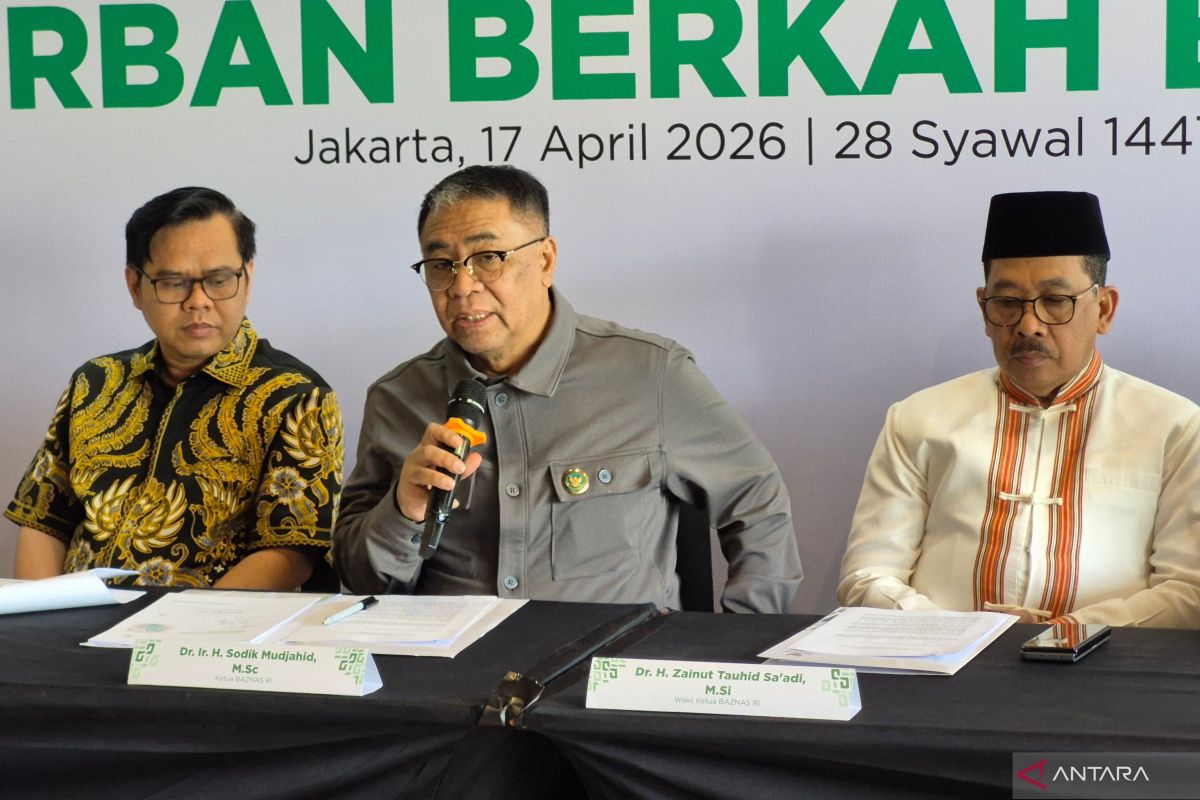
Jakarta (ANTARA) - The National Amil Zakat Agency (Baznas) RI is opening opportunities for Indonesian prospective hajj pilgrims who wish to pay or perform the slaughter of dam or penalty in the homeland.
Baznas RI Chairman Sodik Mudjahid, during a press conference launching the Kurban Berkah Berdayakan Desa 2026 in Jakarta on Friday, revealed that this option is being opened following support from the Ministry of Hajj and Umrah (Kemenhaj), as well as a Muhammadiyah fatwa permitting the slaughter of dam in Indonesia under certain conditions.
However, he emphasised that in this matter, Baznas is only providing the option for the slaughter of dam to the public who believe in that fatwa. Because the latest fatwa from the Indonesian Ulema Council (MUI) (MUI Fatwa No. 41 of 2011) in this regard still states that the slaughter of dam outside the holy land is legally invalid.
“Our principle is that we greatly respect those differing opinions. Yes, the opinion that it is permissible in the homeland, or the opinion that it must be in the holy land, we greatly respect. But we also have space from the Ministry of Hajj and Umrah, that dam can be managed and facilitated for pilgrims who have the conviction that it is permissible to slaughter in the homeland,” said Sodik Mudjahid.
Previously, Kemenhaj together with Baznas RI held a meeting to strengthen commitment in preparing the governance of dam (hajj worship violation penalty) that is transparent, professional, and has broad impact for the community.
According to him, the Ministry of Hajj and Umrah will prepare dam governance standards involving cross-ministry, institutions, and community organisations. This is done so that the implementation of dam management runs effectively, measurably, and in accordance with the needs of Indonesian society.
Jaenal explained that strengthening dam governance is part of efforts to build an inclusive hajj and umrah economic ecosystem. This ecosystem is expected to be able to create a multiplier effect, including for MSME actors, livestock farmers, and beneficiary communities.
“We do not want dam management to stop at the administrative aspect, but it must be driven to become a standardised system, integrated across sectors, and capable of creating real economic added value for the community,” said Jaenal Effendi.