
Baznas Launches "Santri Empowering Villages" Programme Across 26 Locations During Ramadan
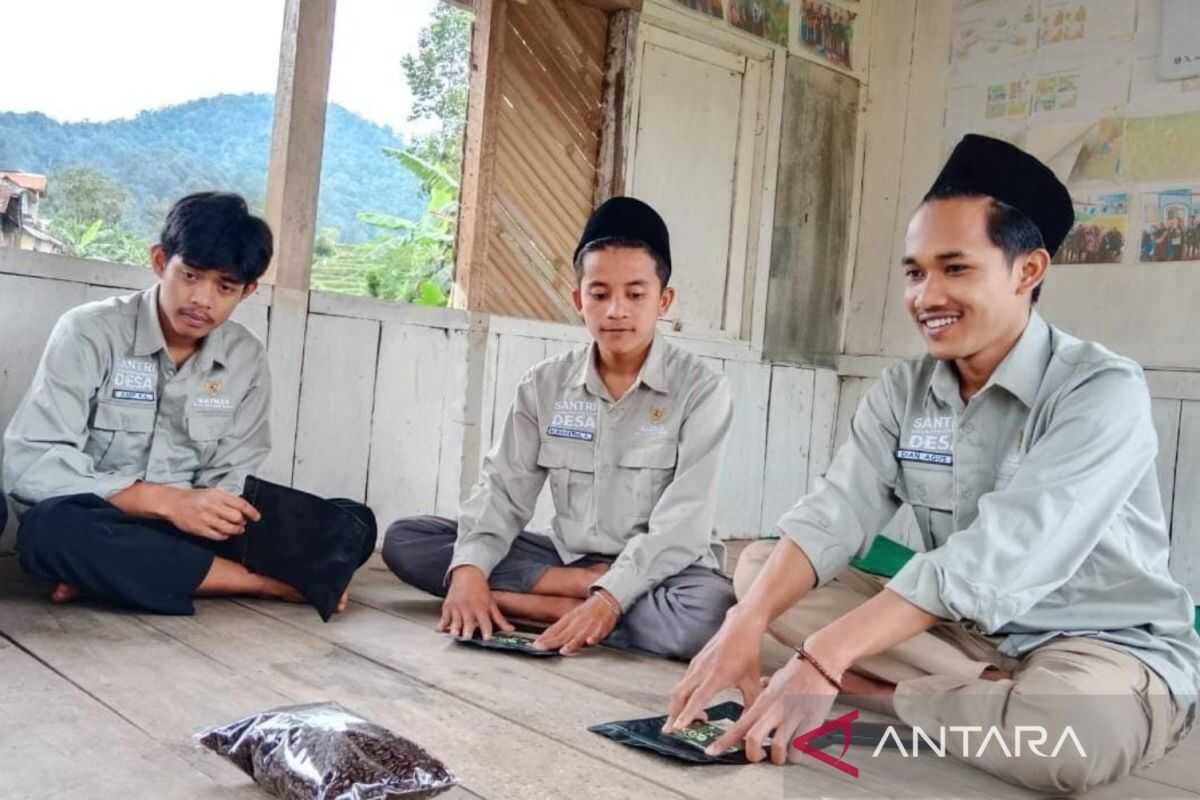
Jakarta (ANTARA) — The National Zakat Agency (Baznas) has launched an innovative initiative to welcome the holy month of Ramadan 1447 Hijriah, entitled “Santri Empowering Villages”, designed to combine the spiritual strengthening of zakat beneficiaries (mustahik) with practical agribusiness experience for the younger generation.
A total of 78 selected santri (Islamic boarding school students) will be deployed across 26 locations in eight provinces, spanning South Sumatra, Lampung, Banten, West Java, Central Java, East Java, West Sulawesi, and West Nusa Tenggara (NTB).
“We have created this Santri Empowering Villages programme to enhance the spiritual dimension of our beneficiaries at Livestock Centres and Food Barn locations. We want our farmers and livestock breeders to be not only economically empowered but also possess resilient faith that is trustworthy and productive,” said Saidah Sakwan, Baznas Head of Distribution and Utilisation, in a statement in Jakarta on Friday.
Saidah emphasised that the programme represents a strategic step to strengthen the rural economic ecosystem through the infusion of religious values.
She noted that the selection of santri as agents of change was based on their potential as catalysts for transformation. Final-year students or alumni of Islamic boarding schools (pesantren) aged between 17 and 22 are expected to serve as religious mentors, leading study circles, dawn sermons, and religious literacy sessions for village residents.
“This is a real-world laboratory for millennial santri to learn first-hand how to manage farming and livestock operations in the field,” she said.
Saidah added that through the programme, the santri would also absorb practical knowledge by learning agribusiness management and micro, small and medium enterprise (MSME) operations directly at the 26 locations.
“These locations were specifically chosen because their agricultural, micro-enterprise, and livestock business units are already running steadily, making them suitable as Study and Emulation Centres for the santri,” she continued.
Over a two-week period, Saidah explained, each group of three santri would undertake a live-in method, residing alongside Baznas-supported community groups — from food barn farmers and micro-enterprise operators to livestock breeders at Baznas Livestock Centres.
Through this programme, Baznas hopes to nurture a new generation of “santripreneurs” who are not only proficient in reading classical Islamic texts but also skilled in managing food barns and livestock operations.
The presence of santri within rural communities is expected to create a more meaningful Ramadan atmosphere whilst ensuring the economic sustainability of zakat beneficiaries through more humanistic and religious-based mentorship.