
Baznas Invites Students to Become Drivers of a Sustainable Zakat Ecosystem
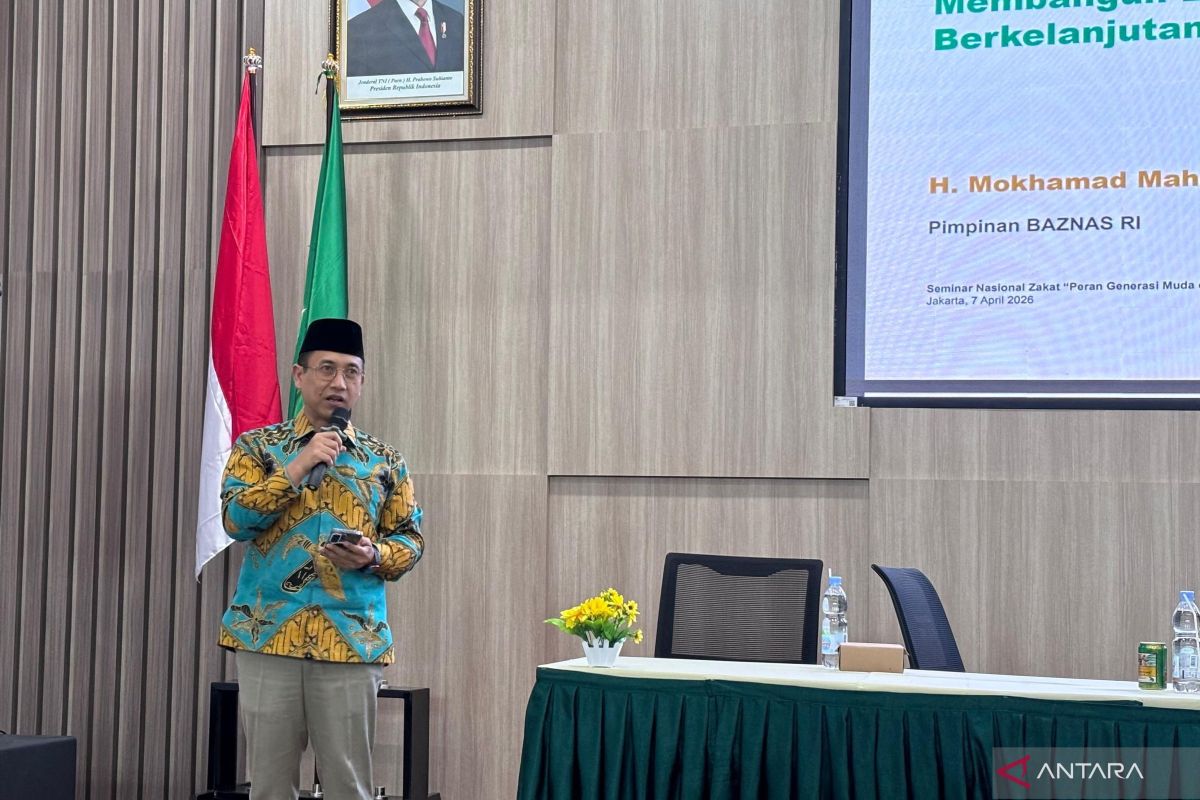
Jakarta (ANTARA) - The leadership of the National Zakat Collection Agency (Baznas) of Indonesia, Mokhamad Mahdum, has invited all students and young people to stop thinking of themselves as beneficiaries (mustahik) and instead resolve to become zakat givers (muzaki).
This call was explained during his speech at the National Zakat Seminar titled “The Role of the Younger Generation in Building a Sustainable Zakat Ecosystem” at UIN Sunan Kudus, Central Java, on Tuesday (7/4).
“Literacy is very important. We are wrong, even sinful, if there are people who should be obligated to pay zakat but do not know. The task of students is at least to become the voice of the community so that they truly understand what zakat is, the difference between infak and sedekah,” Mahdum said in a statement in Jakarta on Wednesday.
Mahdum revealed interesting data on the trend of digital infak reaching Rp9 to Rp10 billion per month, dominated by the younger generation.
He hopes that this concern will continue to grow until the younger generation truly becomes the main driving force of the Islamic economy in the future.
“The role of students and young people is just two. Do you want to be a mustahik or a muzaki? Why be a mustahik? Before anything, already a mustahik. Life is about choosing, whether to be a mustahik or a muzaki,” he stated.
Furthermore, Aan Zainul Anwar, representative of Lazisnu Central Java, on the same occasion emphasised that an institutional amil system will provide far greater impact compared to traditional, unorganised management.
Aan also dissected the results of his dissertation research on the success of zakat management in Jatisono Village, Demak, which has now become a national benchmark.
In that village, he explained, the community faithfully fulfils agricultural zakat, estimated to reach Rp300 million from a single entity alone per year.
“Why can it be like that? Because there is awareness, unity, professionalism, the ecosystem there is already in place,” said Aan Zainul Anwar.