
Baznas distributes 1,240 sacrificial goats for 2026 hajj pilgrims' penalty obligations
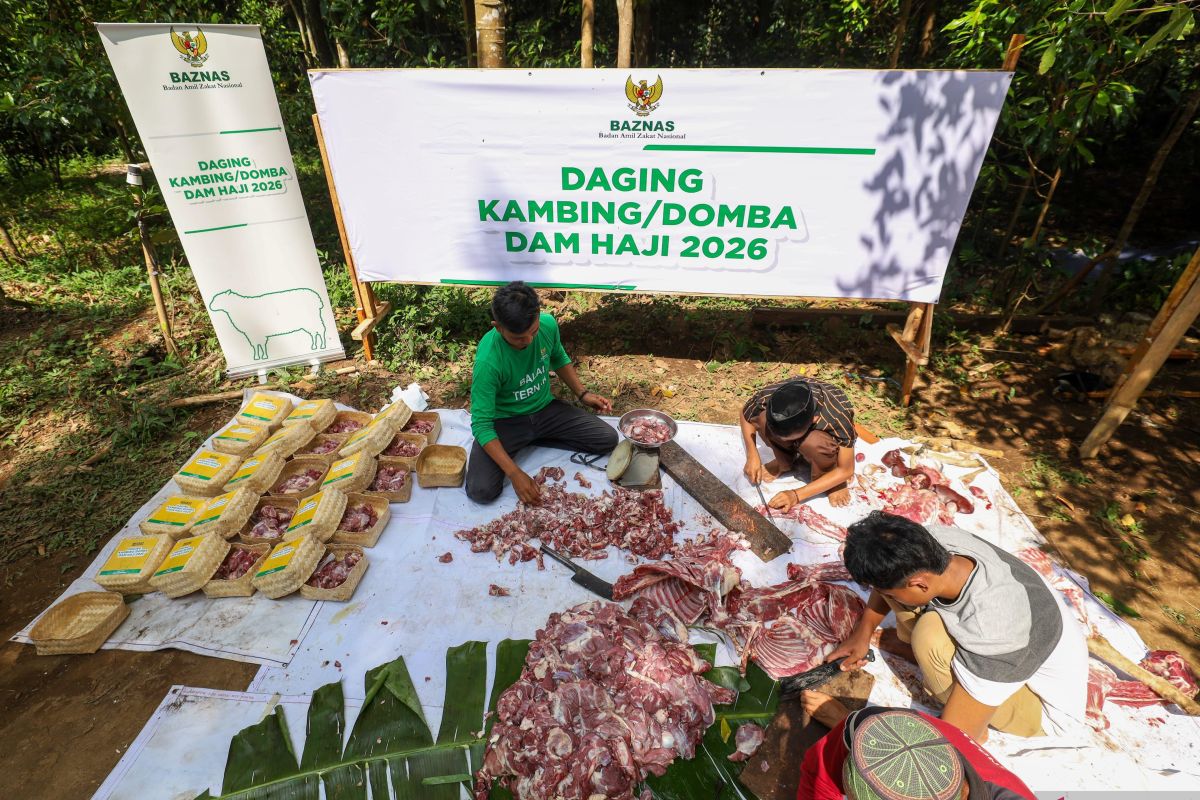
National Zakat Agency (Baznas) Indonesia has distributed 1,240 sacrificial goats for 2026 hajj pilgrims to meet the nutritional needs of the needy across various provinces while empowering local livestock farmers. The distribution was symbolically launched at a ceremony for the 2026 Hajj Sacrifice Program at Baznas Livestock Center in Warungpring Village, Pemalang Regency, Central Java, on Friday (29 May), utilising supplies from 43 Baznas livestock centers across seven provinces, including the slaughter of 50 locally bred sheep. Zainut stated that this ongoing program, active since 2024, aims solely to facilitate pilgrims paying hajj penalties domestically, providing social impact through meat distribution to the needy while empowering local farmers. The meat distribution, he added, also strengthens the contribution of Baznas livestock centers, which now operate at 103 points across 15 provinces, offering capital assistance, production facilities, and business guidance to improve the welfare of needy livestock farmers. ‘Baznas facilitates pilgrims who entrust their sacrificial animals to us, and we guarantee these will be distributed to the needy, those who truly require assistance,’ he said. Meanwhile, Director General of Islamic Community Guidance (Bimas) at the Ministry of Religious Affairs, Abu Rokhmad, stated that domestic slaughter of sacrificial animals was initiated in 2025 as a strategic government move to ensure hajj pilgrims’ contributions have tangible benefits for local communities. He further noted that the total 1,240 sacrificial animals are specifically managed by Baznas, while some pilgrims entrust their obligations to other religious institutions. ‘This is one of the initiatives by the Ministry of Hajj and Umrah currently overseeing hajj, and we should commend this effort to provide greater benefits to the public. Thus, it returns to the homeland in the form of livestock whose meat can be utilised for the community,’ Abu Rokhmad said.