
Baznas collaborates with Bappenas and BPS to accelerate optimisation of national zakat potential
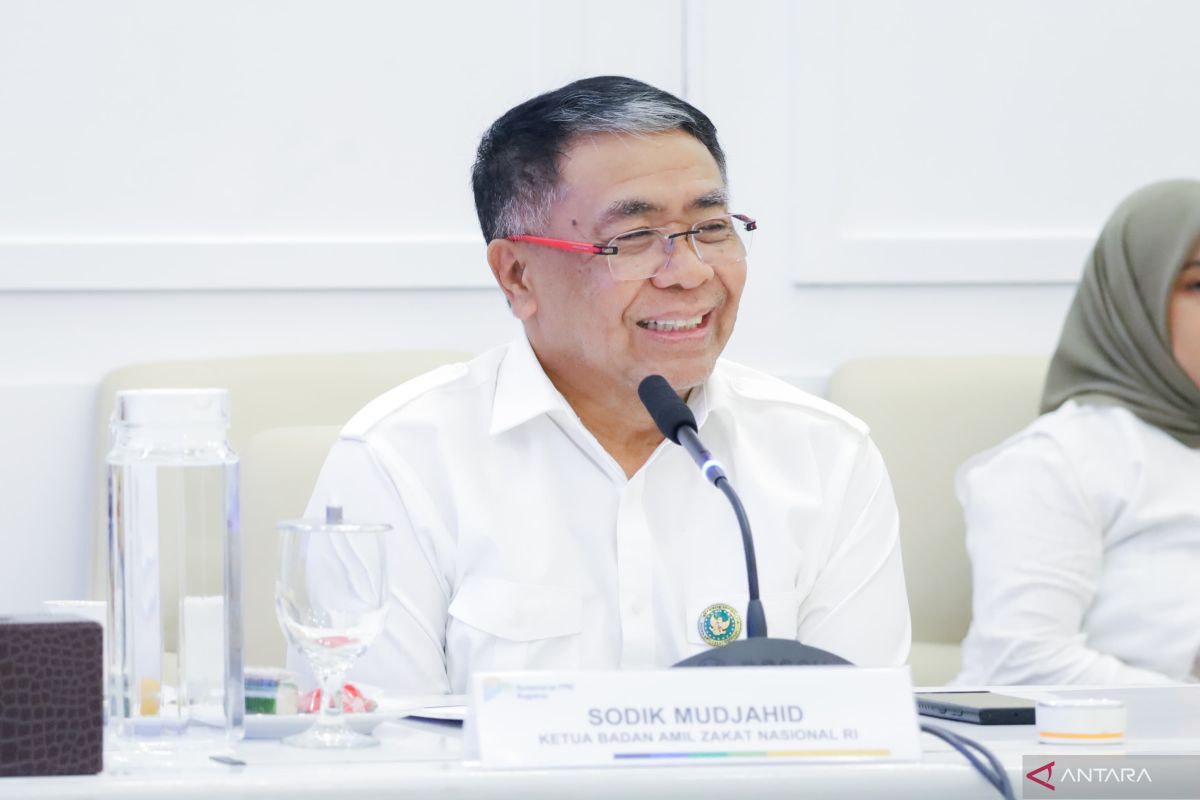
Jakarta (ANTARA) - The Republic of Indonesia’s National Zakat Collection Agency (Baznas) is strengthening synergies with the Ministry of National Development Planning (PPN)/National Development Planning Agency (Bappenas) and the Central Statistics Agency (BPS) to optimise zakat potential and promote the integration of zakat into national development planning.
This was highlighted during an audience between Baznas RI and the Ministry of PPN/Bappenas, attended by Baznas RI Chairman Sodik Mudjahid, Minister of PPN/Head of Bappenas Rachmat Pambudy, and Head of BPS Amalia Adininggar Widyasanti at the Ministry of PPN/Bappenas building in Jakarta on Tuesday (7/4).
Baznas RI Chairman Sodik Mudjahid, in a statement in Jakarta on Wednesday, said that optimising zakat potential is one of the President’s mandates that needs to be realised immediately. He mentioned that the national zakat potential is estimated to reach Rp327 trillion.
“There are several directives from the President for us (zakat managers), including optimising zakat potential, integrating Baznas data and programmes with various parties, strengthening Zakat Collection Units (UPZ) down to the village and sub-district levels, and digitalising zakat management,” he said.
“Zakat has begun to become part of the mainstream national economy. Therefore, stronger coordination and integration with various cross-sectoral parties is needed, including with the Ministry of PPN/Bappenas and BPS, particularly in terms of data, programmes, and policies, including plans to revise the Zakat Law,” he continued.
In response, Minister of PPN/Head of Bappenas Rachmat Pambudy stated his readiness to support Baznas’s efforts to increase national zakat collection, with a target growth of up to 100 per cent.
According to him, from the zakat potential in Indonesia estimated at Rp327 trillion, the realisation is only around 10 per cent.
“Thus, there is an opportunity to increase the achievement to 20 to 30 per cent. Even an increase from 10 per cent to 20 per cent would mean a 100 per cent rise,” he said.
He also encouraged mapping asnaf mustahik based on the National Single Social Economic Data (DTSEN) as a reference for national zakat distribution to make it more targeted.
“The development of collaborative ZISWAF Golden Indonesia programmes will also continue to be strengthened with a focus on the education, health, housing, community empowerment, and social protection sectors,” Rachmat said.
Meanwhile, BPS Head Amalia Adininggar Widyasanti expressed her agency’s readiness to synergise in strengthening data integration and more comprehensive mapping of zakat potential.
She added that BPS together with Baznas will update zakat potential calculations through a survey or census in 2026 to produce more accurate data.
“In the future, we can also provide desil-based information to map mustahik, so that zakat distribution is more targeted,” said the BPS Head.