
Baznas and LAZ Collaboration Drives Zakat Optimisation as Solution to Strengthen Indonesia Against Poverty
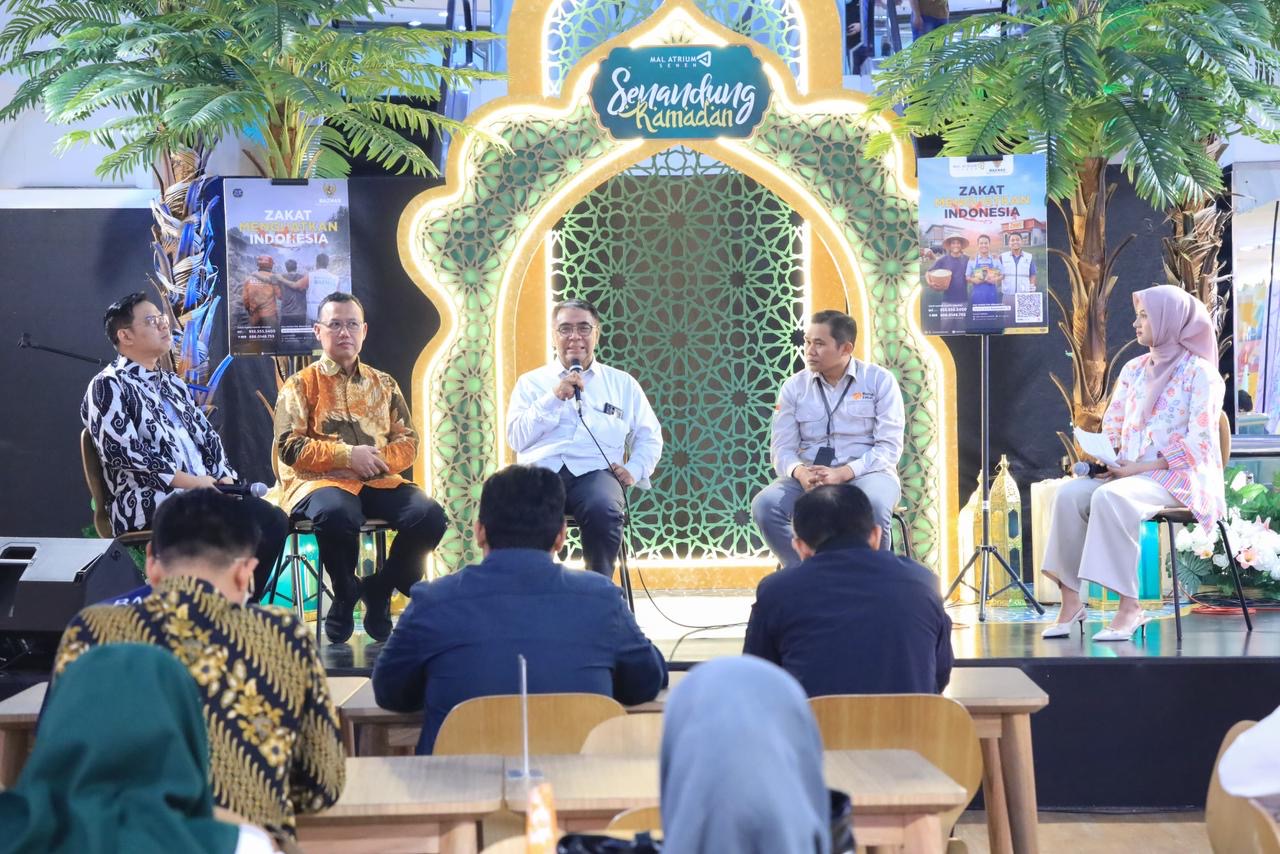
The National Zakat Agency (Baznas) of Indonesia, together with Islamic Charitable Organisations (LAZ), is promoting the optimisation of zakat management as an effort to eradicate poverty and strengthen the economy of communities across Indonesia.
These efforts are being pursued through strengthening synergy between zakat management institutions, improving zakat literacy among the public, digitalising zakat services, and reinforcing human resources within zakat management organisations.
Baznas Chair Sodik Mudjahid stated that increasing public awareness in fulfilling zakat, infaq, and sadaqah obligations is the key to strengthening zakat’s role in community welfare. He noted that this awareness must be encouraged through proactive efforts, including bringing zakat services directly to communities in various public spaces. “We are not waiting passively, but coming directly to the centres of activity. Hopefully in this way awareness increases, the amounts collected increase, and consequently the amounts distributed to the community and the eight categories of recipients also increase,” Mudjahid said.
He added that strengthening zakat is a strategic step to help address poverty, which remains a challenge in Indonesia. “The President has previously stated that poverty continues to be a challenge in Indonesia over the past several years. One solution we can promote is through strengthening zakat,” he said.
Meanwhile, Baznas Deputy Chief Rizaludin Kurniawan stated that two things must be done together to ensure zakat management and distribution operate effectively and efficiently: the implementation of a single national data system for mustahik (recipients) and continuous assistance for mustahik in empowerment programmes.
“Strengthening zakat governance must be supported by the use of integrated data so that the distribution of assistance to mustahik is more targeted and avoids duplication,” he explained. Rizaludin also emphasised the importance of continuous mentorship for mustahik so that zakat empowerment programmes can have more sustainable impact. “Many mustahik cannot simply be left alone. Therefore, continuous assistance is needed to maintain the economic resilience of mustahik,” he said.
Ahmad Juwaini, Chair of Dompet Dhuafa, expressed his support for strengthening synergy between zakat managers to increase national zakat achievement, both in terms of collection and utilisation for communities in need. “Our principle is to continue working together with all zakat stakeholders to achieve national zakat targets. Collection should be achieved and distribution should be beneficial so that more impoverished communities are helped,” Ahmad said.
“Zakat is not merely accompanying the poor, but becoming an instrument of transformation to create change in the lives of the destitute and poor. Therefore, economic empowerment through zakat must continue to be strengthened,” he added.
Similarly, Tantan Supriatna, Head of Customer Relations and Networking at Rumah Zakat, believes the success of zakat programmes can be seen from changes in both muzaki (those who pay zakat) and mustahik. According to him, zakat must be able to create sustained transformation so that mustahik can improve their welfare and gradually escape poverty.
“Zakat empowerment programmes should be directed towards strengthening community economics through support for productive enterprises accompanied by continuous mentorship so that beneficiaries become self-sufficient and even potentially become muzaki in the future,” he said.
Nasaruddin Umar emphasised that zakat can only be distributed to eight categories of recipients as stipulated in Islamic law and the Zakat Management Law, and denied claims that zakat is used for certain government programmes.
The government intends to ensure that organisations holding zakat management licences are truly operational institutions, not merely paper entities.
President Prabowo’s proposal to establish a National Fund Management Institution has the potential to change the Islamic philanthropy landscape and national zakat fund management.
The Indonesian Ulama Council (MUI) has established a ruling on the worker protection and health insurance programmes of the Ministry of Manpower’s social security scheme in accordance with Islamic principles and can be financed with zakat, infaq, and sadaqah.
Baznas is promoting the formation of innovative programmes that can be implemented jointly and are expected to reach communities in need.
Nationally, zakat management throughout 2025 has been recorded as successfully lifting 302,994 people out of poverty.
President Prabowo Subianto emphasised the importance of integrating strategic government programmes as a step to accelerate poverty alleviation. Such adaptability is necessary so that students can drive the mechanism of breaking the poverty cycle when they graduate, whether through employment or by continuing education to higher education levels.
Philanthropy plays an important role in strengthening micro and small enterprises and the people’s economy through financing, mentorship, and collaboration for sustainable and inclusive development. The Coordinating Ministry for Social Welfare has begun implementing the Integrated Task System as a model of cross-programme convergence in areas with extreme poverty pockets.