
Batang District Adopts Japanese Waste Management Model with Village-Operated Enterprise Waste Bag Sales
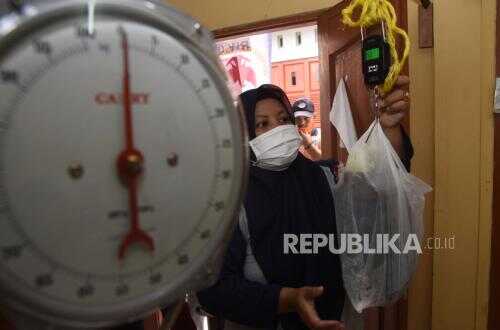
Batang District Government has implemented a new waste management scheme modelled on Japanese practices. Under this mechanism, designated waste bags will be sold by Village-Owned Enterprises (BUMDes) to help control household waste volumes.
Batang Regent Faiz Kurniawan stated on Friday, 28 February 2026, that this scheme allows residents to purchase specially designed waste bags, which are then placed outside their homes according to a designated collection schedule. “Under this system, residents purchase designated waste bags which are then placed outside the home on the scheduled collection day. This scheme allows the volume of waste generated by each household to be better controlled, as the number of bags used varies according to each household’s waste production,” he said.
According to Kurniawan, this approach forms part of an integrated waste management strategy from source to disposal, aimed at greater effectiveness and sustainability. The district government focuses not only on processing at Reduce-Reuse-Recycle centres (TPS-3R), but also on building public awareness for waste management at source.
“We already have functioning TPS-3R operations such as those in Kalipucang and Warungasem. Pesaren Village has also operated a facility, though not yet at optimal capacity,” he noted.
The district government has held discussions with village heads to prepare management mechanisms, including tipping fee arrangements and better-organised waste collection systems.
Kalipucang’s TPS-3R is among the more advanced facilities, though approximately 7.2 per cent of plastic waste remains unoptimally processed. “Going forward, this residual plastic waste is planned to be converted into alternative fuel, known as Refuse-Derived Fuel (RDF), and has potential to be processed into liquid fertiliser,” he said.
According to Kurniawan, these utilisation plans are currently in the feasibility study stage, with plans to progress to design and construction phases in the following year.