
Batam Solar Export Delay: Financing Rules Threaten Indonesia-Singapore Green Power Plan
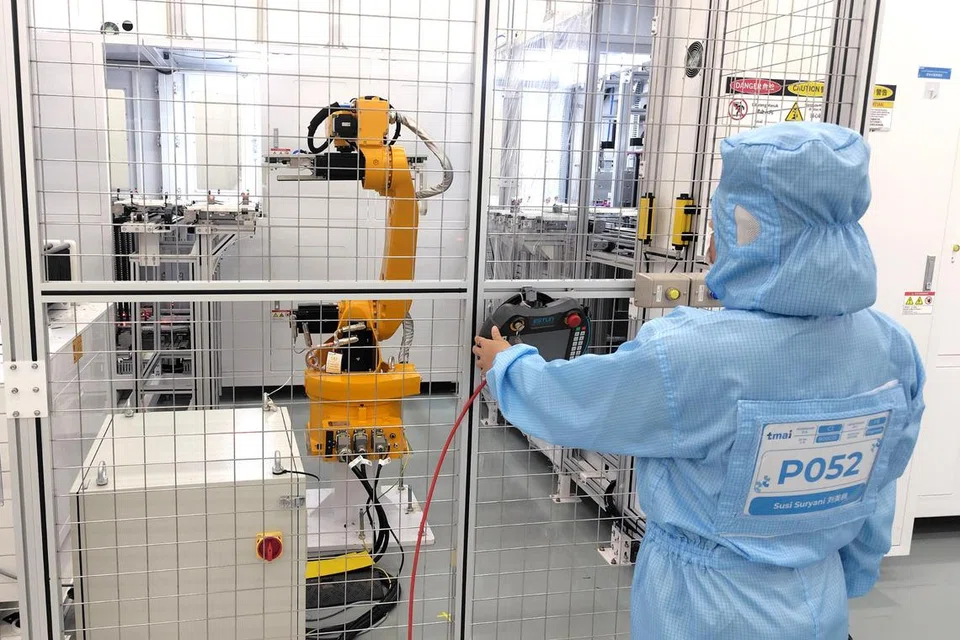
Five-year export permit reviews are complicating funding for multi-billion-dollar Batam solar projects
Indonesia’s plan to export solar power from Batam to Singapore is facing a serious financing hurdle, raising doubts over whether the first projects can begin delivering electricity on schedule.
Permit Rules Are Creating Financing Problems
Several Indonesian and multinational firms were selected under Singapore’s conditional approval process to develop solar farms in Batam and export low-carbon electricity to Singapore, building on energy cooperation MOUs signed in 2023 and later progress announced in 2024. However, these projects are struggling to secure financing because Indonesia requires renewable electricity export permits to be reviewed every five years under Clause 37 of its 2021 electricity business regulation. Analysts and company executives say that mismatch makes long-term funding difficult for projects that need revenue certainty for roughly 20 to 25 years.
Why Banks Are Hesitating
Large solar export projects from Batam would require billions of dollars in investment for solar farms, battery storage, and subsea transmission cables. Under the current licensing framework, exporters face the risk that permits could later be reduced or revoked if the government determines domestic electricity supply is affected, even though Batam itself generally has a power surplus. That uncertainty is a major reason developers describe the projects as effectively “unbankable.”
Singapore Has Expanded Approvals
Singapore’s Energy Market Authority first gave conditional approvals in 2023 for five Indonesia-linked projects totaling 2GW of imports, then announced in September 2024 that two more projects would add 1.4GW, bringing the pipeline to as much as 3.4GW from Indonesia. In 2025, EMA also granted a conditional licence to Singa Renewables, the RGE-TotalEnergies joint venture, to import up to 1GW of solar power from Indonesia, showing that Singapore has continued moving ahead on its side of the arrangement.
Timeline Pressure Is Growing
Analysts say the projects should already be under major construction if they are to start commercial operations by early 2028. But key players have indicated there has been no significant construction progress so far, and Indonesian officials have recently sent mixed signals, with one senior power official saying there is still no final deal on what benefits Indonesia would receive from exporting electricity to Singapore.
Political And Economic Stakes Are Rising
The delay matters beyond a single energy deal. Analysts say exporting clean power to Singapore could help Indonesia scale its still-developing solar industry and generate major foreign exchange earnings, while a prolonged stall could hurt Indonesia’s investment reputation if commitments backed by senior leaders do not translate into execution after a change in administration. At the same time, Singapore is counting on imported low-carbon electricity as part of its broader decarbonization strategy.
The Batam-to-Singapore solar export plan still has strategic logic for both countries, but the financing gap has become a real bottleneck. Unless Indonesia resolves the five-year permit issue or provides clearer long-term certainty, the 2028 timeline looks increasingly difficult to meet. For Indonesians, the project could strengthen solar manufacturing, investment, and export revenues. For Singaporeans, delays would slow a key source of future low-carbon electricity and complicate the country’s energy transition plans.
Sources: Straits Times (2026)
Keywords: Batam Solar Exports, Clause 37 Indonesia, Singapore EMA Imports, Solar Farm Financing, Indonesia Singapore Energy Deal