
Batam Lobster Breeding Centre Aims for 1-Ton Export-Quality Harvest by Late 2026
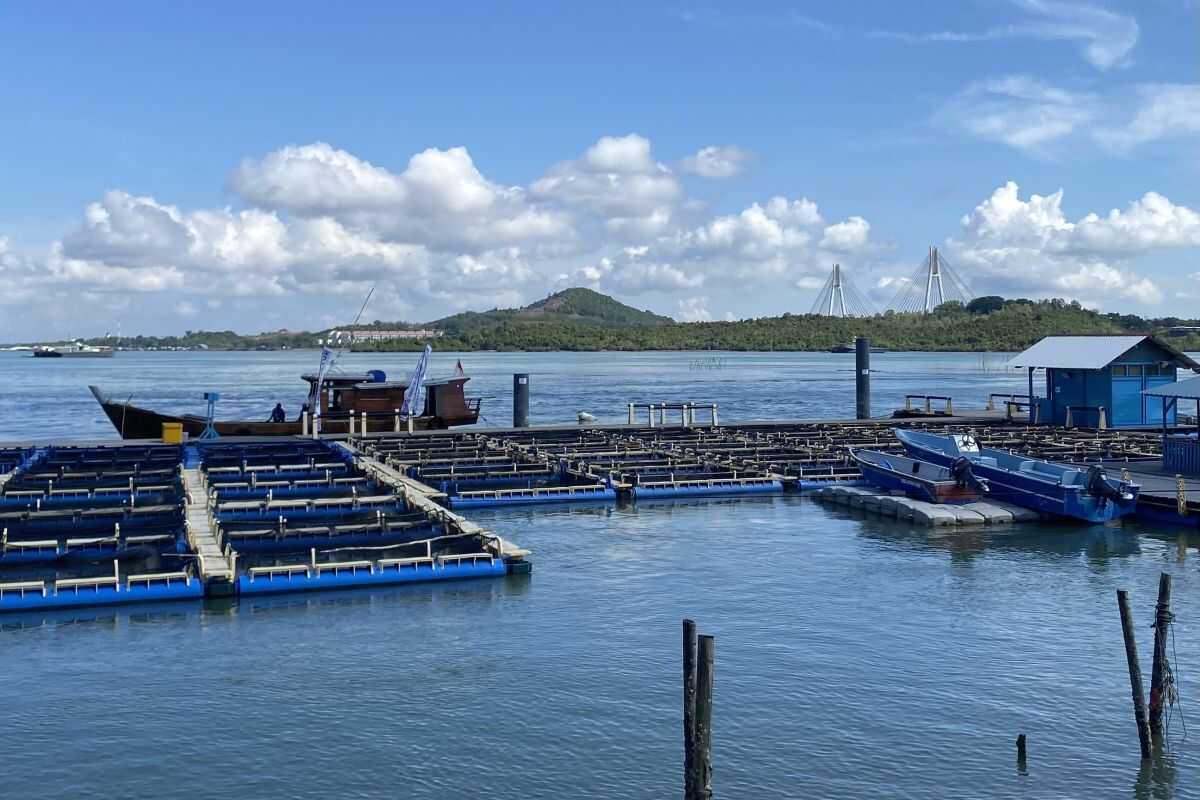
Batam (ANTARA) - The Batam Marine Aquaculture Breeding Centre (BPBL), Riau Islands, is targeting a harvest of 1 ton of export-quality lobsters by the end of this year through its lobster modelling program, or integrated breeding model.
Head of BPBL Batam, Ipong Adi Guna, explained that they are currently focusing on the lobster rearing phase, with an estimated harvest in late 2026.
“At least 1 ton will be harvested by the end of the year. Currently, we are still in the rearing phase, because lobster maintenance takes time. Distribution is likely to be at the end of this year, and it is clear that this program is sustainable,” he said when contacted in Batam, Thursday.
He said that in September, the first lobster harvest, which was attended by the Vice President and the Minister of Marine Affairs and Fisheries, recorded a production of around 1.7 tons.
The target harvest is estimated for the end of 2026, although the exact month cannot yet be determined as it depends on lobster growth and size.
“The estimate is for the end of 2026, but the month cannot be confirmed yet as it depends on lobster growth,” he added.
BPBL Batam is currently cultivating three types of lobster, namely sand lobster, pearl lobster, and bamboo lobster.
“For exports, Singapore is still the nearest destination. In addition, in 2025, export routes to South Korea will also be opened through air freight,” he said.
In terms of price, the lobsters are sold in accordance with the Non-Tax State Revenue (PNBP) regulations of IDR 360,000 per kilogram. However, in the market, he added, prices can fluctuate up to IDR 500,000 per kilogram, depending on demand and size.
“If translated, 1 ton of lobster can be sold at a price range of IDR 360 million to IDR 500 million,” he said.
However, Ipong emphasized that this program is developed as a pilot project so that it can be replicated by the community, not for mass production.
“This model is based on a pilot project for the community to replicate, not for mass production. The facilities are also limited,” he said.
Ipong added that in Batam, there are quite a few business actors who plan to replicate the breeding system developed by BPBL.
“There are actually many who will replicate the model like ours, but many are also constrained by licensing regulations which are still in process,” he said.
For information, the lobster breeding model is a cultivation method that includes the process of raising lobster seeds, rearing lobsters, to processing.
With a target harvest of 1 ton in 2026, BPBL Batam hopes that this pilot program can encourage the growth of sustainable lobster cultivation in the coastal city.