
Basic Child Immunisation Becomes Serious Concern, Berau Health Office: Do Not Let It Be Missed
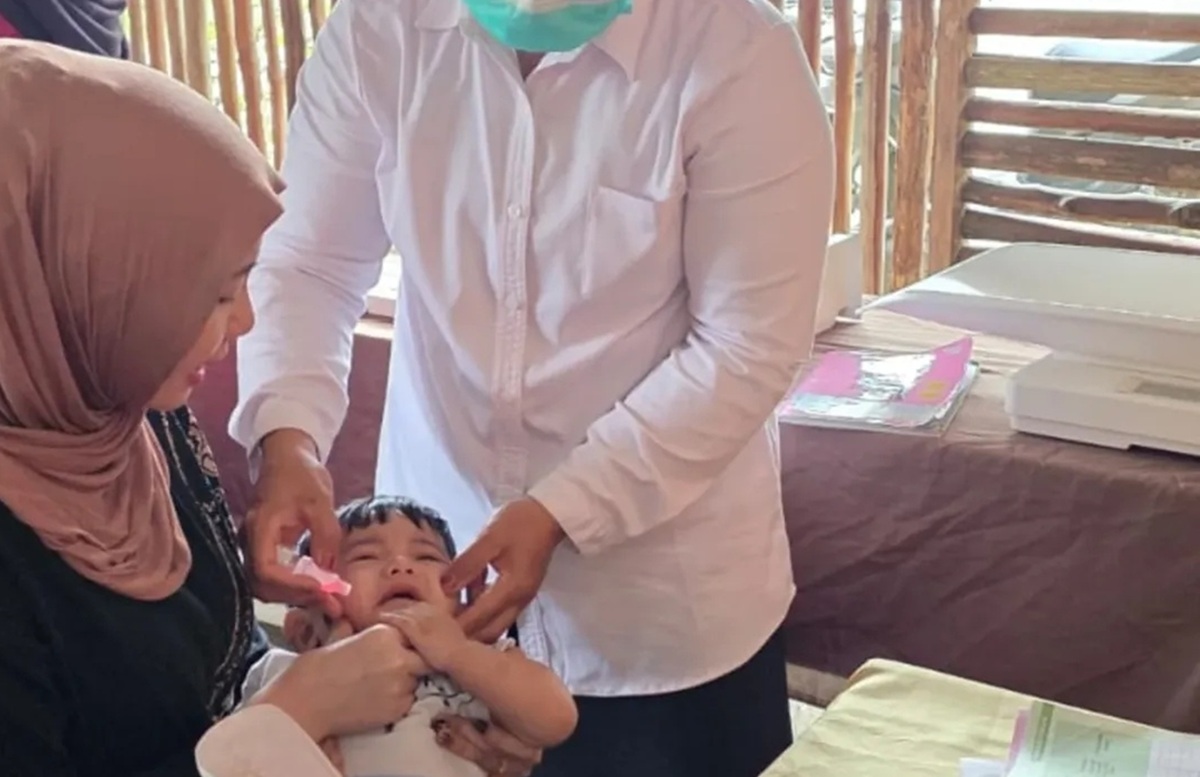
The Berau Health Office (Dinkes) has stressed the importance of providing complete basic immunisation for children as the primary step in preventing various dangerous diseases from an early age. Immunisation is considered an effective protective barrier against Vaccine-Preventable Diseases (PD3I), which not only affect individual health but also have the potential to spread within the community environment. Adi Haryono, from the Immunisation Surveillance Team at Dinkes Berau, stated that immunisation must be administered gradually from infancy according to the established schedule. “Immunisation is not just an individual need, but also protects the surrounding environment through herd immunity,” he explained. He outlined several mandatory basic vaccines, such as BCG to prevent tuberculosis, DPT-Hib for protection against diphtheria, tetanus, whooping cough, and other serious bacterial infections, and the hepatitis B vaccine to prevent liver disease. In addition, children need the polio vaccine, either in oral (OPV) or injectable (IPV) form, the MR or MMR vaccine to prevent measles and rubella, as well as additional vaccines like PCV, rotavirus, Japanese Encephalitis (JE), and HPV for protection against cervical cancer in the future. Adi emphasised that all these vaccine types have undergone clinical trials and are declared safe for use. Mild side effects such as fever after immunisation are a normal body response in building immunity. “Information claiming that vaccines can cause autism or other diseases is untrue. Medically, it has been proven that there is no connection,” he asserted. Nevertheless, he acknowledged that some parents remain hesitant to immunise their children due to being influenced by incorrect information. In reality, without immunisation, the risk of children being exposed to serious diseases increases significantly. To enhance public understanding, Dinkes Berau continues to conduct education through various approaches, from direct outreach to cross-sector collaborations and the use of local media. On the other hand, ease of access to services is also a focus. Immunisation is available free of charge at various health facilities such as posyandu and puskesmas, even through outreach programmes to schools. “Facilities are already available and easily accessible. It just depends on parents’ awareness to ensure their children receive complete immunisation,” he said. Dinkes Berau hopes that more parents will understand that immunisation is a long-term health investment, to create a healthier generation protected from various dangerous diseases.