
Barantin implements "pre-border" system to control fish import risks
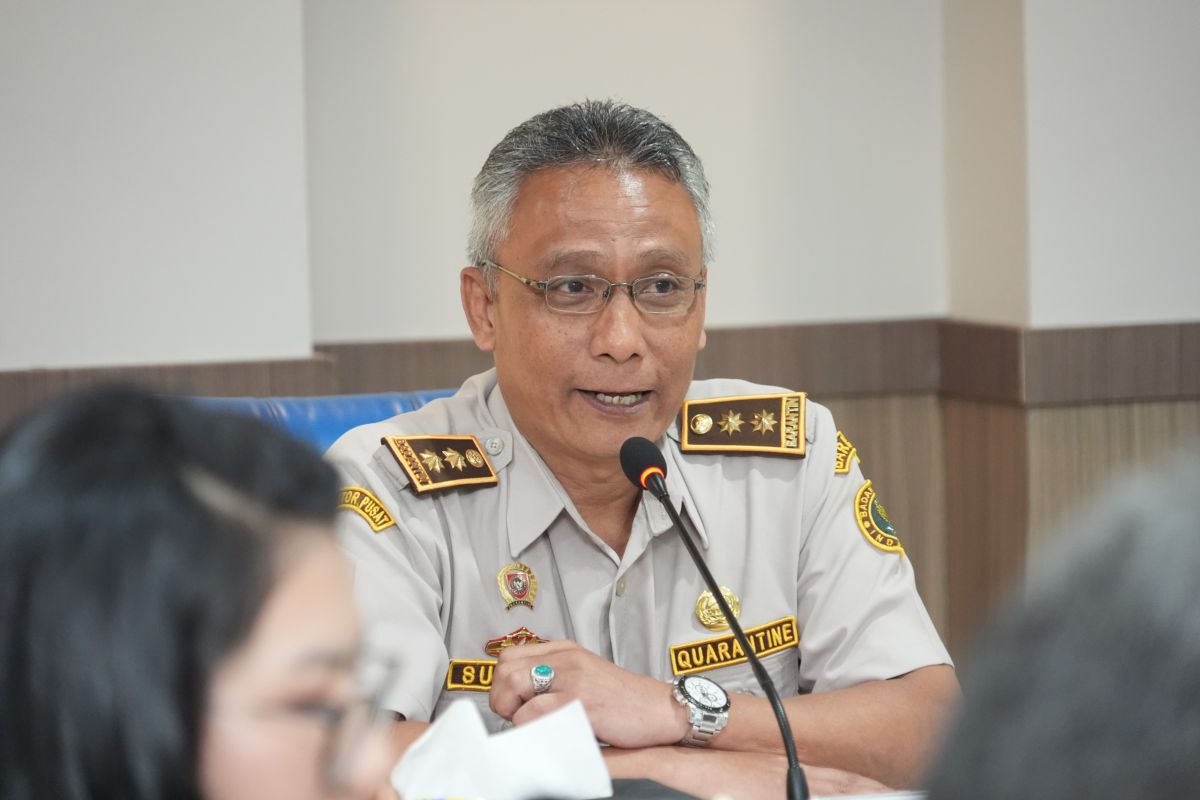
With control implemented from the outset, we can identify and map risks before commodities enter Indonesia.
Jakarta (ANTARA) - The Indonesian Quarantine Agency (Barantin) is implementing fish quarantine measures in the country of origin, or pre-border, to control risks before commodities enter Indonesia, while simultaneously increasing the efficiency of handling fish and fishery product imports.
Sugeng Sudiarto, Director of Fish Quarantine Risk Management at Barantin, stated that this approach shifts the surveillance pattern from inspections centred at points of entry to risk control while commodities are still in their country of origin.
“We are no longer just waiting for commodities to arrive at the point of entry to be inspected. Risks must be managed from the country of origin,” Sugeng said in an official statement received in Jakarta on Tuesday.
This implementation is part of the ‘Safe Fish, Secure Food’ (SAFE FISH) innovation developed by Barantin to strengthen biosecurity and make the handling process for fish and fishery product imports more efficient.
In its implementation, Barantin conducts registration and verification of competent authorities, companies or business units, and laboratories in the country of origin, ensuring that the health and quality safety aspects of the commodities can be inspected before shipment to Indonesia.
The risk profile considers factors such as the type of commodity, the country or zone of origin, the business unit, the type of disease, and compliance history. Consequently, inspection measures can be tailored to the specific risk level of each commodity.
Sugeng noted that this approach is necessary given the high volume of fish and fishery product traffic from abroad. Throughout 2025, Barantin recorded 9,385 fish and fish product import activities.
According to him, conducting all controls only after commodities arrive in Indonesia can lead to inspection backlogs and inefficiencies in time and logistics costs.
Furthermore, inspections at points of entry face limitations in facilities and technology, particularly in detecting fish pests and diseases that cannot be identified through physical examination alone.
“Pre-border does not mean reduced supervision. Supervision is actually strengthened by controlling risks as early as possible, based on data and risk profiles,” he explained.
Barantin noted that international trade in fish and fishery products carries several risks, ranging from the entry of quarantine fish pests and diseases, food quality non-compliance, genetically modified products outside of intended use, to invasive fish species.
The implementation of quarantine measures in the country of origin is grounded in Law Number 21 of 2019 concerning Animal, Fish, and Plant Quarantine.
Article 56, paragraph 1, stipulates that quarantine actions outside of the point of entry can be conducted in the country of origin and/or transit countries.
Barantin will implement this system gradually, starting with countries and business units designated as pilot projects, before expanding based on the risk profile of commodities, countries of origin, and trade routes.
Based on data from the Ministry of Marine Affairs and Fisheries (KKP), the value of Indonesia’s marine and fishery product exports in 2025 reached 6.27 billion USD or approximately IDR 107 trillion, while imports reached 0.67 billion USD or approximately IDR 11.4 trillion, an increase of 5.2 per cent compared to the previous year.
“The ultimate goal is to ensure that incoming fishery commodities are safe and risks are controllable, while ensuring the trade process remains efficient,” said Sugeng.