
Barantin forms a 24-hour task force to oversee sacrificial livestock
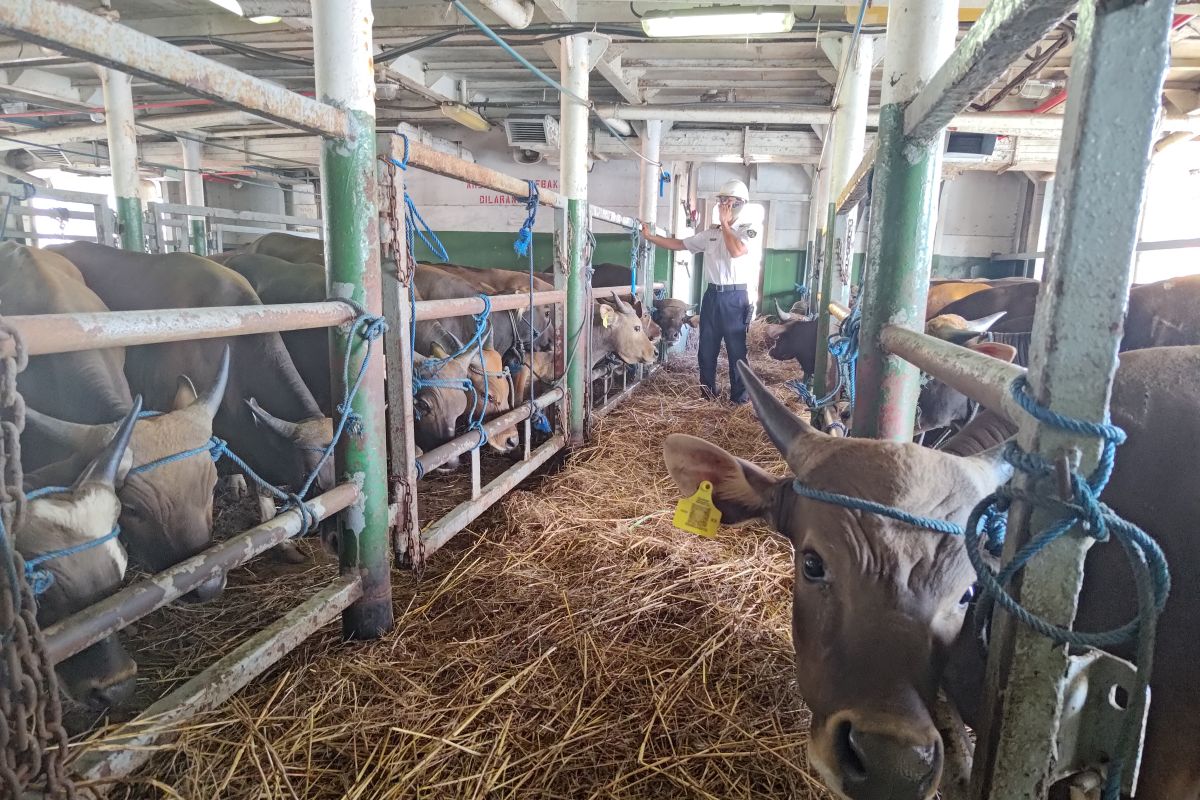
Jakarta (ANTARA) - The Indonesian Quarantine Agency (Barantin) has formed a dedicated task force to monitor livestock movements around the clock in the run-up to Eid al-Adha 2026. Barantin’s head Abdul Kadir Karding said the task force was established at the Technical Implementation Units (UPT) or the Animal, Fish, and Plant Quarantine Centre (BKHIT), which are the main channels for the entry and exit of sacrificial animals.
‘I chaired the meeting to ensure the formation of the task force in every UPT or BKHIT that has long served as the route for outgoing and incoming sacrificial animals,’ Karding said at Tanjung Priok Port, Jakarta, on Thursday.
According to him, the task force is charged with ensuring that checks of sacrificial animals are carried out in accordance with procedures, from the origin area, during transit, to the destination.
Karding said Barantin implements five main pillars of its risk mitigation strategy: analysis of livestock movement trends, evaluation of obstacles from the previous year, readiness of facilities and infrastructure, regulatory strengthening, cross-sector synergy, and concrete actions to monitor animal movement.
He said the task force will also patrol unofficial routes to prevent breaches of animal movement.
‘If there is evidence of smuggling, we will destroy it and act in accordance with the quarantine SOP,’ he added.
Karding noted that monitoring is also conducted at temporary holding facilities to ensure the health status of animals remains under surveillance before slaughter or further distribution.
He said Barantin has not yet detected cases of smuggling or contagious animal diseases such as Foot-and-Mouth Disease (FMD), Lumpy Skin Disease (LSD), or anthrax in this year’s sacrificial animal traffic.
‘As of today there are no findings. Previous reports were also not found,’ he said.
Nevertheless, he added, one to two animals experienced mild health disturbances during the journey and were treated and isolated by accompanying veterinarians.
In addition, Karding emphasised that strict quarantine actions would be prepared if documents are violated or there are clinical indications of disease in the animals.
He stressed that the surveillance is conducted to prevent the emergence of contagious animal diseases in the community.
‘We do not want incidents where suddenly there are issues in the community, there are facts, there is disease transmitted through cattle or goats,’ Karding said.
Based on data from the Best Trust Barantin information system, cattle traffic from January to April 2026 reached 198,925 head, up 70 percent from the same period last year.
Meanwhile, traffic of goats and sheep stood at 103,216 head, up 77 percent from last year.