
Barantin and BPJPH Explore Collaboration on Halal Import Commodity Oversight
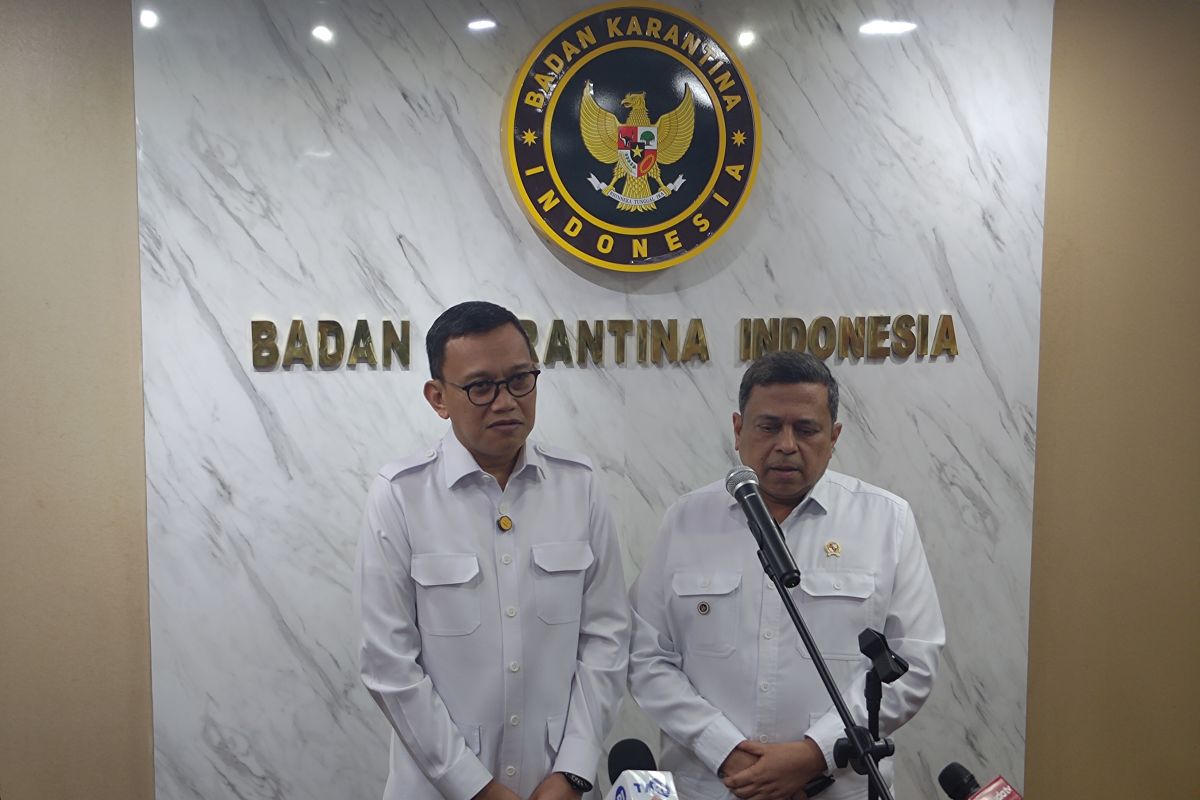
Jakarta (ANTARA) - Indonesia’s Quarantine Agency (Barantin) and the Halal Product Assurance Organising Agency (BPJPH) are exploring cooperation to ensure that commodities entering Indonesia meet health and halal requirements.
Head of Barantin, Abdul Kadir Karding, stated that such cooperation is necessary because products that pass quarantine inspections still need to be verified for halal compliance.
“We are working together to ensure that materials or commodities entering Indonesia must be guaranteed on two fronts. First, they must be healthy, and second, they must be halal,” Karding said at the Indonesian Quarantine Agency office in Jakarta on Monday.
He explained that the cooperation includes harmonising regulations between Barantin and BPJPH.
This integration also encompasses joint actions in oversight across all stages of goods entry.
“We will establish data integration, including joint actions, particularly in pre-border, at-border, and post-border phases,” he said.
He emphasised that Barantin is authorised to ensure the health and quarantine aspects of commodities entering Indonesia.
Karding added that his agency only verifies that incoming commodities meet health standards, while determining halal status falls under BPJPH’s authority.
Head of BPJPH, Haikal Hasan, stated that data integration between the two institutions will help the government identify incoming commodities, including their halal or non-halal status.
Babe Haikal, as he is affectionately known, explained that this integration will utilise the information systems or dashboards owned by each institution.
Furthermore, he emphasised that all products entering Indonesia can still circulate as long as they comply with labelling requirements, namely that halal products must display a halal label, while non-halal products must be labelled as non-halal.
“Non-halal food should be given a non-halal logo. Everything can enter because we are a free country, but halal ones should be given (a halal logo), and non-halal ones should be given (a non-halal logo),” said Babe Haikal.
This labelling policy aims to provide information certainty for consumers while ensuring transparency in the circulation of products domestically.
The cooperation between the two agencies is expected to enhance the effectiveness of oversight and provide assurance to the public regarding the safety and halal status of products circulating in Indonesia.
Barantin records that the value of commodity exports undergoing quarantine actions in 2025 reached approximately Rp393 trillion, with a total of more than 2.6 million quarantine certification documents throughout the year.
This value demonstrates the strategic role of quarantine in supporting international trade, while ensuring that outgoing and incoming commodities meet health and biosafety standards.