
Bappenas: Green Economy at the Core of National Development Strategy
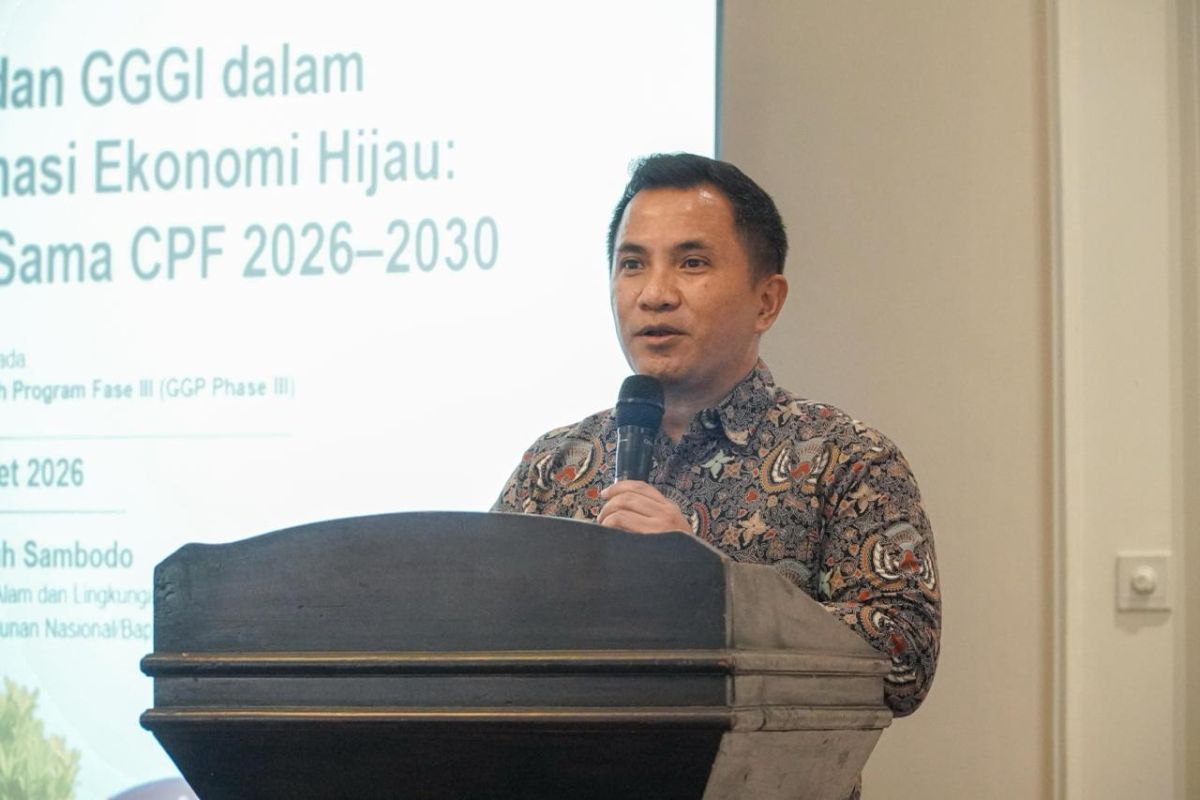
The government is shifting the development paradigm by viewing the green economy as the heart of national planning. Jakarta (ANTARA) - The Ministry of National Development Planning/National Development Planning Agency (PPN/Bappenas) has revealed that the government now regards the green economy as the core of the national development strategy amid rising climate change challenges and hydro-meteorological disaster risks. “The government is shifting the development paradigm by viewing the green economy as the heart of national planning. This commitment has been evident since the RPJMN (Medium-Term National Development Plan) 2020–2024 and is further strengthened in the RPJMN 2025–2029 through Pillars 2 and 8. In short, the green economy has become the mainstream of every development policy we formulate,” said Deputy for Food, Natural Resources, and the Environment of the Ministry of PPN/Bappenas, Leonardo A.A. Teguh Sambodo, during the Dialogue on the Journey and Reflection of the Green Growth Programme Phase III (GGP III), organised by Bappenas with the Global Green Growth Institute Indonesia (GGGI), according to an official statement in Jakarta on Monday. He explained that increasingly evident climate pattern changes and the rising frequency of hydro-meteorological disasters demand stronger and more integrated development strategies. Without adequate mitigation and adaptation measures, he continued, the potential economic losses from climate change are estimated to reach nearly Rp500 trillion by 2025 and could exceed Rp2 quadrillion by 2029. The partnership established since 2013 through the Green Growth Programme has supported the achievement of inclusive, resilient, and sustainable economic growth. Several programmes include policy development, institutional capacity building, and mobilisation of public and private investments in priority sectors aligned with Indonesia’s national development agenda and climate commitments. Since 2021, this partnership has successfully resulted in a reduction of 183.54 million tonnes of CO2 equivalent greenhouse gas emissions, sustainable management of approximately 12.5 million hectares of ecosystems, the creation of more than 271,000 green jobs, and improved access to sustainable energy for over 276,000 people. Additionally, hundreds of thousands of beneficiaries have also received indirect impacts from the various programmes implemented. Furthermore, Teguh stated that this forum marks the closure of GGP III while serving as a momentum for transitioning to the Green Indonesia Future Initiative (GIFT), to be launched in June 2026, and formulating the direction of the green development partnership for the 2026–2030 period. “This meeting also serves as a strategic bridge for the Ministry of PPN/Bappenas and GGGI to review past achievements while aligning our future work compass towards the Country Planning Framework (CPF) 2026–2030. We reflect on the tangible results of the third phase to build a stronger foundation for the next stage and ensure that every future initiative aligns with the mandate of the Medium-Term National Development Plan 2025–2029 and is responsive to global change dynamics,” he said. Within the CPF 2026–2030 framework, GIFT will focus on green investments, climate action, carbon assessment, sustainable landscapes, blue and coastal economy, and green industry development that supports Indonesia’s low-carbon economic transformation. GGGI Indonesia Country Representative, Rowan Fraser, stated that the partnership between the Indonesian government and GGGI has evolved gradually since Indonesia became one of the founding members of GGGI in 2012, with the implementation of various phases of the Green Growth Programme from 2013 to the third phase in 2021–2025. “Through this partnership, GGGI provides technical support to the government in developing green development policies, strengthening collaboration with development partners and the private sector, and implementing various programmes at national and local levels. Moving forward, through the Green Indonesia Future Initiative (GIFT), we hope to continue and strengthen this cooperation to support the implementation of green development and encourage sustainable investments in Indonesia,” Rowan revealed.