
Bappenas Formulates Strategic Framework to Strengthen Public Mentality
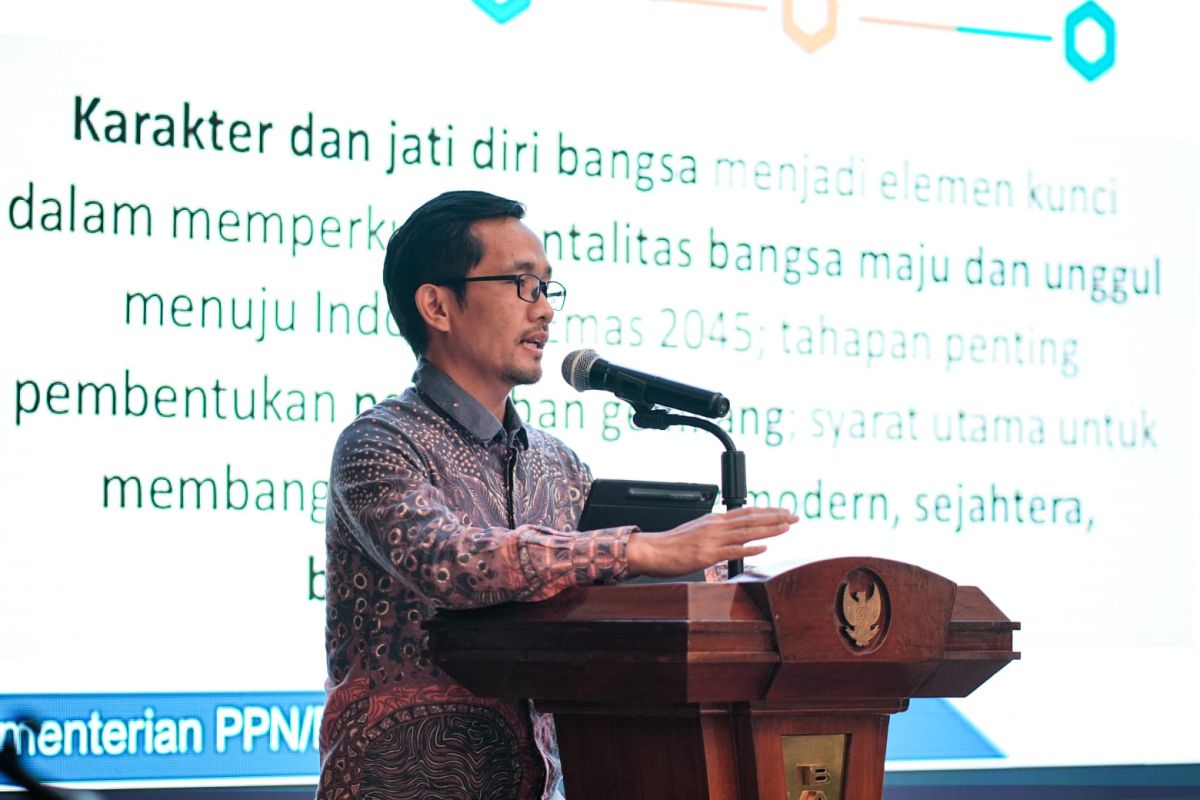
Jakarta (ANTARA) - The Ministry of National Development Planning/National Development Planning Agency (PPN/Bappenas) is formulating an integrated strategic framework to strengthen societal values, ethics, and mentality as the foundation for national development.
“Character building is a key element that cannot be separated from the national development agenda,” said the Director of Religion, Culture, Youth, and Sports at the Ministry of PPN/Bappenas, Didik Darmanto, during the Roadmap Compilation Meeting for Strengthening Character and National Identity.
In a written statement received in Jakarta on Thursday, he stated that a nation’s progress is not solely determined by economic growth, productivity, industrialisation, or infrastructure development. However, there is one very important aspect, namely related to societal values, ethics, and mentality, as well as that of individuals themselves.
Furthermore, strengthening character and national identity has been established as one of the 20 transformative efforts (game changers) in the National Long-Term Development Plan (RPJPN) 2025–2045.
According to Didik, this demonstrates that human and societal development based on values is a priority in realising the Golden Indonesia 2045 vision.
The implementation of the character strengthening roadmap will be carried out through an ecosystem approach involving various strategic channels, starting from the family as the primary foundation, educational institutions, religious institutions, communities, media, to community organisations. This approach is expected to sustainably transform values and ethics in societal life.
Various character strengthening programmes have been implemented by ministries and agencies. Nevertheless, according to him, a broader framework is still needed to unify these various initiatives.
“The issue is not the absence of programmes and activities, as programmes are always present in every ministry and agency. However, what has not yet been realised is a grand framework capable of connecting and synergising all those programmes to make them more implementable, impactful, and able to transform society,” said Didik.