
Bappenas Designs More Equitable Intergenerational Development Document
Jakarta (ANTARA) - The Ministry of National Development Planning/National Development Planning Agency (PPN/Bappenas) is preparing a strategic document based on National Transfer Accounts (NTA) analysis, designed to understand population dynamics while supporting more equitable intergenerational development planning.
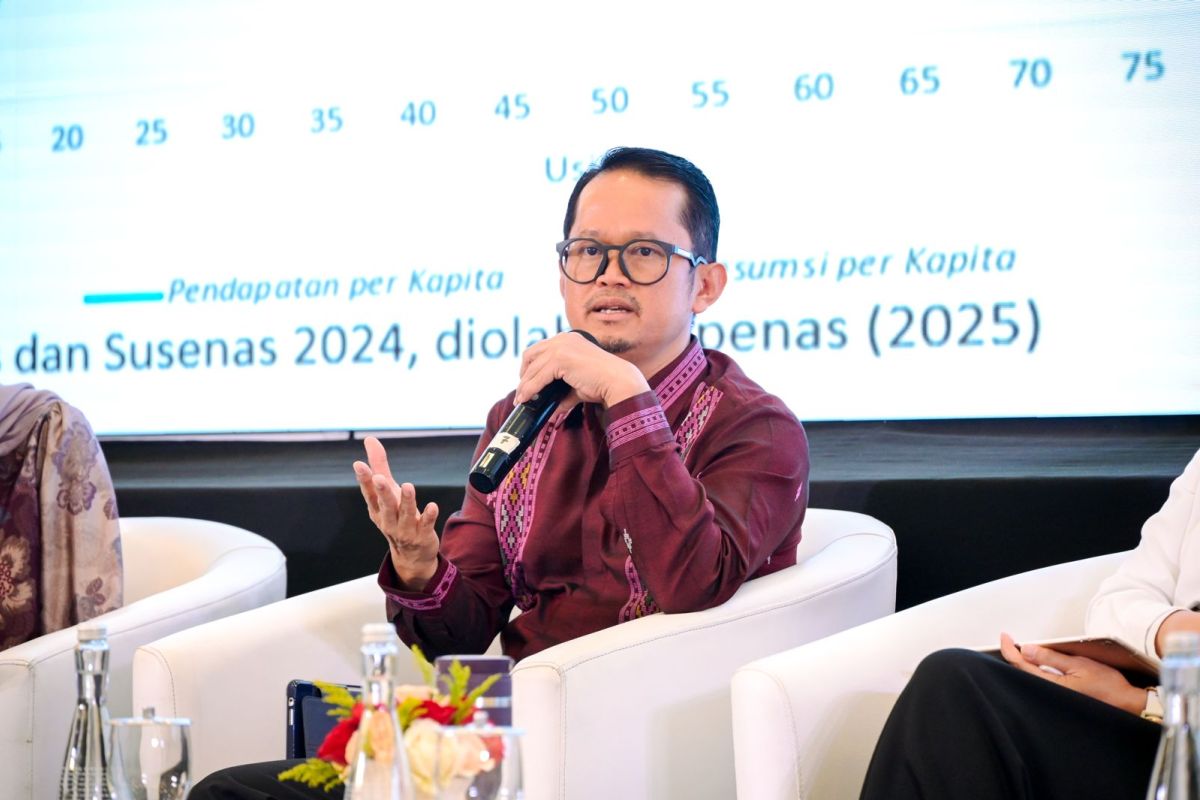
“NTA is an international method for measuring economic resource flows between age groups, enabling the government to design policies based on life cycles and intergenerational justice. Through this approach, NTA analysis is expected to serve as a new compass for the government in mapping economic resource flows across ages,” said Deputy for Community Empowerment, Population, and Employment at the Ministry of PPN/Bappenas, Maliki, during the launch event for the book Intergenerational Investment: A New Direction for Indonesian Policy at the End of the Demographic Transition.
In a statement received in Jakarta on Thursday, he noted that the government has recorded Indonesia entering a phase of declining population growth rates, with the proportion of elderly continuously increasing.
Rather than viewing the elderly as a burden, he continued, the government is beginning to optimise economic growth potential from longer lifespans and extended working years among healthy and active elderly populations (silver dividend) by strengthening all economic activities specifically designed to meet the needs of the elderly (silver economy), including the development of healthcare services, elderly-friendly housing, and supportive technologies.
On the other hand, the care economy issue is also receiving serious attention, given that the burden of caring for children and the elderly has not been proportionally shared and tends to be borne by women, leading to time poverty.
Maliki stated that the book serves as a tool for deeper analysis.
“If previously we discussed the demographic bonus only based on the number of children, working-age population, and elderly through simple age boundaries (cut-off), then through NTA we can understand the real productivity of those age groups,” he said.
Furthermore, the document will be used as a strategic foundation in preparing the National Medium-Term Development Plan (RPJMN) 2025–2029, emphasising six transformation directions. First is investment in human resources from an early age through strengthening child nutrition, health, and education.
Next is labour market reform through vocational education transformation and competency-based wage systems. Third, increasing women’s productivity through the provision of childcare facilities and flexible work systems. Then, strengthening social safety nets through sustainable pension system reforms for the elderly.
Fifth is developing the care economy as a new source of formal employment, and regional equity through synchronisation of inclusive development between Western and Eastern Indonesia.
Through the NTA-based approach, the government is expected to formulate more targeted, inclusive, and intergenerational justice policies to support sustainable development in the future.
“Most importantly is the support system. We hope NTA can become a tool for us to formulate those policies, especially policies for our ageing population,” he said.