
Bapanas Reaffirms Commitment to Maintaining Fair Food Prices During Ramadhan
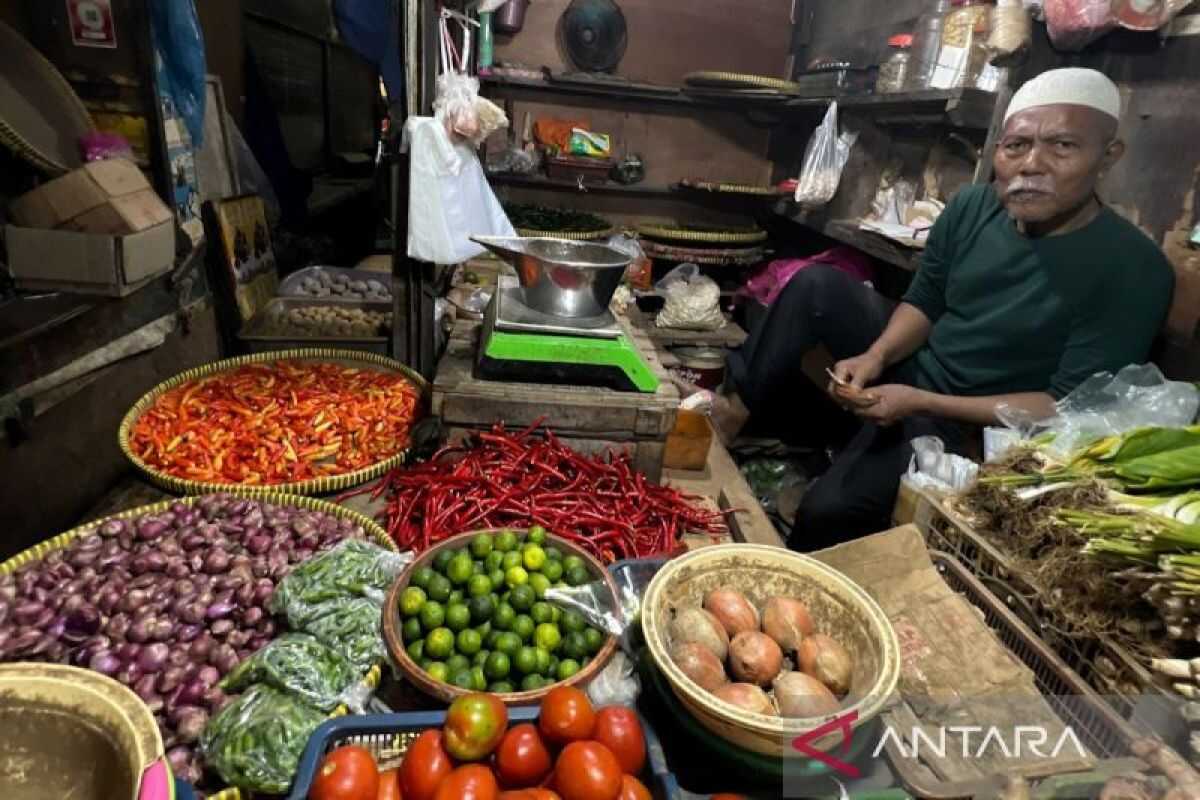
Jakarta — Indonesia’s National Food Agency (Bapanas) has reaffirmed its continued commitment to maintaining fair food prices during Ramadhan 1447 Hijriah by intensifying inspections of strategic staple commodity conditions across major and secondary markets.
“This is being done to guarantee price stability at the consumer level, given that markets are the main source where people meet their daily food needs,” said I Gusti Ketut Astawa, Deputy for Food Availability and Stabilisation at Bapanas, when reached for comment in Jakarta on Saturday.
He stated that based on field surveys, the price levels of strategic staple foods remain relatively reasonable. The government intends to maintain fair prices so that people feel comfortable accessing their food consumption needs.
“Hopefully prices will remain stable so that in the future people will also feel more comfortable obtaining reasonably priced goods, particularly food,” said Ketut.
According to him, selling prices ranging from beef, horticultural products and poultry to rice are still within the bounds of reasonableness set by government price regulations. Red chilli prices have even begun to decline.
Although prices remain volatile, they are still within reasonable margins relative to the Maximum Retail Price (HAT) and Sales Reference Price (HAP) determined by the government.
Ketut revealed he had personally visited several markets including Pasar Senen and Pasar Gondangdia in Jakarta. Market heads and their teams accompanied Ketut at Pasar Gondangdia to monitor food prices, where beef prices reached a maximum of Rp140,000 per kilogramme and chicken meat ranged from Rp39,000 to Rp40,000 per kg.
He also recorded red onion prices at Rp42,000 to Rp43,000 per kg, red chillies declining to Rp100,000 per kg, eggs at Rp30,000 to Rp31,000 per kg, garlic at Rp38,000 to Rp39,000 per kg, and medium-grade rice at Rp12,000 to Rp12,500 per kg.
According to the Price Development Index (IPH) data through the third week of February 2026, the number of regions nationally experiencing a decline in IPH moved positively compared to the IPH situation one month earlier. This indicates that food price volatility remains manageable and the government’s food intervention programme is sufficiently effective.
Ketut cited garlic as an example, with the number of regions experiencing a declining IPH through the third week of February 2026 recorded at 138 regencies/cities, up twofold compared to the previous month’s figure of 65 regencies/cities.
Chicken eggs also recorded an increase in the number of regions with declining IPH at 171 regencies/cities through the third week of February 2026, compared to 129 regencies/cities in the previous month.
The highest number of regions with declining IPH was in the red onion commodity with 232 regencies/cities. Cooking oil followed with 207 regencies/cities, red chilli with 145 regencies/cities, chicken meat with 88 regencies/cities, raw chilli with 81 regencies/cities, rice with 79 regencies/cities, granulated sugar with 49 regencies/cities, and beef with 22 regencies/cities.
On the other hand, food price fluctuations exceeding HAT and HAP were partly caused by the behaviour of traders or retailers in traditional markets deliberately raising prices to gain higher margins.
“This often happens in preparation for the upcoming Eid al-Fitr celebrations. This has been a finding of the Food Violation Task Force,” Ketut explained.
Regarding this, Ketut urged business operators not to be excessive in setting prices. The supply of strategic staple foods is currently adequate, so there is no justification for unreasonable and excessive price increases.
“We cannot allow price volatility to be this drastic and uncontrolled whilst supply is good. There is no reason to raise prices brutally,” said Ketut.
According to him, the price benchmarks set by the government have undergone careful calculation. One consideration has been to ensure profit margins from producers through to retail traders.
“We have already calculated — for example with chicken. When at the farmer level it is still Rp22,000 to Rp23,000 per kilogramme for live bird, then at the downstream level Rp40,000 is still relatively adequate for people or for traders to gain profit,” he explained.
Previously, Bapanas Head and Agriculture Minister Andi Amran Sulaiman had requested the Food Task Force of the Police to take firm action against business actors causing price anomalies, particularly during Ramadhan 1447 Hijriah.