
Bapanas Partners with Farmers, Traders, and Task Force to Maintain Chili Price Stability
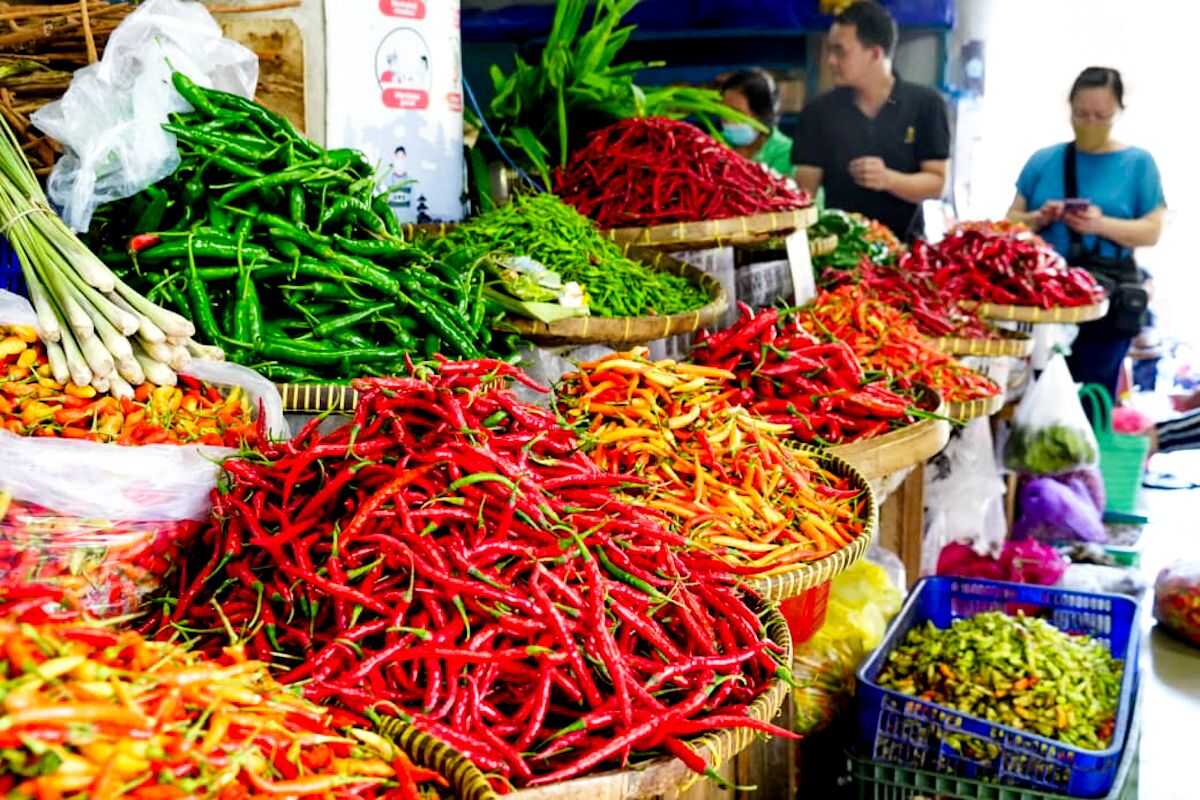
Strengthening distribution from harvest centers to main markets must be accelerated through cross-regional and cross-ministerial coordination
The National Food Agency (Bapanas) is partnering with farmers, traders, regional governments, and the Food Task Force to strengthen oversight, smooth distribution, and maintain the price stability and availability of red cayenne peppers ahead of Ramadan 1447 Hijriah.
“Chili is a commodity that is highly sensitive to daily supply. Therefore, strengthening distribution from harvest centers to main markets must be accelerated through cross-regional and cross-ministerial coordination,” said Bapanas Deputy for Food Availability and Stabilization I Gusti Ketut Astawa in Jakarta on Sunday.
In response to the dynamics of red cayenne pepper prices and supply in several regions, particularly in Jakarta, Bapanas gathered chili commodity stakeholders consisting of champion chili farmers from Java, West Nusa Tenggara (NTB), and South Sulawesi. Additionally, chili traders in the Jakarta area, the Directorate General of Horticulture at the Ministry of Agriculture, the Jakarta Food Security Agency, and the National Police Food Task Force participated through a Chili Stabilization Coordination Meeting held online.
“Chili stabilization requires orchestration from upstream to downstream,” he said.
According to him, production centers currently in harvest season must be quickly connected with downstream markets, primarily in consumer areas such as Jakarta, to prevent significant price surges. Ketut stressed that the government has from the outset provided space for farmers to earn fair profits. However, he cautioned that prices at both the producer and consumer levels must be fair and reasonable. If not, stabilization interventions must be carried out to provide balance on both the upstream and downstream sides.
Based on the Food Price Panel as of February 14, 2026, the national average price of red cayenne peppers at the producer level stands at approximately Rp 56,383 per kilogram. Meanwhile, the national average at the consumer level is recorded at Rp 73,339 per kilogram. Inter-regional price disparities are the focus of distribution interventions to prevent the price gap from widening.
“Therefore, we cannot simply wait until after Lunar New Year or a few weeks from now. Distribution measures must be carried out immediately,” he said.
To that end, Ketut continued, Food Distribution Facilitation (FDP) from production centers in South Sulawesi, East Java, and West Java to the Kramat Jati Central Market in Jakarta must be conducted to reduce logistics costs and maintain price affordability. “So that we can ensure chili prices trend downward,” he said.
Chairman of the East Lombok Chili Farmer Champions, Subhan, supports the government’s measures to maintain chili affordability through FDP and inter-regional cooperation mechanisms. “We hope for Bapanas’ support through this food distribution facilitation. This support is important to maintain supply and keep price movements more controlled,” Subhan said.
Meanwhile, Suyono from the Indonesian Chili Farmers Association (APCI) noted that shopping activity has indeed increased in recent days, coinciding with the Lunar New Year and fasting season. Nevertheless, he predicted that after the Lunar New Year period, red cayenne pepper prices will gradually decline. According to Suyono, several production centers in East Java such as Kediri, Blitar, Mojokerto, and Banyuwangi will soon enter the harvest period. However, rainfall in those areas remains quite high, impacting the picking process.
Meanwhile, Guntur, a trader at Kramat Jati Central Market (PIKJ), affirmed his readiness to absorb chili supply from various regions, including South Sulawesi, to strengthen availability and help stabilize prices at the main market. He is also optimistic that chili prices will ease in the coming days as supply from production centers increases.
Previously, Bapanas Head and concurrent Minister of Agriculture Andi Amran Sulaiman affirmed that national food stocks are currently in a strong position, and no party should exploit demand momentum for one-sided interests. “Our stocks are strong and in surplus condition heading into Ramadan. This condition must be reflected in fair and reasonable prices for the public. No one should be manipulating the situation,” Amran emphasized at the launch of the Simultaneous Affordable Food Movement (GPM) in Jakarta on Friday (February 13).
Amran assured that the government will not tolerate practices that harm the public. If violations or attempts to exploit the situation to raise prices unreasonably are found, the Price Violation, Food Safety and Quality Enforcement Task Force will take firm action within its authority. “Including the revocation of permits, which will be enforced together with the National Police Food Task Force,” Amran said.