
Bapanas Maintains Live Chicken Price Stability Through Multi-Stakeholder Intervention
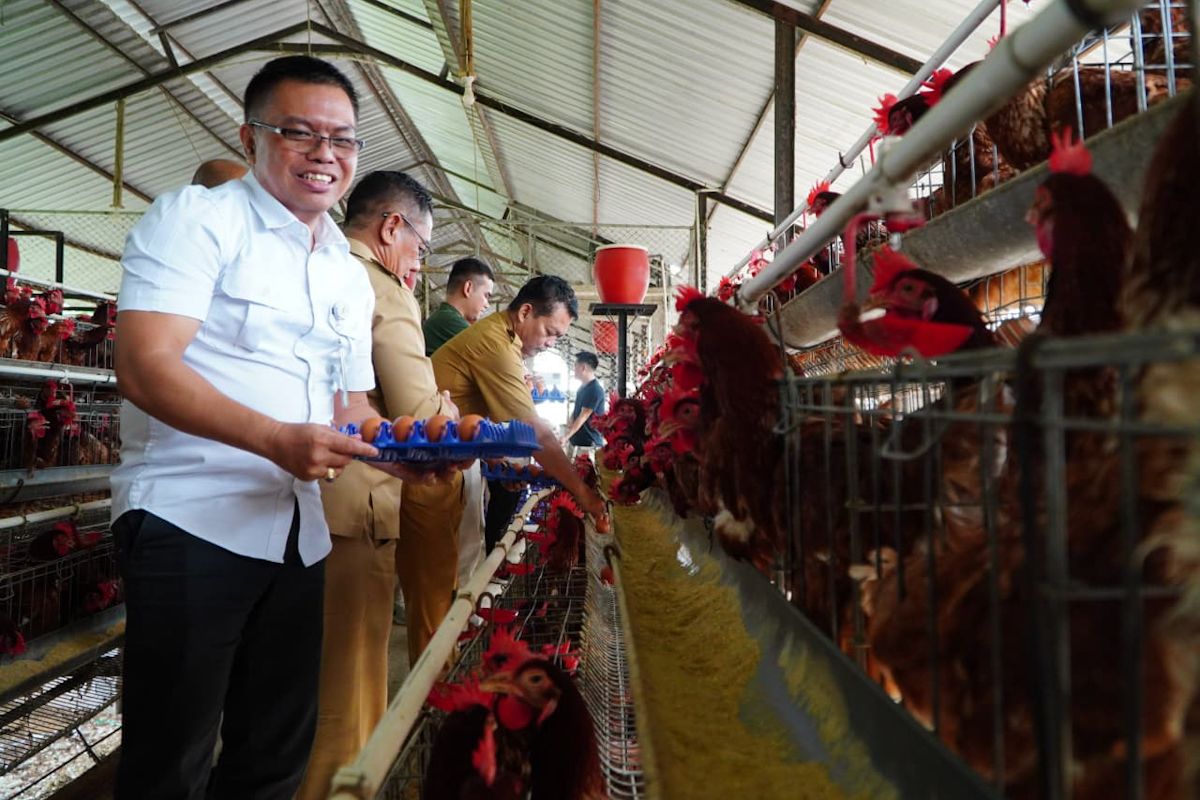
Do not let our small-scale farmers be disrupted by falling chicken prices. We will certainly continue to act because this phase will inevitably see a decline after Eid.
Jakarta (ANTARA) - The National Food Agency (Bapanas) is ensuring the stability of live chicken prices through multi-stakeholder interventions by partnering with chicken chick (day old chick/DOC) businesses and feed producers to curb price weakening after Ramadan and Eid al-Fitr 1447 Hijriah.
“To address the weakening live chicken prices following Ramadan and Eid al-Fitr, the government will synergise with all businesses operating in chicken chicks and feed,” said Deputy for Food Availability and Stabilisation of Bapanas, I Gusti Ketut Astawa, when confirmed in Jakarta on Friday.
He emphasised that this is an effort to prevent poultry farmers from being further impacted as one of the implications of the post-Eid al-Fitr phase in 2026.
Ketut said he has received instructions from the Head of Bapanas, who is also the Minister of Agriculture Andi Amran Sulaiman, to immediately summon businesses in the DOC and feed sectors, including large-scale players, to control live chicken prices.
In Bapanas’ monitoring, Ketut noted that the average live chicken price in several regions has fluctuated below the government’s Reference Purchase Price (HAP) at the producer level, which is set at a maximum of Rp25,000 per kilogram (kg).
South Sumatra is recorded at Rp21,938 per kg, or 12.25 percent below the producer HAP. However, live chicken prices in South Sulawesi remain relatively high at Rp27,409 per kg, or 9.64 percent above the HAP.
The national average live chicken price is around Rp24,076 per kg, or 3.7 percent slightly below the producer HAP.
Up to the last week of March, the Meat Chicken Price Development Index (IPH) was recorded as quite significant, with 237 districts/cities experiencing increases.
However, the upward movement of the IPH for broiler meat began to ease into early April. From a previous increase in 237 districts/cities, it decreased to 148 districts/cities. Similarly, the number of areas with a declining IPH for broiler meat has increased to 125 districts/cities.
Ketut said the government continues to maintain price balance from upstream to downstream. The principle of fair pricing for every link in the supply chain is important to implement.
The government hopes that through close synergy with related businesses, poultry product prices can be normalised. Assurance of absorption or offtake is an important matter that must be ensured by the government.
“Therefore, we will organise, we will gather again. We will coordinate with farmers and large businesses, which we hope can offtake at the existing prices from farmers, so that prices start to become fair,” said Ketut.
In addition, the government has prepared the Food Supply and Price Stabilisation Programme (SPHP) for feed corn as an effort to at least suppress production costs for farmers.
Separately, the Head of Bapanas and Minister of Agriculture Andi Amran Sulaiman emphasised that as a short-term to long-term solution, his side is building feed and DOC factories to address fluctuations in broiler meat prices.
“The permanent solution is to build government-owned feed and DOC factories. In the short term, we will call on feed factories to help. Do not raise prices,” said Amran.