
Bapanas: High Soybean Prices in Jakarta Not from Official Distributors
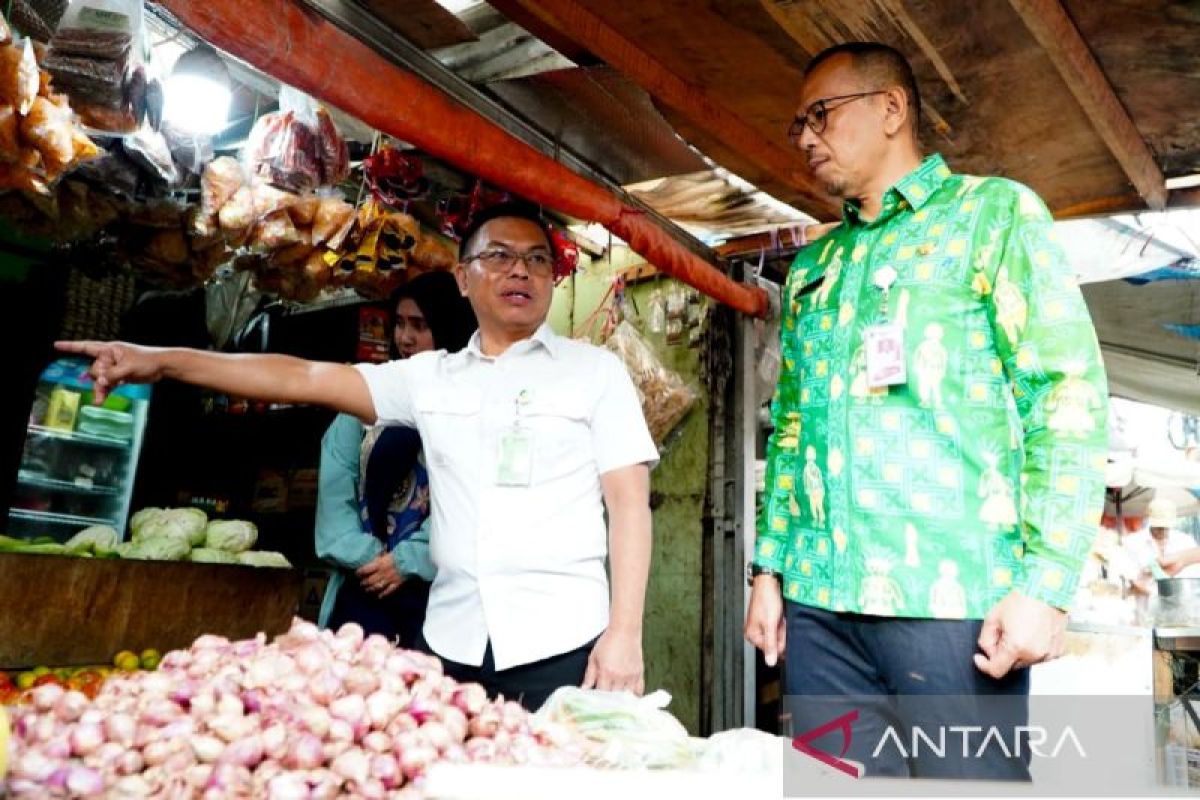
Traders charging Rp20,000 per kg for soybeans are small-scale vendors who do not source from official distributors. Jakarta (ANTARA) - The National Food Agency (Bapanas) has emphasised that the high soybean prices found in Pasar Menteng Pulo, Jakarta, do not originate from official distributors, but rather from small traders with limited stocks, resulting in price disparities. “The news of soybean prices reportedly reaching Rp20,000 per kilogram in the DKI Jakarta area was immediately addressed by Bapanas,” said Deputy for Food Availability and Stabilisation of Bapanas, I Gusti Ketut Astawa, in Jakarta on Thursday. It is known that the government has set the Highest Retail Price (HAP) for soybeans at the consumer or tofu and tempe artisan level. Under National Food Agency Regulation No. 12 of 2024, the HAP for local soybeans is a maximum of Rp11,400 per kg, while for imported soybeans it is a maximum of Rp12,000 per kg. “Regarding this matter, Bapanas, together with the DKI Jakarta Food Security, Maritime, and Agriculture Office (DKPKP), conducted a raid at Pasar Menteng Pulo today,” Ketut stated. He explained that the traders charging Rp20,000 per kg for soybeans are small traders who do not take supplies from official distributors. These traders only purchase stocks in limited quantities and face sales difficulties, resulting in slow stock turnover over a considerable period. “Indeed, there is a stall selling soybeans for Rp20,000. The mother bought the stock online at Rp10,100 to Rp10,200. But it sells very slowly, only 5 kg in a month, so the price is increased,” Ketut clarified. Nevertheless, they did not take firm action and instead prioritised persuasive advice because the small traders only have limited stocks of around five kilograms that are difficult to sell, thus adjusting the price. “In terms of quantity, it is indeed very small in a month. So we are clarifying the truth of the news,” Ketut explained. Furthermore, he stated that in the same market, there are still traders selling soybeans in accordance with the consumer-level HAP at relatively stable prices. Ketut reminded that traditional markets operate on a bargaining system, allowing buyers the freedom to choose traders with the lowest prices according to their preferences. “So there are two shops, two stalls with different prices, one at Rp20,000 per kg, and a bit further back at Rp12,000. The second shop gets it from a distributor at Rp10,000 to Rp10,500 per kg. So the prices from importers and distributors are very good,” Ketut elaborated. Meanwhile, Heni, a soybean trader selling at Rp20,000 per kg, revealed that her stock was purchased online, but it does not necessarily sell out within a month. She buys a maximum of 6 kg using three accounts, as each account purchases 2 kg of soybeans. Her customers are not tofu and tempe artisans, but chicken porridge sellers or other consumers such as schoolchildren for craft needs. “I buy it online. At most 2 kg, then with 3 accounts. So 6 kg, sometimes 5 kg. Sold at Rp20,000. Sometimes it sells out in a month, sometimes more than a month,” said Heni. At the same location, Head of the DKI Jakarta DKPKP, Hasudungan Sidabalok, stated that the raid was conducted as a form of clarification so that the public receives clear information. “After checking and clarifying, indeed a price of Rp20,000 per kg was still found. But the Deputy has already explained the reasons for the significant price disparity between one trader and another,” Hasudungan added. Subsequently, the DKI Jakarta Provincial Government will deploy officers to comprehensively assess soybean price conditions. Not only checking markets, but also targeting tofu and tempe artisans in the capital.