
Bapanas affirms 371,000 tonnes of SPHP rice distributed since early 2026
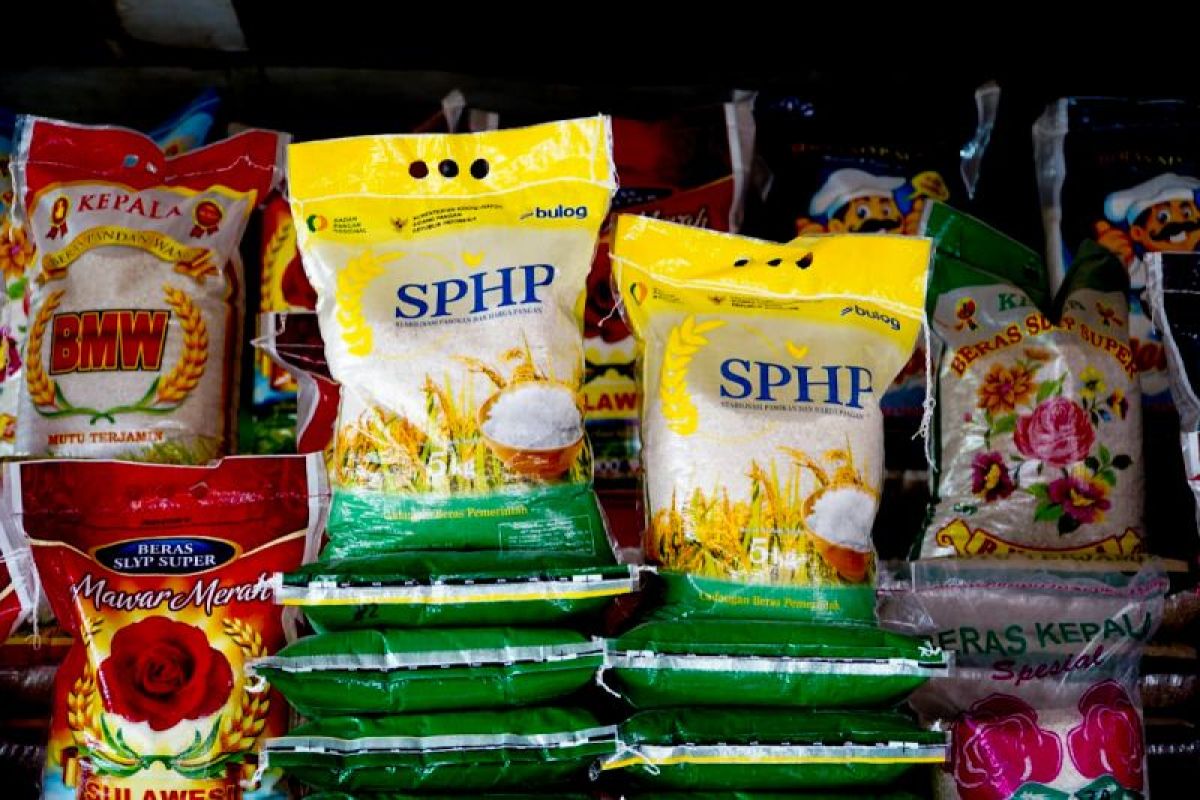
Jakarta (ANTARA) - The National Food Agency (Bapanas) has affirmed that 371,000 tonnes of rice under the Food Supply and Price Stabilisation Programme (SPHP) have been distributed since early 2026, to maintain price stability and ensure food availability for communities across Indonesia.
SPHP Director at Bapanas, Maino Dwi Hartono, confirmed in Jakarta on Wednesday that the 371,000 tonnes of SPHP rice distributed consist of 221,000 tonnes as an extension of the 2025 programme continued into January-February 2026, and 150,200 tonnes of this year’s programme distributed from March to 25 April 2026.
“The SPHP rice realisation in January-February (2026) reached 221,000 tonnes (extension of the 2025 programme), while the SPHP rice realisation from March to 25 April (2026) is 150,200 tonnes. The total of both reaches 371,200 tonnes,” said Maino.
The government is optimising the SPHP rice programme to suppress price developments. In 2026, the SPHP rice programme has been arranged to avoid any interruption in distribution during the year transition.
Bapanas, together with Perum Bulog, is strengthening the expansion of SPHP rice distribution channels to broaden its realisation, in line with Government Rice Reserves (CBP) stocks that have exceeded 5 million tonnes.
Maino stated that SPHP rice distribution in 2026 is targeted at 828,000 tonnes and can be carried out through various channels, including distributors as well as state-owned enterprises (BUMN) and regional state-owned enterprises (BUMD).
In addition, distribution is also expanded through modern retail in collaboration with relevant associations, and prioritised to reach retailers in traditional markets to strengthen distribution to the public.
SPHP rice is sold according to the Highest Retail Price (HET), namely Rp12,500 per kilogram for zone 1 (Java, Lampung, South Sumatra, Bali, West Nusa Tenggara, Sulawesi); Rp13,100 per kilogram for zone 2 (Sumatra excluding Lampung and South Sumatra, East Nusa Tenggara, Kalimantan); and Rp13,500 per kilogram for zone 3 (Maluku, Papua).
Previously, Maino continued, the Central Statistics Agency (BPS) reported an increase in the Rice Price Development Index (IPH) nationally up to the fourth week of April 2026, occurring in 109 regencies/cities and being the highest.
However, based on Bapanas analysis, of the 109 regions, only 52 regencies/cities experienced an IPH rice increase exceeding the Highest Retail Price (HET) for medium rice.
That number is equivalent to 14.65 percent of the total 355 regencies/cities monitored by BPS in the national rice IPH development.
Bapanas also noted that the average price of medium rice as of 28 April was still within the HET range and even decreased compared to a year ago. For zone I (Java, Lampung, South Sumatra, Bali, West Nusa Tenggara, Sulawesi), the price was recorded at Rp12,998 per kilogram (kg), whereas a year ago it was Rp13,070 per kg.
Zone II (Sumatra excluding Lampung and South Sumatra, East Nusa Tenggara, Kalimantan), the average price on 28 April was Rp13,618 per kg. This also decreased compared to a year ago at Rp14,113 per kg.
Meanwhile, zone III (Maluku, Papua), the price on 28 April was at Rp14,957 per kg. This also fell compared to the previous year at Rp15,937 per kg.
The Head of Bapanas and Minister of Agriculture, Andi Amran Sulaiman, emphasised that there is no price change for SPHP rice despite issues of shortages in plastic raw materials impacting packaging.
The plastic raw material packaging obstacle has been addressed by Bapanas together with Perum Bulog so that SPHP rice distribution does not encounter hurdles.
“SPHP is rice to balance if there are those who want to raise prices. Well, SPHP, we do not raise. The price remains as it is now. So now the quality is good because the fertiliser is good, on time, the right volume, and the water is good,” said Amran.
To address the challenge of plastic packaging availability for SPHP rice, it has also been decided that SPHP rice packaging stock from 2023-2025 can be used.
Bapanas permits this as long as there is adjustment of information on the packaging label to the current conditions, such as HET, expiry date, and other important information.
Amran also emphasised that currently, rice commodities no longer contribute significantly to inflation, one of which is thanks to the massive national-scale SPHP rice programme.
In BPS data, the rice inflation rate in 2026 has become more stable compared to previous years. The highest monthly rice inflation in 2023 and 2024 reached 5.61 percent in September 2023 and 5.28 percent in February 2024.
Meanwhile, the highest monthly rice inflation rate during 2025 was 1.35 percent in July. However, in 2026, the latest and highest monthly rice inflation is in March with an index that is still quite low at 0.65 percent.