
Banyumas Set as Model for Regional Potential-Based Food Production Centre Development
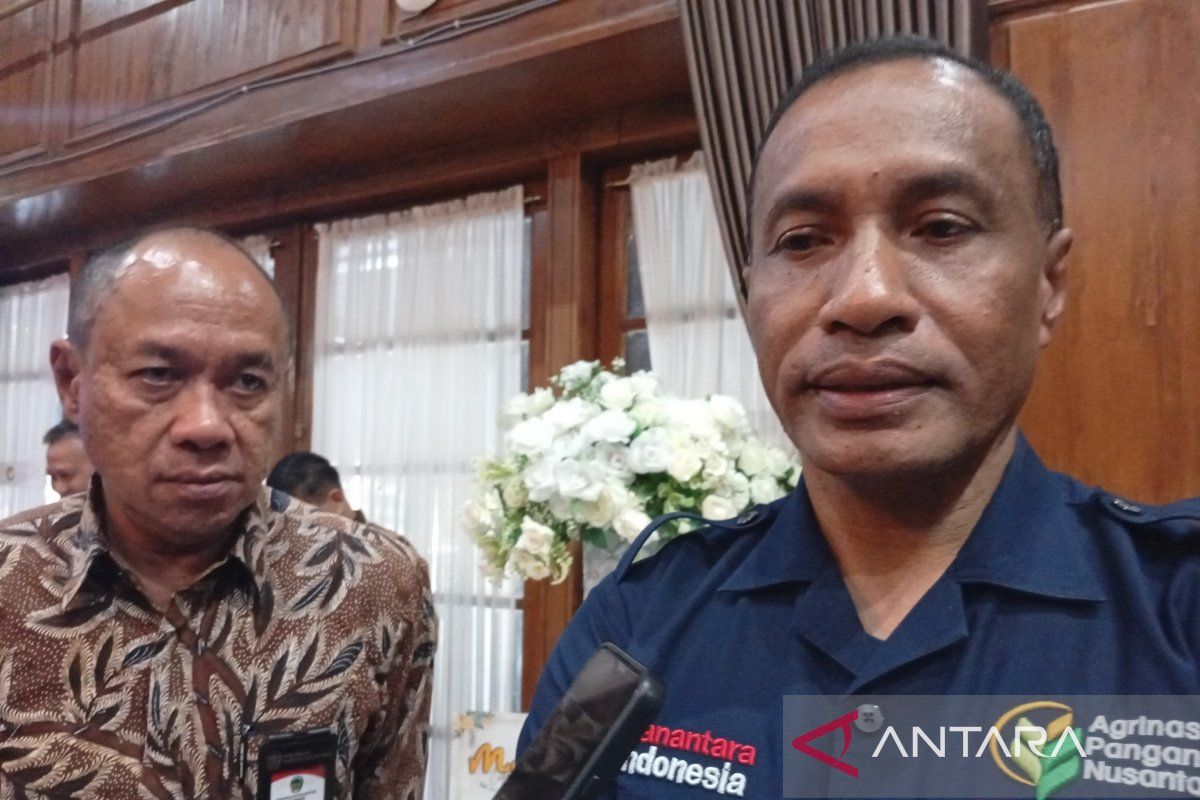
Purwokerto, Central Java (ANTARA) - Banyumas Regency in Central Java is being prepared as a model for developing Food Production Centres (KSPP) based on regional potential to strengthen national food security on a sustainable basis.
KSPP Project Director Blasius Popylus, after an audience with Banyumas Regent Sadewo Tri Lastiono at the Si Panji Purwokerto Pendopo Complex in Banyumas Regency on Thursday, stated that the programme is part of the mandate given to PT Agrinas Pangan Nusantara (Persero) as a state-owned enterprise to support the national food defence programme.
“By 2026, we will build 20 KSPPs across Indonesia, one of which will be in Banyumas. This KSPP is a food production centre area expected to integrate all activities from upstream to downstream,” said the Vice President of the Food Division of Agrinas Pangan Nusantara.
According to him, KSPP development prioritises collaboration between state-owned enterprises, local government, and other stakeholders, positioning farmers as the main subject of agricultural development.
He emphasised that this approach is expected to encourage farmers not only as beneficiaries but also as the primary actors who play a role in improving community welfare.
“Hopefully, agriculture will not only prosper farmers, but farmers will also contribute to prospering all Indonesians,” he said.
He stated that the selection of Banyumas is based on several considerations, including its strategic geographical position and the region’s recorded food surplus, particularly in rice.
In addition, various agricultural sector development programmes that have been implemented by the local government serve as important capital in supporting KSPP implementation.
“This KSPP is not built from scratch, but rather optimises existing resources in the area, both human resources, natural resources, and other potentials,” he said.
In the initial stage, he said, development will focus on rice commodities with an integrated system that covers cultivation activities, processing, and agribusiness development within one ecosystem.
Subsequently, the area also has the potential to be developed for other commodities such as corn, coconut, and various other food products in line with local potential and further study results.
He also highlighted the role of the younger generation, particularly millennial farmers in Banyumas, who are considered active in agricultural innovations, including the development of superior seeds.
“The participation of the younger generation in Banyumas is very good. This becomes important capital for farmer regeneration and future agricultural sector development,” he said.
In its development, he said, the KSPP will also involve universities, such as Jenderal Soedirman University, through the establishment of a research and development centre in the area.
Blasius hopes that the facility will serve as a means for students and researchers to develop innovations in areas such as seeds, agricultural tools and machinery, and cultivation methods.
Meanwhile, Banyumas Regent Sadewo Tri Lastiono stated that the local government is fully committed to supporting the programme as an effort to empower farmers.
“I ask all ranks to support this programme because it is farmer empowerment. Farmers will be happy if their income increases,” he said.
His side is actively pushing for the acceleration of KSPP realisation, including exploring collaborations with various parties such as Perum Bulog and related state-owned enterprises so that area development can run in an integrated manner.
He assessed that the presence of supporting infrastructure such as rice milling units (RMU) integrated with the KSPP programme will strengthen the local food production ecosystem.
In addition, Banyumas also has potential for coconut commodity development, which has so far been supported by seedling assistance from the central government and corporate social responsibility (CSR) programmes.
Nevertheless, he emphasised the importance of maintaining the region’s superiority as a producer of coconut sugar or brown sugar that already has a strong market.
“If all these programmes run optimally, I am confident there will be a large economic multiplier effect for the community,” he said.