
Banyumas Environmental Agency Develops TPST BLE to Reduce Waste Processing Burden
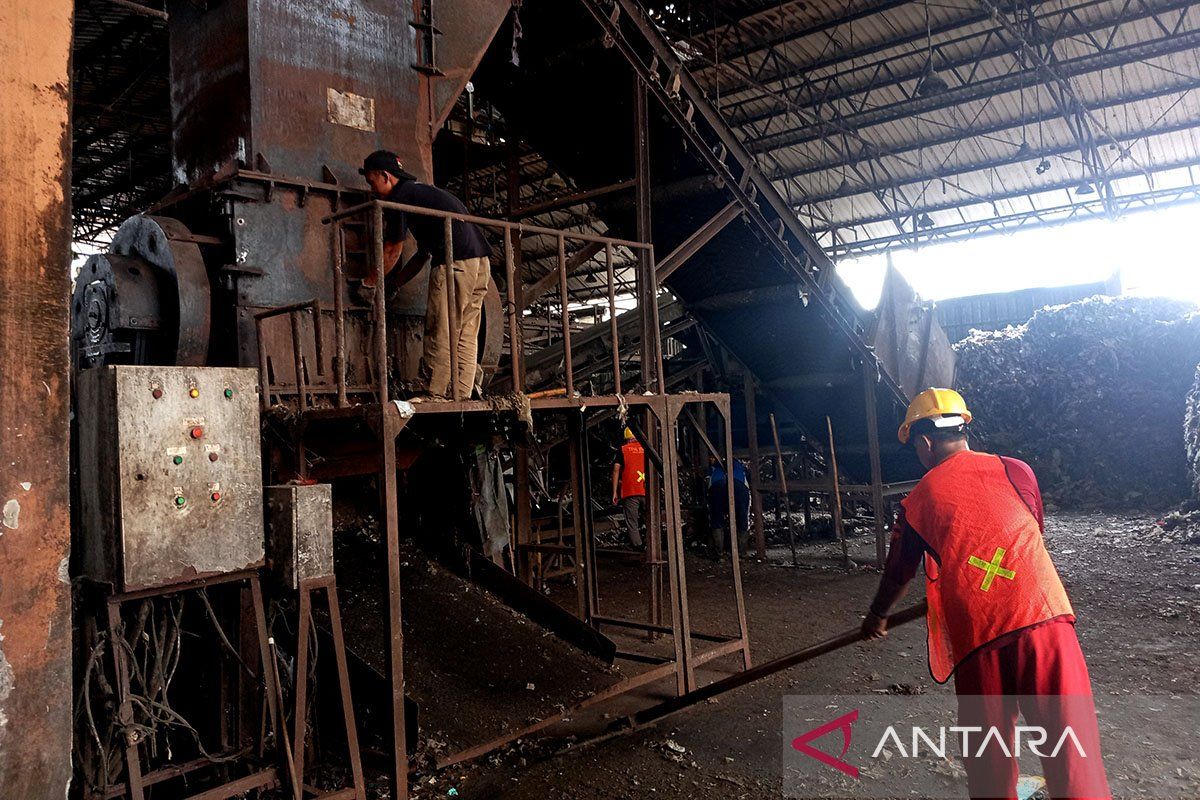
Purwokerto (ANTARA) - The Banyumas Regency Environmental Agency (DLH) in Central Java is developing an Environmentally and Educationally Based Integrated Waste Processing Site (TPST BLE) in Wlahar Wetan Village to reduce the waste processing burden amid increasing daily waste generation. Head of the Banyumas Regency DLH, Widodo Sugiri, stated in Purwokerto on Tuesday that the current operating capacity of TPST BLE is designed to process only around 40 tons of waste per day, while the incoming waste volume continues to increase significantly. “Now, the incoming waste can reach 160 tons per day for organics that have been sorted and around 60 tons of RDF material. This is far above the initial design capacity,” he said. According to him, this increase in waste volume is inseparable from the development of Community Self-Help Groups (KSM) managing waste at the village level. Currently, there are around 70 KSMs in Banyumas, with 40-50 of them already having processing infrastructure. Overall, management by KSMs can handle around 500 tons of household waste per day from the total waste generation in Banyumas, which reaches 700-800 tons per day. Of that amount, around 30 percent is processed into refuse-derived fuel (RDF) or about 150 tons per day, as well as around 40 tons of organic waste. Therefore, DLH Banyumas plans to expand and increase the capacity of TPST BLE with an area estimated to be almost the same as the existing facility, around 1.5 hectares. This development is currently in the tender process by the Ministry of Public Works through the provincial-level work unit, with hopes that construction can start and be completed in 2026. “We are not targeting too high, but the important thing is that there is an improvement in services and the pressure on TPST can be reduced,” Sugiri said. In addition to strengthening TPST BLE, he said, DLH Banyumas is also promoting the strengthening of village-level waste banks to handle various types of waste, including low-value items like plastic bags and other household waste. Currently, the number of active waste banks is still around 40 units, so in the future, it is targeted to be established in all villages and sub-districts, numbering 331 areas, consisting of 301 villages and 30 sub-districts. According to him, the existence of waste banks will be synergised with KSMs so that waste management becomes more optimal and sustainable, including in collecting used cooking oil, which has so far been mostly managed by waste banks. On the other hand, the Banyumas Regency Government is also opening opportunities for investment in waste processing, including plans for cooperation with investors from Malaysia for processing plastic ore from plastic waste. He assessed that the development of TPST BLE does not only focus on physical construction but also on strengthening institutions, readiness of human resources, preparation of standard operating procedures (SOP), and support for operational financing.